
Last updated October 15, 2026
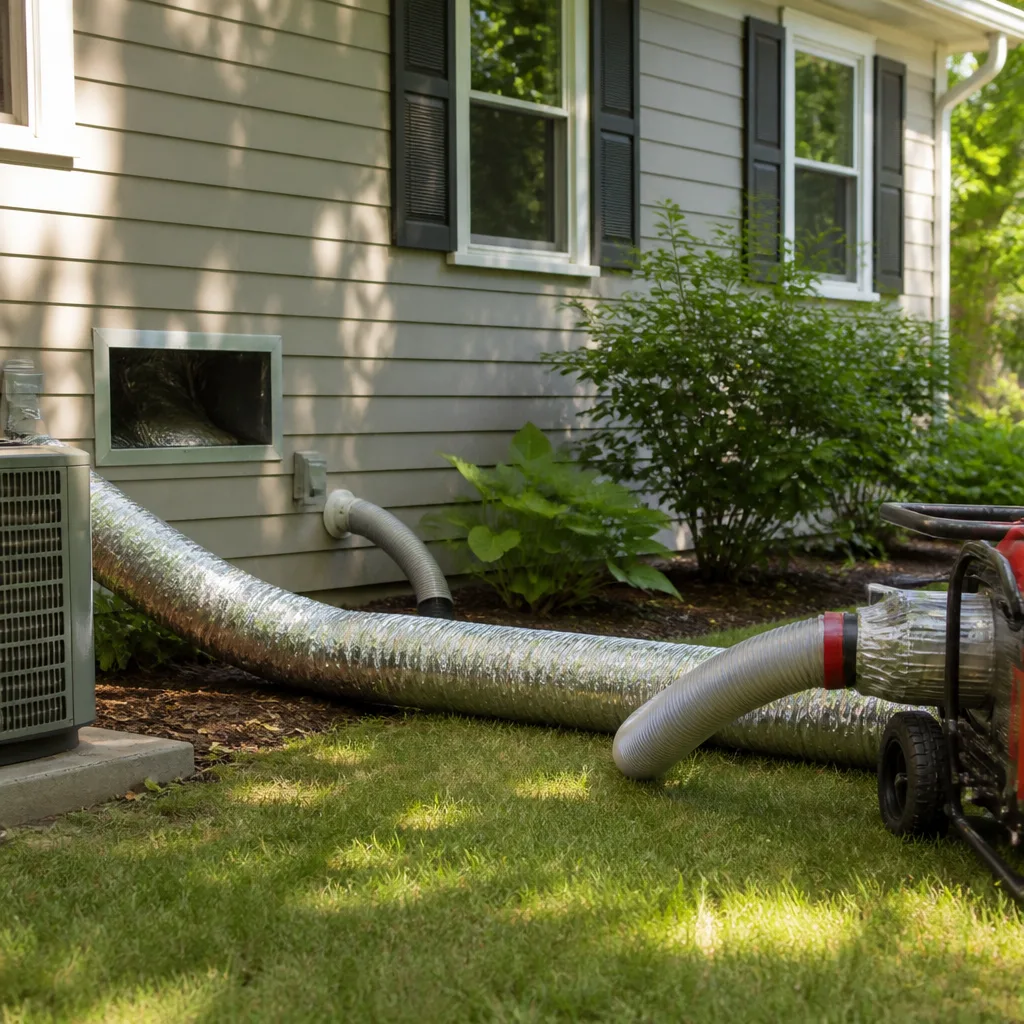 Whole-home duct cleaning
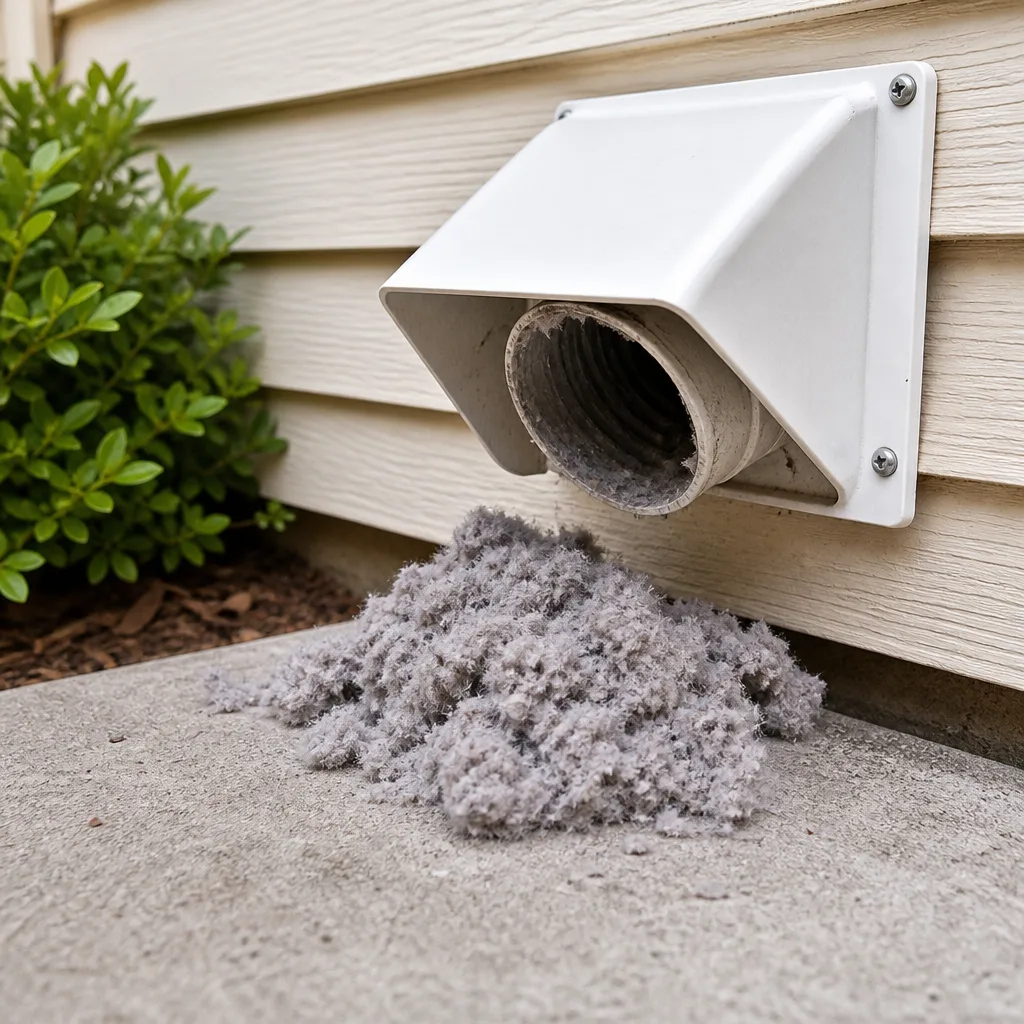 Dryer vent cleaning
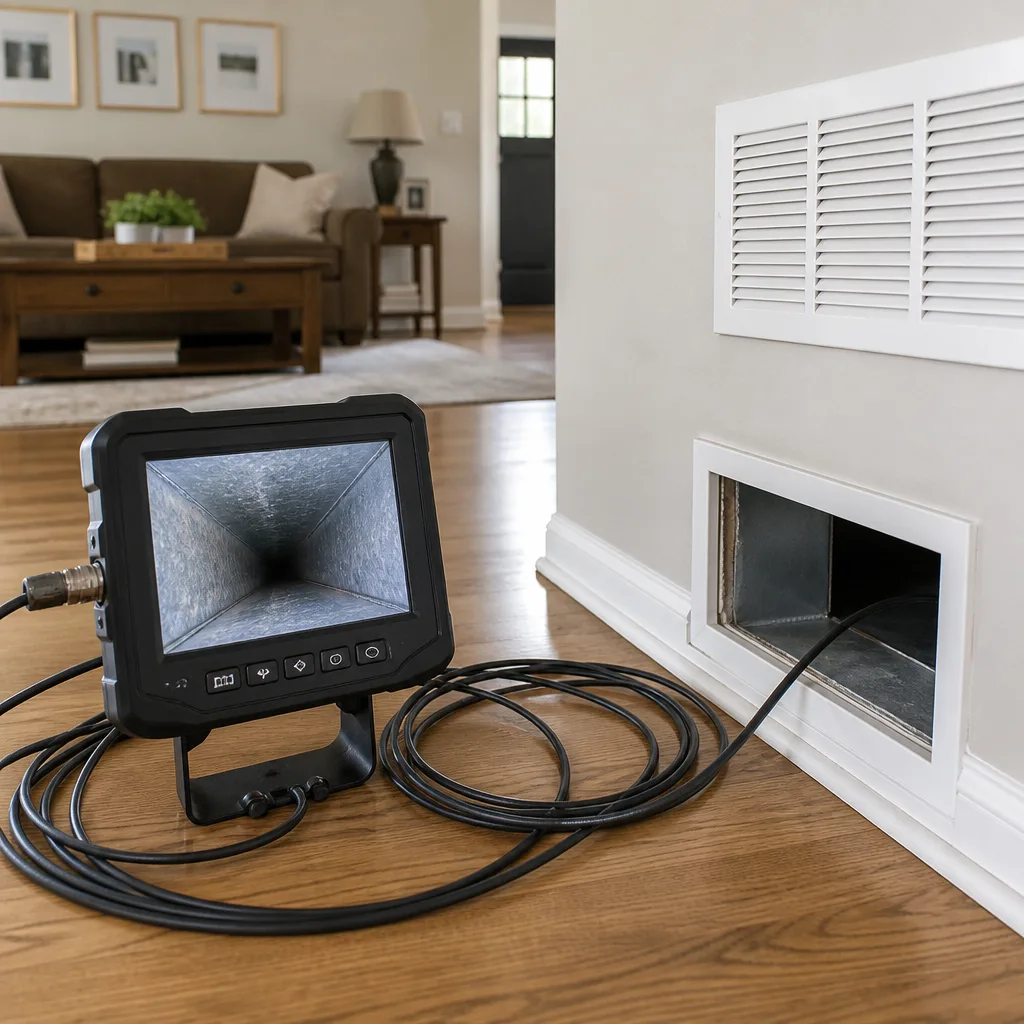 Camera inspection
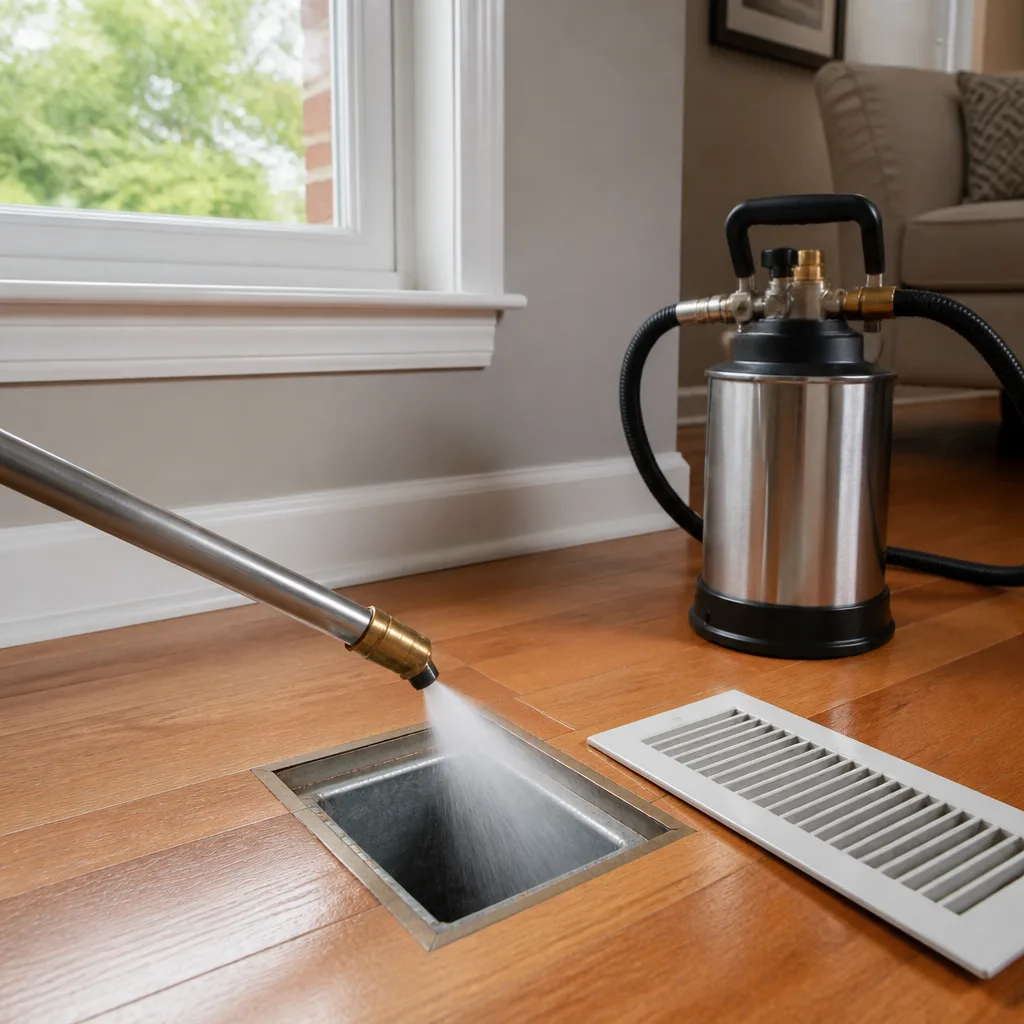 Sanitizing & deodorizing
Whole-system duct and dryer vent check with before-and-after photos - you see exactly what came out of your vents
That "$99 whole-house special" is a bait ad - the real number appears once they are in your hallway, or the "clean" is a shop-vac at the register. We photograph the inside of your ducts before and after instead.
Seasonal Air Duct Cleaning Care for West Palm Beach: Year-Round Homeowner’s Guide
The advice to clean your air ducts every three to five years was written for houses in Ohio and Pennsylvania, where furnaces run hard for five months and then sit silent for the rest of the year. In West Palm Beach, your air handler may run 10 to 14 hours a day from May through October, and it never truly stops. That means the dust, humidity, and biological growth inside your ducts compound on a completely different schedule. This guide explains what that schedule actually looks like in West Palm Beach, month by month, and how to build a duct care plan around the climate you live in, not a national average.
Styles & brands we work with
Quick Answer
In West Palm Beach, air duct cleaning should be scheduled around the transition out of peak cooling season, typically October or November, rather than on a generic three-to-five-year cycle. The combination of year-round AC runtime, persistent humidity, and seasonal pollen and construction dust means most local systems benefit from a professional inspection every two to three years, with light maintenance you can do yourself in between.
Table of Contents
- Why West Palm Beach Is Different from the National Guideline
- A Month-by-Month Guide to Duct Care in West Palm Beach
- Why the October – November Window Matters More Than Any Other
- How Seasonal Contaminants Map onto West Palm Beach Duct Risk
- What “Dry Season” Maintenance Actually Looks Like for a System That Never Rests
- Using Utility Bills as a Seasonal Diagnostic Tool
- What You Can Do Yourself vs. What Needs a Professional
- Common Mistakes to Avoid
- When to Call a Professional
- Frequently Asked Questions
- The Bottom Line
Why West Palm Beach Is Different from the National Guideline
The three-to-five-year cleaning recommendation comes from trade associations studying systems in temperate climates. Those systems shut down for months at a time. Dust settles, but it doesn’t keep accumulating, and the ducts dry out. West Palm Beach doesn’t work that way. Your HVAC system cycles year-round because the outdoor temperature rarely drops below 60 degrees even in January. That means the blower keeps pulling whatever is in your air through the system: pollen, sand, drywall dust from nearby renovations, pet dander, and the fine particulate that comes in through open windows during the cooler months.
Humidity changes the equation further. When indoor relative humidity sits above 60 percent for weeks at a time, the dust inside ductwork can absorb moisture and become a substrate for mold and bacterial growth. We’ve pulled apart ducts in West Palm Beach homes in October that looked like they’d been neglected for a decade. The homeowner had them cleaned four years earlier. The system just never got a break.
Here in West Palm Beach, a realistic cleaning interval for most households is every two to three years. Homes with pets, homes near the ocean or the Intracoastal, homes with construction nearby, and homes where anyone has allergies or asthma may need attention annually. The interval isn’t about how much time passed. It’s about how many hours the blower ran and how much moisture the ducts absorbed.
A Month-by-Month Guide to Duct Care in West Palm Beach
Here’s what a practical year looks like for a West Palm Beach homeowner who wants to stay ahead of duct contamination instead of reacting to it. This isn’t a chore list. Most months require nothing more than paying attention.
January and February: The “Cool” Months
These are the months when some West Palm Beach homeowners open windows and give the AC a partial rest. That’s good for your electric bill, but open windows mean outdoor allergens and roadway dust enter the house directly, and the HVAC system pulls that air through the return ducts. This is also the time when snowbirds return, meaning a house that sat with reduced airflow for months suddenly runs more often.
- Open the return air registers and look inside with a flashlight. If you see visible gray fuzz, dust webs, or staining on the interior surfaces, make a note.
- Check the air filter. If it’s been more than 60 days, replace it. West Palm Beach air is consistently particulate-heavy, even in winter.
- If you haven’t run the system much this month, run the fan-only setting for 30 minutes once a week to keep air moving through the ducts and prevent stagnation.
Key West Palm Beach factor: Snowbird season runs roughly November through April. That means more occupied homes, more cooking, more showers, more dust. Ducts that sat mostly idle all summer in a seasonal home suddenly carry a full load, and whatever settled inside gets pushed into living spaces.
March and April: Pollen Season Arrives Early
Oak, pine, and grass pollens in South Florida spike as early as February and stay elevated through April. Pollen particles are small enough to pass through standard fiberglass air filters, and once they enter the duct system, they coat the interior surfaces. For allergy sufferers in West Palm Beach, these are often the worst months of the year indoors, not just outside.
- Upgrade to a pleated filter rated MERV 8 to MERV 11 during pollen season. It will catch more pollen without choking airflow on most residential systems.
- Run the fan continuously on high-pollen days. Constant airflow reduces the chance that airborne pollen settles and accumulates in duct interiors.
- Wipe down return registers and supply vents monthly. Pollen collects on the louvers, and every time the blower kicks on, it reintroduces that pollen into the airflow.
Key West Palm Beach factor: Pollen counts in South Florida don’t follow the northern spring calendar. By the time northern states are still frozen, West Palm Beach pollen is already at levels that trigger symptoms. Duct contamination from pollen builds up earlier and longer here.
May through September: Peak Cooling Season
This is the brutal stretch. Your air handler runs 10 to 14 hours a day, pulling humid air across the coil. The condensation that forms on the coil drains away, but the humidity in the ductwork itself stays elevated whenever the system cycles off. Combined with continuous dust intake, this is when microbial growth begins inside ducts that haven’t been cleaned in years.
- Check the condensate drain line monthly. A clogged line backs water into the drain pan, which raises humidity inside the air handler and ductwork. In West Palm Beach, this is one of the single most common contributors to moldy-smelling ducts.
- Change the filter every 30 days during these months, especially if you have pets or live near a construction site.
- Pay attention to musty odor when the system first kicks on. That smell is often the first sign of biological growth in the ducts or on the coil.
Key West Palm Beach factor: The combination of 12-hour daily runtime and 80-percent outdoor humidity creates conditions inside ducts that northern systems never face. This is why the generic three-to-five-year guideline falls apart here. The system is doing a year’s worth of work every four months.
June through November: Hurricane Season Means Water Intrusion Risk
West Palm Beach hurricane season overlaps with peak cooling season, and every major storm brings the possibility of water entering places it shouldn’t. Ducts in attics are particularly vulnerable to roof leaks, and even a small amount of water inside fiberglass duct board creates a mold risk that doesn’t go away on its own. After any significant storm, a visual check of accessible ductwork is worth doing.
- After heavy rain or a hurricane, walk the house and check ceilings near supply registers for water stains. Water that gets into attic ducts often shows up at the registers first.
- Turn on the fan and pay attention to any new odor. Wet duct insulation smells distinct – damp, earthy, almost musty – and it won’t resolve by itself.
- If the home lost power for more than 24 hours, the interior humidity may have spiked. Running the AC for a full day dries the air, but it can also spread mold spores if the ducts were already compromised.
Key West Palm Beach factor: Hurricanes and tropical storms are localized events. A home in El Cid or Flamingo Park may take on wind-driven rain while a house six miles west stays dry. After any major storm, West Palm Beach homeowners should treat their ducts as suspect until visually cleared.
October and November: The Most Important Window
This deserves its own section, but here’s the short version: October and November are when the cooling load finally drops, the humidity drops, and the conditions are best for cleaning and inspection. Ducts that spent six months carrying humid air can finally be opened, cleaned, and left dry.
December: Recovery and Planning
December in West Palm Beach is the closest thing to a rest period your HVAC system gets. It’s a good month to review utility bills, evaluate whether the system performed efficiently over the summer, and schedule any repair work that’s been deferred. It’s also the month when families entertain, which means indoor air quality matters more than usual.
Why the October – November Window Matters More Than Any Other
If you only take one thing from this guide, make it this: schedule duct inspection and cleaning for October or November. Here’s the reasoning, because it matters.
First, the system has just finished its hardest stretch. From May through September, your air handler moved more air through your ducts than a northern system moves in a full year. Whatever accumulated during that period is sitting in the ductwork. Cleaning in March means you’re cleaning ducts before the main loading event. Cleaning in October means you’re cleaning them after it.
Second, humidity is finally cooperating. Professional duct cleaning in West Palm Beach is more effective when the ambient humidity is lower, because the duct interiors can be left thoroughly dry after the cleaning process. Cleaning in August means you’re working against 85-percent humidity. Cleaning in November means the ducts stay dry after the equipment is removed.
Third, the timing lines up with the return of seasonal residents and the holiday indoor season. Snowbirds arrive in November and December, families gather indoors for the holidays, and the windows stay closed more. Having clean ducts in November means the six months when people spend the most time inside are also the months with the cleanest air.
In our experience, October and November are also when we see the most deferred maintenance surface in West Palm Beach. The cooling load drops enough that homeowners notice the system isn’t performing the way it used to, but it’s still warm enough that a struggling system is obvious. That makes it an ideal window for a professional assessment.
How Seasonal Contaminants Map onto West Palm Beach Duct Risk
Duct contamination in West Palm Beach isn’t a single thing. It’s a rotating cast of contaminants that shifts through the year. Understanding what’s entering your ducts in each season helps you understand when to act.
Pollen and Outdoor Allergens: February through April
Oak, pine, and grass pollens dominate the spring months. These particles are typically 10 to 100 microns in size, which means they’re visible individually but light enough to stay airborne for hours. Standard one-inch fiberglass filters catch only a fraction of this material, so a significant portion passes through the return and into the duct system. Once inside, pollen that settles onto duct surfaces gets stirred up every time the blower starts.
Humidity-Driven Biological Growth: May through October
This is the West Palm Beach-specific risk that generic cleaning guides miss. When humid air sits inside cool ductwork during the system’s off cycles, condensation can form inside the ducts themselves, particularly in uninsulated sheet metal in attics. That moisture combines with organic dust to support mold and bacterial growth. The result is often a musty odor that homeowners notice when the system first starts, then gradually stop smelling as they acclimate to it.
Construction Dust and Road Debris: Year-Round, Peaking November through April
West Palm Beach has seen continuous development for years: condo projects downtown, road work on Okeechobee Boulevard, renovations in historic districts like Grandview Heights and Northwood. Construction dust is fine, abrasive, and chemically distinct from household dust. It infiltrates homes through windows, doors, and the HVAC system’s fresh air intake. Once in the ducts, it can cling to the oily residue left by earlier contamination and form a layer that’s difficult to remove without professional equipment.
Saharan Dust Events: Typically June through August
West Palm Beach sits directly in the path of Saharan dust plumes that cross the Atlantic each summer. These events bring elevated levels of fine particulate matter, often visible as a hazy sky. That dust enters homes through every opening, and the HVAC system pulls it in continuously. During and after Saharan dust events, filters in West Palm Beach homes clog noticeably faster. Some of that dust ends up in the ducts.
What “Dry Season” Maintenance Actually Looks Like for a System That Never Rests
West Palm Beach’s “dry season” runs roughly from November through April, but the word dry is relative. Average monthly rainfall does drop, and humidity readings in the 50s and 60s feel almost crisp compared to summer. But your AC still runs. It just runs less. That changes what maintenance should look like.
During the dry months, the primary duct contaminants are dust, dander, and particulate matter, not moisture. The system runs enough to keep air moving, but not enough to fully clear itself. This is the season to focus on filtration and airway cleanliness.
- Upgrade filtration during the dry season. A MERV 8 to MERV 11 pleated filter catches more of the dry-season dust without the airflow penalty that matters more in summer. If your system can handle it, a media filter cabinet from a brand like Honeywell or Aprilaire can make a measurable difference in how much dust reaches the ducts.
- Vacuum the returns whenever you change the filter. The return registers are the gateway to your ducts. Loose dust and pet hair around the returns gets pulled in every cycle.
- Inspect visible duct runs in the attic or garage. If you can see sections of ductwork, look for sagging, tears, or disconnected joints. A gap in a return duct in a dusty attic pulls unfiltered air and fine particulate directly into the system.
- Run the fan on low speed for 15 minutes after vacuuming or other high-dust activities. This pushes particulates through the filter rather than letting them settle into ducts and registers.
The dry season is also the right time to handle repairs. Duct sealing, insulation replacement, and air handler service are all easier and more effective when the ambient conditions are drier. If you noticed weak airflow, hot spots, or high energy bills during the summer, don’t wait until next May to address it. The winter months in West Palm Beach are your window.
Using Utility Bills as a Seasonal Diagnostic Tool
Your FPL bill tells a story about your ducts. A sudden increase in cooling costs without a corresponding increase in outdoor temperature often means the system is working against something: a dirty coil, a clogged filter, or ducts that are leaking conditioned air into the attic.
Here’s how to read the patterns, West Palm Beach-style:
- Compare July usage year over year, not month to month. Outdoor temperatures in South Florida are remarkably consistent between summers. A 15 to 20 percent increase in kWh usage for the same cooling hours suggests the system’s efficiency has degraded. Dirty ducts don’t directly cause this, but a clogged coil and restricted airflow from heavily loaded ducts absolutely will.
- Watch for a disproportionate jump in the spring. If your March bill spikes before the real heat arrives in May, restricted airflow from accumulated pollen and dust may be forcing the system to run longer to reach the setpoint. That’s a signal to at least inspect the ducts and filters.
- Track cooling degree days. FPL bills include your usage pattern, and many homeowners can access daily usage data online. If usage goes up on days with the same outdoor temperature, something changed. In our experience in West Palm Beach, duct leaks and coil fouling are the two most common explanations.
- Seasonal homes tell an even clearer story. If a home sat unoccupied through the summer and the bills were higher than expected, the ducts may have been pulling humid air through leak points for months. That’s a recipe for biological growth that needs professional attention.
The goal here isn’t to turn you into a data scientist. It’s to give you a baseline. Once you know what a normal July bill looks like for your house, a spike becomes a diagnostic signal instead of just an annoyance.
What You Can Do Yourself vs. What Needs a Professional
There’s an honest line between maintenance and cleaning. Homeowners can and should manage the parts of duct care that don’t require specialized equipment. But actual duct cleaning, the kind that removes accumulated debris from inside the duct runs, requires negative-pressure extraction equipment that no homeowner owns.
Reasonable DIY Tasks
- Changing air filters on schedule
- Vacuuming return and supply registers
- Visually inspecting accessible ductwork for leaks, tears, or sagging
- Keeping the condensate drain line clear during summer
- Tracking utility bill patterns
- Checking for water stains after storms
What Requires Professional Equipment and Training
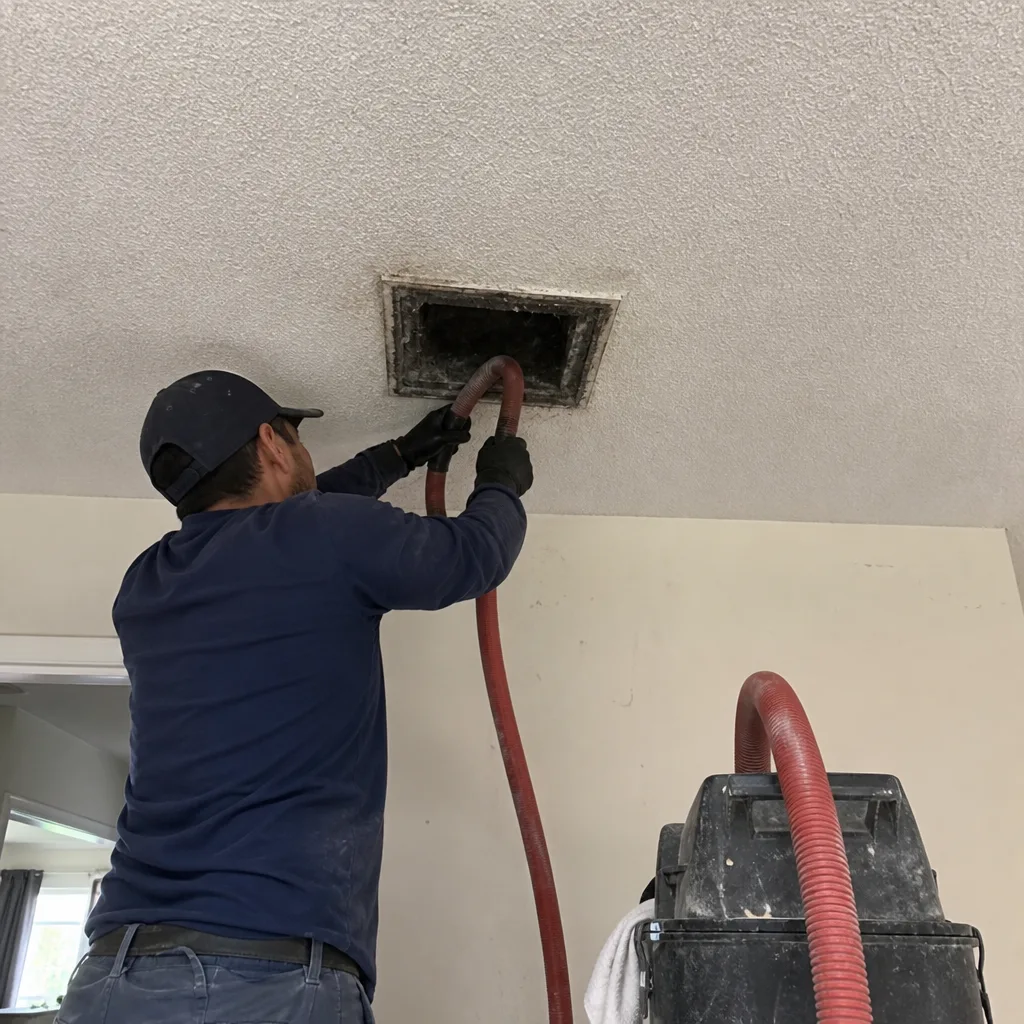
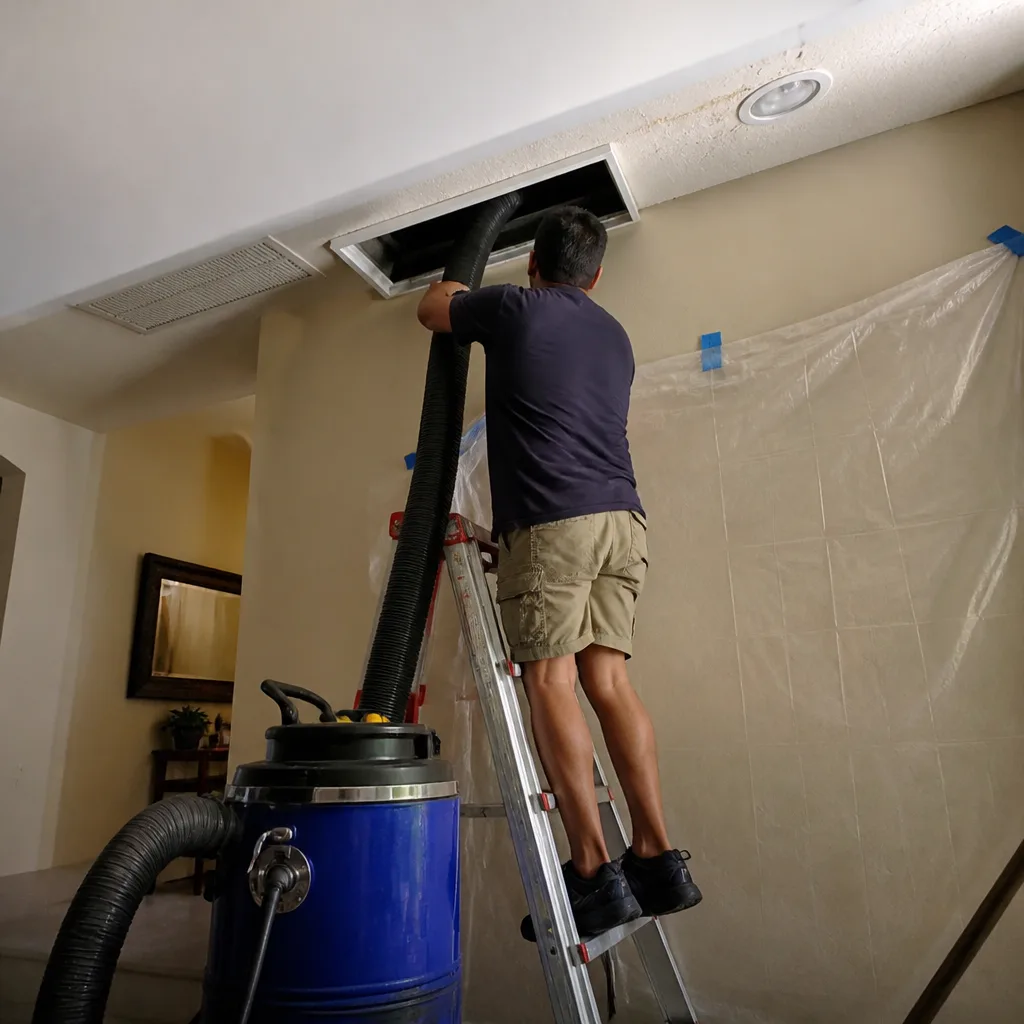
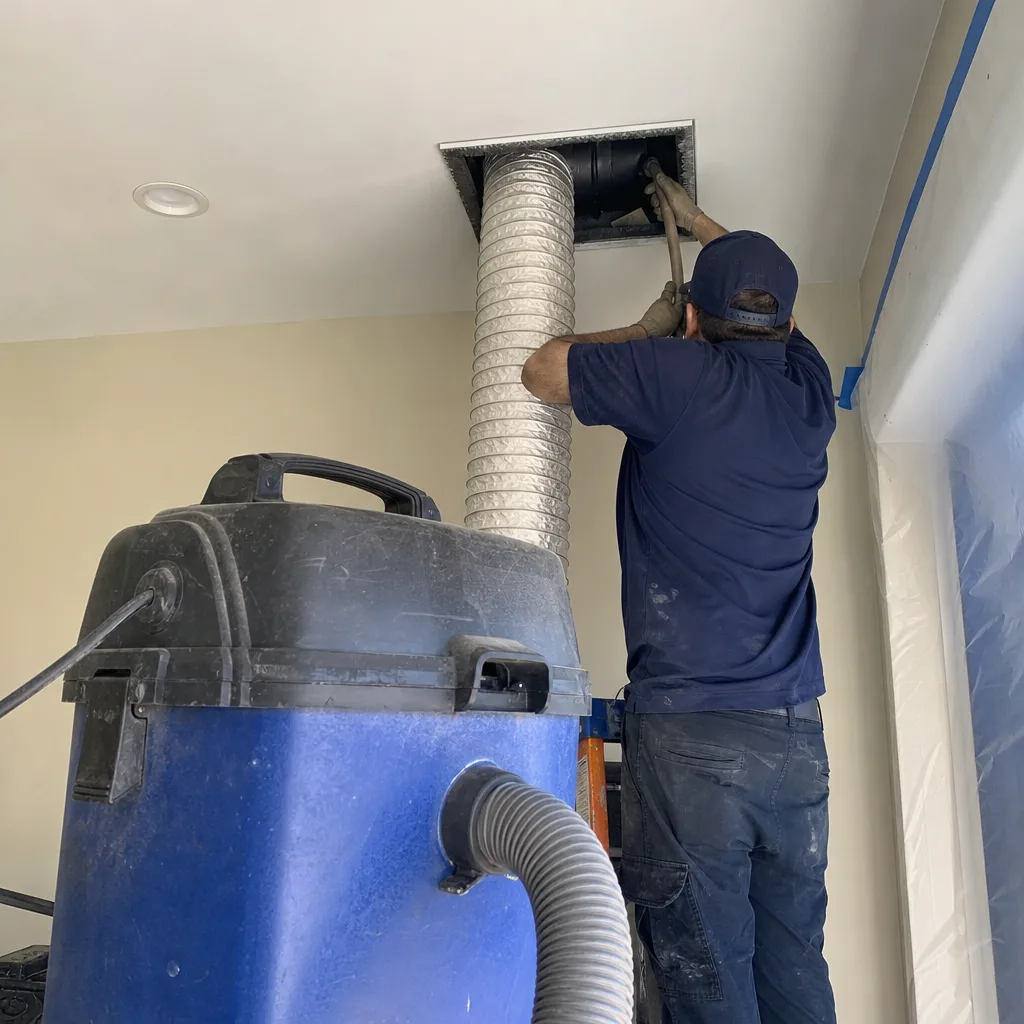
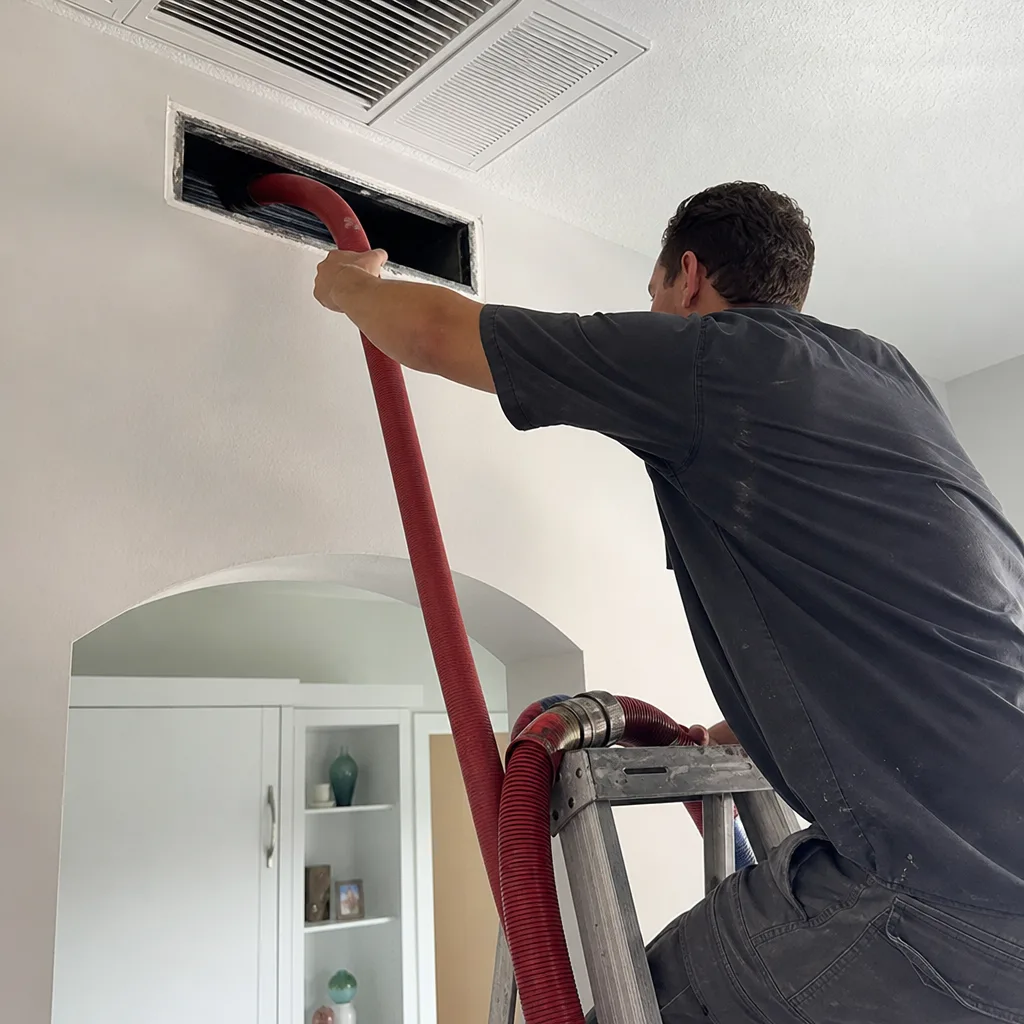
- Negative-pressure duct cleaning using a high-powered vacuum that pulls the entire duct run into negative pressure while agitation tools dislodge debris. This is the industry standard method, and the equipment is HEPA-filtered in professional setups from brands like Rotobrush and Nikro. It’s not something a shop vac can replicate.
- Coil cleaning and air handler service. The evaporator coil sits downstream of the filter and upstream of the supply ducts. If it’s dirty, everything downstream gets dirty faster.
- Duct sealing and repair. Leaks in attic ductwork require professional tools and materials. Duct mastic and proper taping are not homeowner jobs, and getting it wrong makes the problem worse. Air duct repair in West Palm Beach is specialized work, and we include a written guarantee on every repair.
- Mold remediation inside ducts. If biological growth is present, simply vacuuming it out isn’t enough. The affected material needs to be treated or removed, and the underlying moisture problem needs to be addressed or the growth returns.
We’ve said this before to West Palm Beach homeowners and we’ll say it here: attempting to clean your own ducts with a shop vac and a hose isn’t just ineffective, it can make things worse by loosening debris and pushing it further into the system without containing it.
Common Mistakes to Avoid
Most duct problems in West Palm Beach aren’t caused by neglect alone. They’re caused by well-intentioned actions that make things worse, or by deferring attention until the signs are impossible to ignore. Here are the mistakes we see most often.
- Following the national three-to-five-year guideline without adjusting for West Palm Beach runtime. Your system operates twice as many hours per year as a comparable system in the Midwest. The interval should reflect that. Every two to three years is a safer baseline here.
- Buying the cheapest fiberglass filters and changing them quarterly. In West Palm Beach, a one-inch fiberglass filter is essentially a rock catcher. It protects the equipment, not the ducts or the air you breathe. A MERV 8 or higher pleated filter changed monthly during summer makes a real difference.
- Closing registers in unused rooms to save energy. Residential systems in West Palm Beach are sized for the whole house. Closing registers increases static pressure, reduces airflow across the coil, and can cause condensation in the ducts. It often increases energy use rather than reducing it.
- Ignoring a musty smell because it fades after a few minutes. That smell is usually biological growth on the coil or inside the ducts. It doesn’t go away on its own, and waiting means more growth and a more extensive remediation job later.
- Skipping the post-storm duct inspection because the roof didn’t leak. Hurricane-driven rain can enter through vents, soffits, and small roof penetrations that never show up as visible ceiling stains. Ducts are often the first place that moisture accumulates.
- Hiring a duct cleaner based on a low per-vent price. The bait-and-switch in this industry is real: a teaser per-vent price that turns into a much larger invoice once the technician is in the home. Air duct cleaning in West Palm Beach should be quoted as one flat price per system, in writing, before the work starts.
- Using a portable air purifier as a substitute for duct cleaning. Standalone purifiers help with air in one room. They don’t remove the contamination that’s already inside the ducts, and they don’t address whatever is causing the system to spread particles through the whole house.
When to Call a Professional
Some situations warrant a professional inspection rather than another month of watching and waiting. If you notice visible mold growth around registers or on the air handler, a persistent musty odor that returns every time the system runs, dust accumulation on surfaces within days of cleaning, or a sudden unexplained jump in your FPL bill, those are all signals that the ducts need professional attention. The same applies after water intrusion: a roofline leak, a flooded drain pan, or a hurricane-driven moisture event near the air handler warrants a check before the next cooling season. Linden Air Duct West Palm Beach offers free estimates in West Palm Beach, and you’ll get a written price before any work begins. Call (728) 231-8154 if any of these signs sound familiar.
Frequently Asked Questions
Most West Palm Beach homes benefit from professional air duct cleaning every two to three years, rather than the generic three-to-five-year interval. The year-round cooling load, high humidity, and seasonal pollen load mean ducts accumulate contamination faster here than in most of the country. Homes with pets, allergy sufferers, nearby construction, or oceanfront exposure may need annual attention. Call (728) 231-8154 for an honest assessment of your specific situation.
October and November are the best months for duct cleaning in West Palm Beach. The peak cooling season has just ended, so the ducts contain a full summer’s worth of accumulated material, but the humidity has dropped enough that the ducts can be thoroughly dried after cleaning. Scheduling during this window also means the system is clean before the holiday season and snowbird return.
Air duct cleaning in West Palm Beach typically ranges from $400 to $750 for a complete system, depending on the size of the home, the number of systems, and the level of contamination. We quote one flat price per system before any work begins, and that price doesn’t change when the technician arrives.
The low per-vent prices you see advertised are almost always bait to get a technician into the home. Once inside, the pitch shifts to add-ons and upgrades, and the final invoice often exceeds a legitimate whole-system price. A professional duct cleaning in West Palm Beach requires negative-pressure equipment, agitation tools, and a technician who spends two to four hours on the job. Companies advertising prices that don’t cover the labor and equipment are planning to make up the difference another way. Call (728) 231-8154 to hear an honest price range before anyone steps through your door.
Ask for before-and-after photos of your own ducts, not stock images. A professional cleaner using the right equipment can show you the interior surface of the ducts at multiple points, before and after the work. At Linden Air Duct West Palm Beach, we document every job with photos of your system, and we walk you through what was found and what was done before we leave.
For many people, yes. The pollens and molds that trigger symptoms in West Palm Beach are precisely the materials that accumulate in uncleaned ducts, and every time the system runs, it redistributes those particles through the living space. Removing the reservoir of allergens from the ducts reduces the total load the system circulates. It’s not a cure for allergies, but it removes a significant indoor source.
The Bottom Line
West Palm Beach doesn’t have four seasons, and your duct care plan shouldn’t pretend otherwise. The system runs year-round, loads up with contaminants during a long humid summer, and gets its best opportunity for cleaning and repair in October and November. Watch pollen in the spring, humidity and storm moisture in the summer, and utility bills all year. Change filters more often than the national advice suggests. And when it’s time for professional work, get a written whole-system price before the technician arrives. That’s what an honest duct cleaning company in West Palm Beach does, and it’s what you should expect.
Learn more about our services: Linden Air Duct West Palm Beach home, Air Duct Cleaning in West Palm Beach, Dryer Vent Cleaning in West Palm Beach, and Air Duct Repair in West Palm Beach. Call (728) 231-8154 for a free estimate and a written price before any work begins.
Written by Marcus Veale, Owner at Linden Air Duct West Palm Beach, serving West Palm Beach since 2004.
See the difference
 Before
 After
After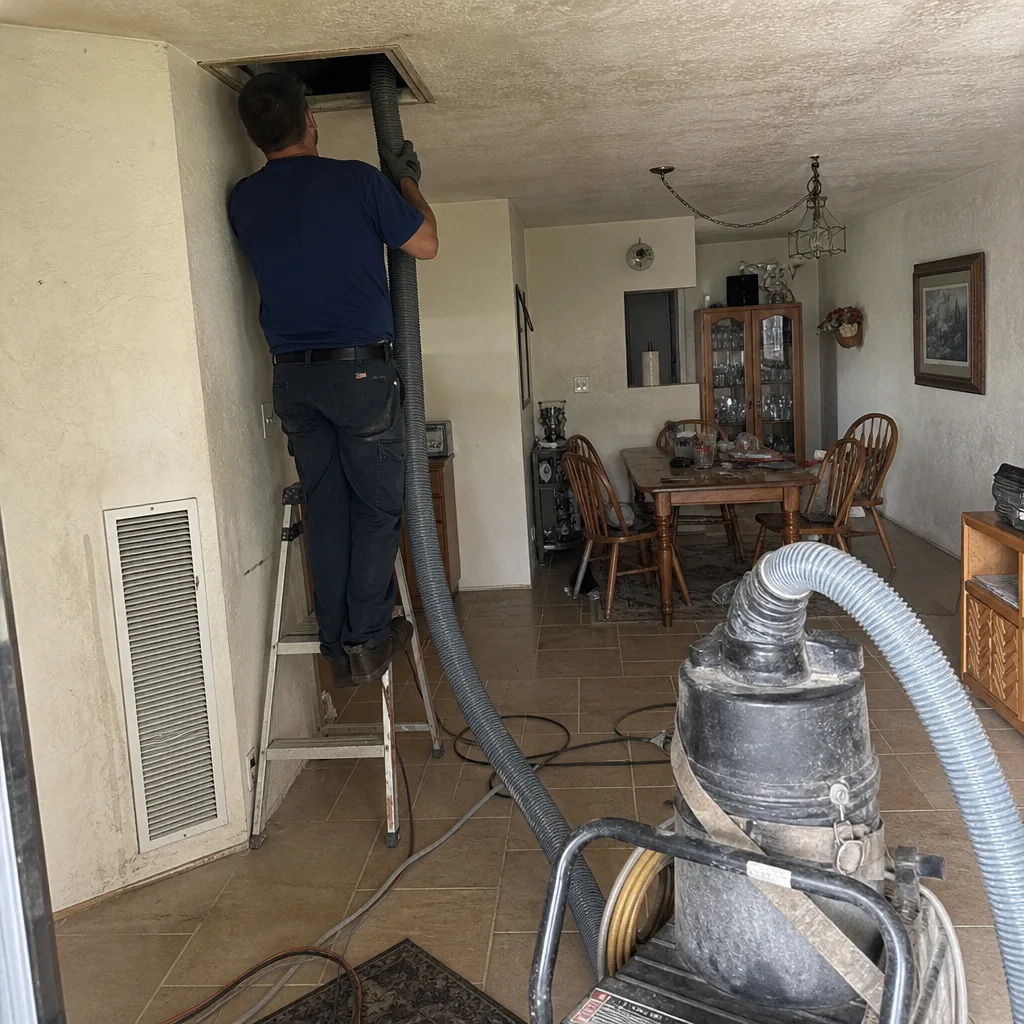 Before
 After
After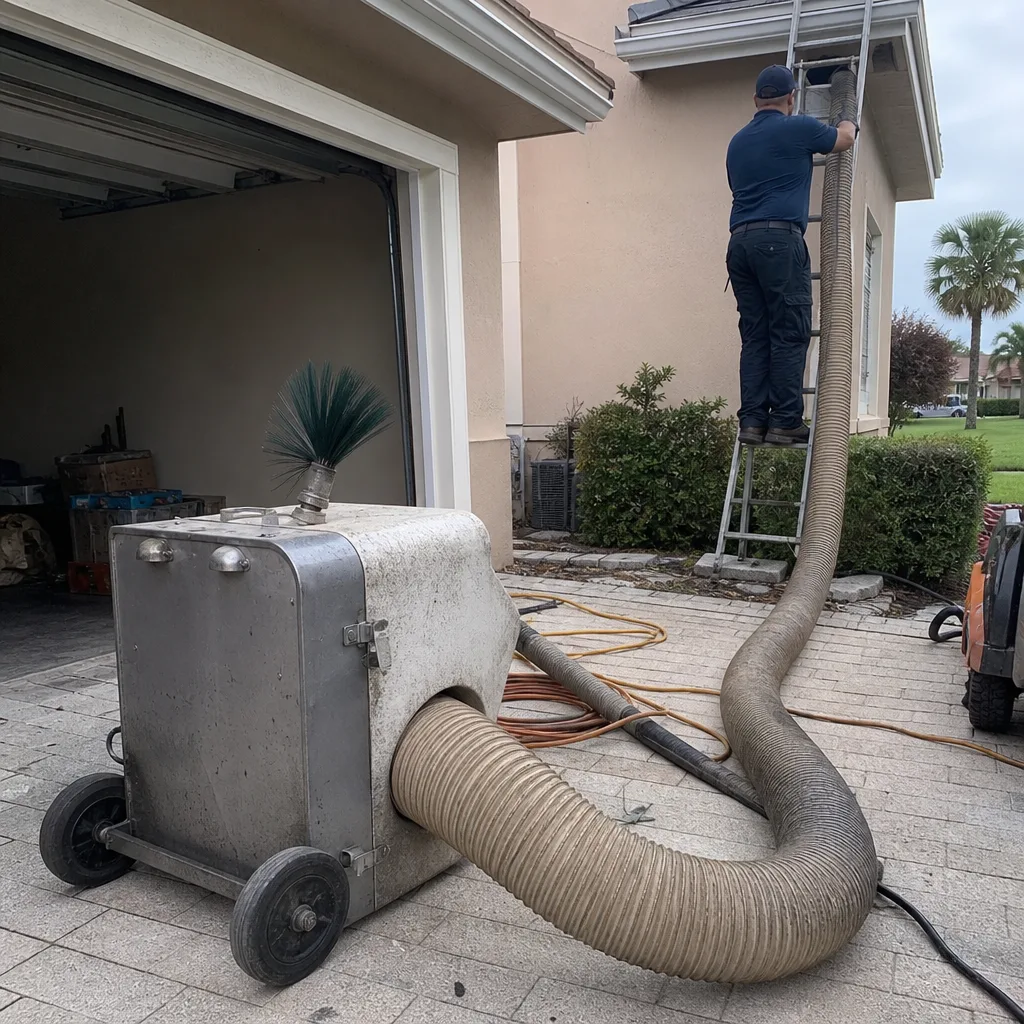 Before
 After
After