
Last updated October 15, 2026
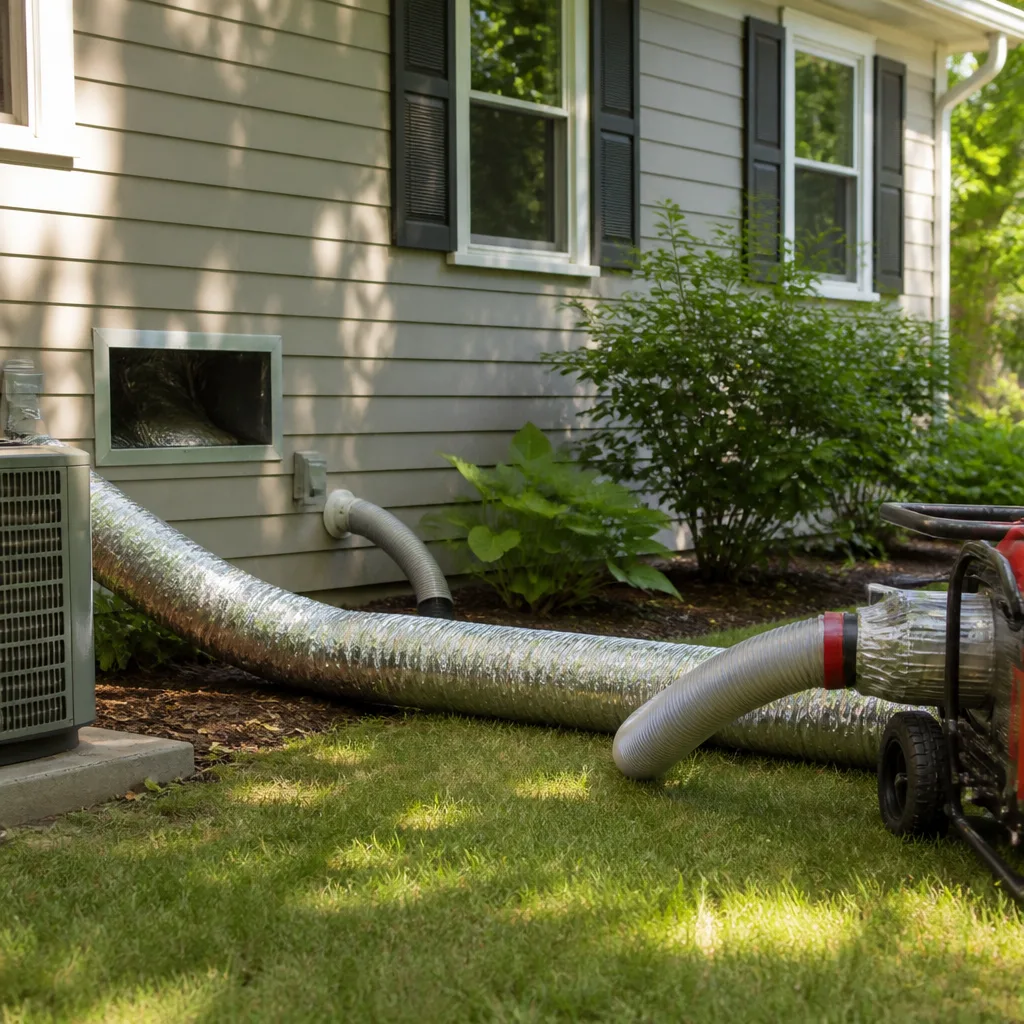 Whole-home duct cleaning
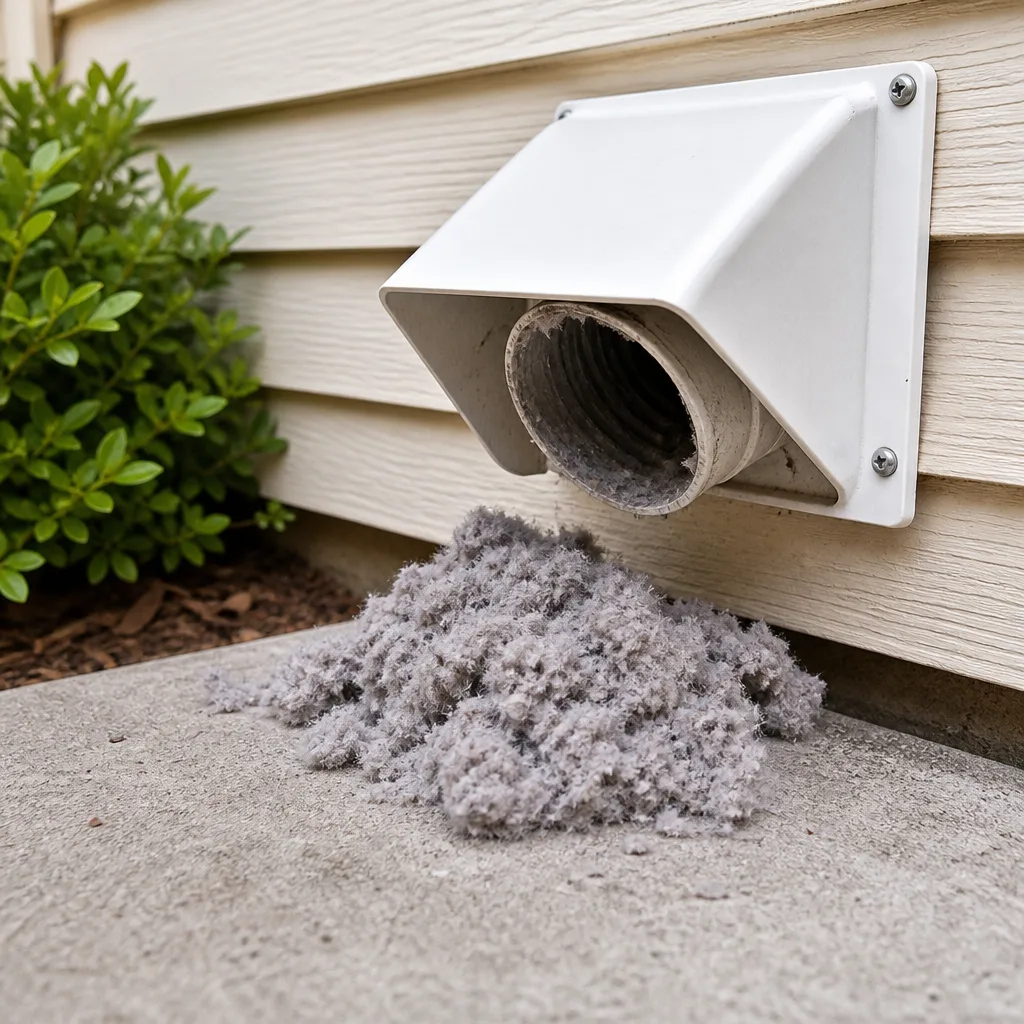 Dryer vent cleaning
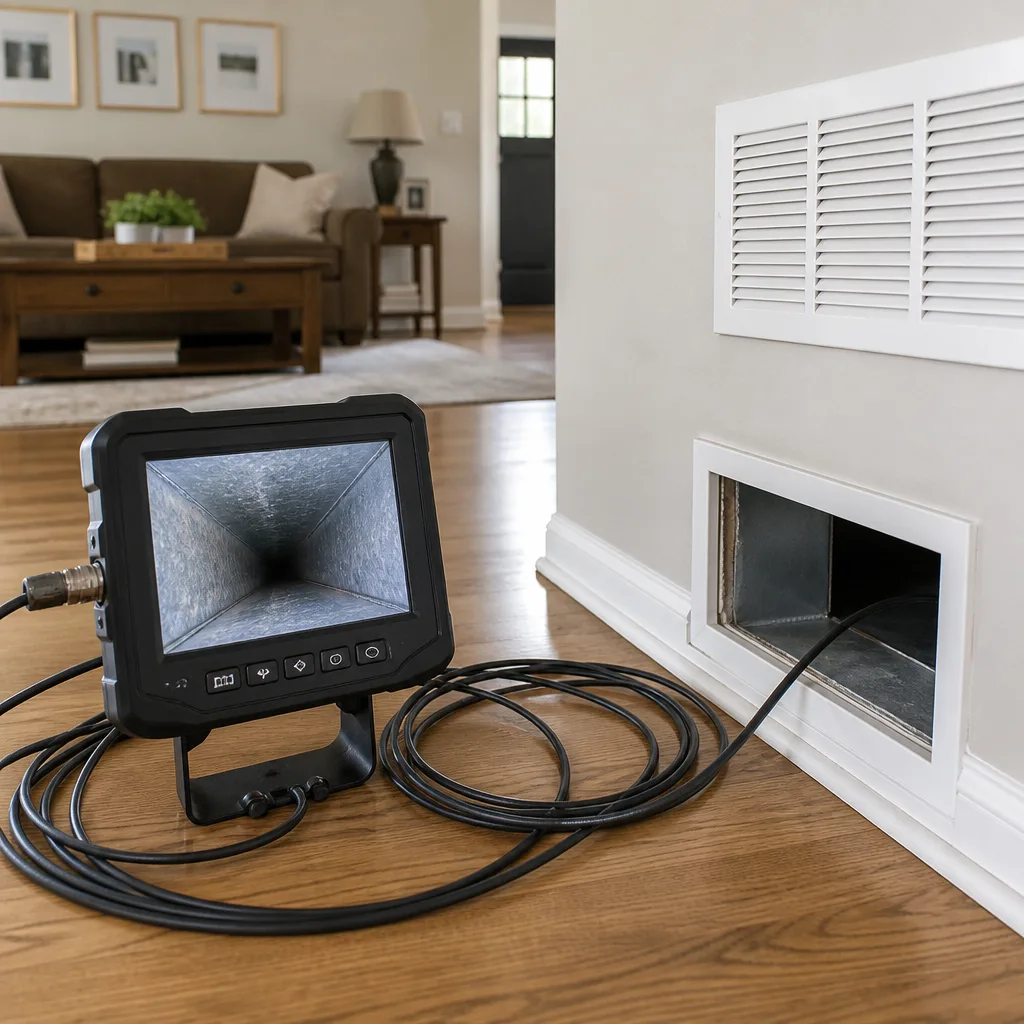 Camera inspection
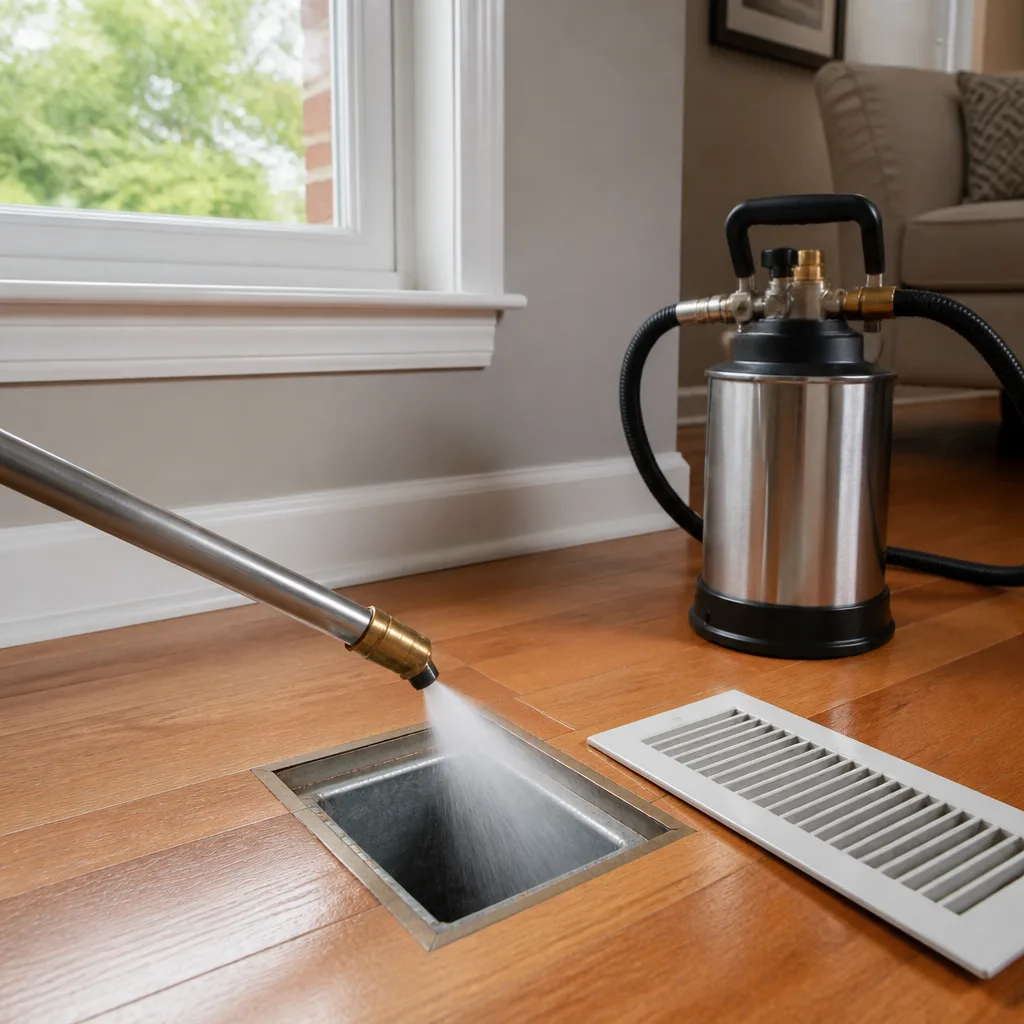 Sanitizing & deodorizing
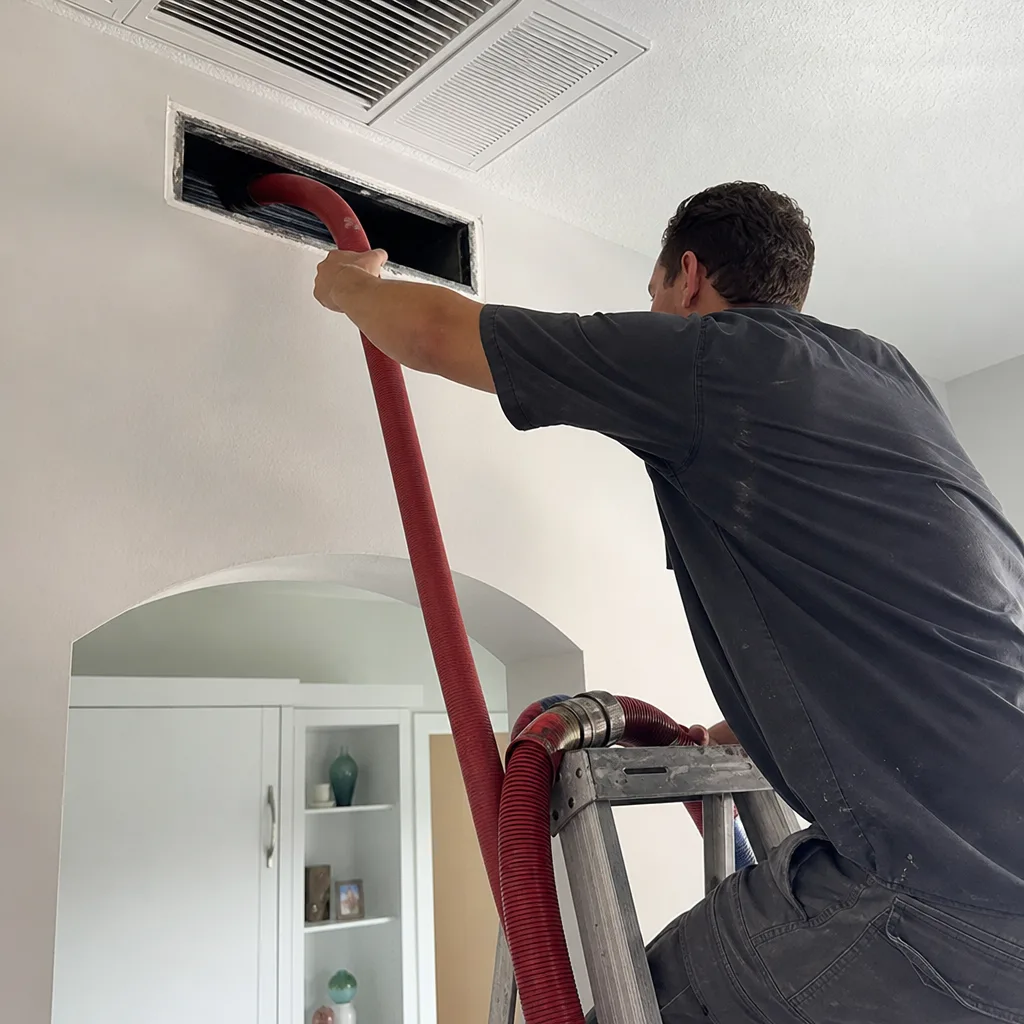
Whole-system duct and dryer vent check with before-and-after photos - you see exactly what came out of your vents
That "$99 whole-house special" is a bait ad - the real number appears once they are in your hallway, or the "clean" is a shop-vac at the register. We photograph the inside of your ducts before and after instead.
Air Duct Cleaning Permits, Codes & Inspections in FL: What You Need to Know
Here’s the counterintuitive truth most homeowners in West Palm Beach don’t hear until something goes wrong: air duct cleaning itself doesn’t require a permit in Florida, but the moment a technician modifies, seals, or replaces any duct component, the regulatory picture changes completely. That line between cleaning and what Florida’s mechanical code calls a “repair or alteration” affects your homeowner’s insurance, your HVAC warranty, and your liability if a system fails later. This guide-along with our The Complete Guide to Air Duct Cleaning in West Palm Beach-walks through exactly where that line sits, how to verify a contractor has followed the rules, and what questions to ask before anyone touches your ductwork. If you’ve been told “no permit needed” and taken it at face value, this is for you.
Styles & brands we work with
Quick Answer
Routine air duct cleaning in Florida does not require a permit because it doesn’t modify the mechanical system. Duct repairs, alterations, or replacements that change the system’s structure or components generally do require a permit under the Florida Building Code’s Mechanical section. The key is knowing which category the proposed work falls into before signing anything.
Table of Contents
- The Florida Building Code: Where Cleaning Ends and Mechanical Work Begins
- Duct Sealing vs. Duct Replacement: How to Tell Which Is Being Proposed
- How to Ask a Contractor Point-Blank About Permits (And Why Some Avoid Answering)
- What Unpermitted Duct Work Does to Your Homeowner’s Insurance Claim
- Palm Beach County’s Enforcement Context: How Local Jurisdictions Handle Duct Permits
- How to Verify a Permit Was Actually Pulled in West Palm Beach
- HVAC Warranty Implications of Unpermitted Duct Modifications
- Common Mistakes to Avoid
The Florida Building Code: Where Cleaning Ends and Mechanical Work Begins
The Florida Building Code (FBC) governs all mechanical work in the state, including air distribution systems. Section 101.4.3 of the FBC Mechanical volume applies to “the installation, alteration, repair, replacement, and maintenance of mechanical systems.” What’s telling is what’s not on that list: cleaning. The code does not treat cleaning as installation, alteration, repair, or replacement. That’s why a straight cleaning job that uses negative-pressure extraction, brush agitation, and sanitization of existing ducts requires no permit anywhere in Florida, including West Palm Beach.
But the FBC gets specific about what does require a permit. Chapter 1, Section 105.1 states that permits are required for any mechanical work “except as exempted” elsewhere. The exemptions are narrow and don’t include anything that changes the duct system’s configuration, materials, or connections. Here’s a practical way to think about it:
- Cleaning: Removing accumulated dust, debris, and contaminants from existing ducts using extraction equipment. No permit. No inspection. No code involvement.
- Sealing: Applying mastic, tape, or aerosol sealants to close gaps in existing ducts. Generally no permit if the duct material stays in place and nothing structural changes.
- Repair: Replacing a section of damaged flex duct, reattaching a disconnected boot, or patching a hole. Permit required in most Florida jurisdictions if the repair involves replacing mechanical components.
- Replacement: Removing and installing new duct runs, plenums, or distribution boxes. Permit required, no ambiguity.
- Alteration: Reconfiguring duct paths, resizing runs, adding new supply or return lines. Permit required, with rare exceptions for very minor changes.
In our experience serving West Palm Beach homeowners with our Air Duct Cleaning services, the confusion almost always comes at the sealing-and-repair boundary. Duct sealing is where contractors often blur the language. We’ll get into that distinction in the next section.
Duct Sealing vs. Duct Replacement: How to Tell Which Is Being Proposed
The most important question you can ask any contractor is: “Will any duct components be removed, replaced, or reconfigured as part of this job?” The answer determines whether a permit is needed. Here’s the practical difference.
Duct sealing typically means closing air leaks in existing ductwork. Methods include brush-on mastic, foil tape over seams, or aerosolized sealant systems like those used with equipment from Rotobrush and similar professional-grade brands. The duct material itself stays in place. No component is removed. The system’s air path is not rerouted. Under the FBC, this is generally classified as maintenance or minor repair, which does not trigger the permit requirement in most Florida jurisdictions, including West Palm Beach.
Duct replacement means pulling out existing duct and installing new material. This changes the mechanical system’s installed condition, and Florida’s code treats it as mechanical work that requires a permit and subsequent inspection. The same applies to replacing a supply plenum, moving a return-air box, or adding a new branch run. Even if the total linear feet of new duct is small, replacement is replacement.
How to tell which is being proposed in plain language:
- Ask: “Will you be removing any existing duct material from my home, or are you sealing what’s already there?”
- If they say sealing only: “Will you be using any new components besides sealant, tape, or encapsulation material?”
- If they say replacing: “Can you show me in writing which sections get replaced and confirm a permit will be pulled?”
- If they hesitate on any of these, get the response in writing before work begins. A verbal “don’t worry about it” is not the same as a written “no permit required,” and in Palm Beach County, that distinction matters.
We’ve seen proposals in West Palm Beach where “sealing” included replacing three flex-duct runs and re-taping two boots. That’s replacement, not sealing, and it should have been permitted. The homeowner only learned this-after missing the Air Duct Cleaning Warning Signs: A West Palm Beach Homeowner’s Reference Guide-when their AC failed a year later and the insurance adjuster started asking questions.
If you’re planning any duct work, understand the scope before signing. Our Air Duct Repair in West Palm Beach page walks through common repair scopes and what to expect cost-wise and paperwork-wise. And for an overview of what maintenance should include, see Air Duct Cleaning in West Palm Beach.
How to Ask a Contractor Point-Blank About Permits (And Why Some Avoid Answering)
Here’s a sentence we hear from homeowners regularly: “I asked if I needed a permit and they didn’t really answer.” That’s not an accident. Contractors who operate without permits benefit from keeping the conversation vague. A direct answer creates a paper trail. Vague language leaves room to claim later that the scope was misunderstood.
The fix is to make the permit question impossible to dodge. Ask these questions in this order, and get answers in writing:
- “Is any part of this job a repair, replacement, or alteration under the Florida Building Code?” This uses the code’s exact language. It’s hard to dismiss as a layperson’s misunderstanding.
- “If a permit is required, will you pull it in your name before work begins?” In most Florida jurisdictions, the contractor is responsible for obtaining mechanical permits. If they say they’ll help you pull it as the homeowner, that’s sometimes legitimate for DIY work, but for a hired contractor it’s a warning sign.
- “Will the completed work be inspected by the local building department?” If a permit is pulled, inspection follows. If there’s no permit, there’s no inspection. A contractor who says “inspections aren’t needed for this” is telling you they don’t intend to permit the work.
- “Can you put in writing that no permit is required for the specific scope you’re proposing?” This is the one that separates careful contractors from comfortable corners-cutters. A legitimate contractor will explain, in writing, which code section exempts the work. Someone who refuses to put it in writing is signaling something.
Why do some avoid the answer? Because unpermitted mechanical work is faster, cheaper, and avoids inspection fees that eat into profit margins. In West Palm Beach, where many homes date from the 1970s through 1990s, aging duct systems often need more than cleaning. A contractor who quietly does unpermitted replacement work under the umbrella of “cleaning plus sealing” can undercut a compliant competitor’s quote by hundreds of dollars. The homeowner doesn’t discover the difference until the system fails and someone asks to see the permit.
What Unpermitted Duct Work Does to Your Homeowner’s Insurance Claim
This is the section most guides skip, and it’s the one with the highest financial stakes for West Palm Beach homeowners. When you file a homeowner’s insurance claim related to your HVAC system or ductwork, the adjuster’s job is to determine cause, scope, and whether any non-covered act contributed to the loss. Unpermitted mechanical work is a gift to an adjuster looking for a reason to limit a payout.
Here’s the mechanics of what typically happens if unpermitted duct modifications are discovered after a failure:
- Coverage denial for the modified component. Most Florida homeowner’s policies include language that excludes coverage for damages resulting from work that violated building codes or was performed without required permits. If a fire, water leak, or mold outbreak traces back to unpermitted duct work, that portion of the claim can be denied outright.
- Reduced settlement for related damage. Even if the entire claim isn’t denied, the adjuster may apply “betterment” deductions or exclude the unpermitted modification’s scope from the estimate.
- Premium increases or nonrenewal. Insurers don’t need to prove the unpermitted work caused a loss to decide you’re a higher-risk policyholder. In Florida’s tightening insurance market, a discovered code violation on your property can lead to nonrenewal.
- Subrogation complications. If your insurance pays a claim and then pursues the contractor who did the unpermitted work, the process gets messy. The contractor may argue the scope didn’t require a permit. Your insurer may argue you failed to verify. You’re in the middle.
The preventive step is simple: before any work begins, know whether a permit applies and, if one does, confirm it was pulled. In West Palm Beach, you can check permit status directly with the city’s building department. We cover verification steps further down in this guide.
Palm Beach County’s Enforcement Context: How Local Jurisdictions Handle Duct Permits
Florida’s building code is state-level, but enforcement is local. West Palm Beach operates its own building division and enforces the FBC through its permit and inspection process. Palm Beach County’s unincorporated areas follow county-level enforcement. This creates a patchwork where the same duct replacement might require a permit through one jurisdiction’s mechanical trade review and be handled slightly differently in another.
In practice, here’s what we’ve observed serving West Palm Beach and surrounding Palm Beach County neighborhoods:
- Mechanical permits for duct replacement are pulled through the city or county building division, and an inspection is typically required before final sign-off.
- Inspectors in this region pay close attention to duct connections, support spacing, insulation on replacement runs in unconditioned spaces, and whether the new duct was sized to match the existing system rather than whatever was cheapest on the truck.
- Attic-installed ductwork gets additional scrutiny in South Florida because of heat and humidity. Poorly insulated or poorly supported flex duct in a hot attic is a common inspection failure point in West Palm Beach and throughout Palm Beach County.
- Some minor resealing work performed as part of a cleaning or maintenance job does not require inspection because it doesn’t constitute “mechanical alteration” under the code. The moment new duct material enters the picture, enforcement expectations change.
The practical takeaway: don’t assume a contractor’s claim of “no permit needed” matches West Palm Beach’s actual enforcement practices. When in doubt, call the city’s building division and describe the scope. The staff will tell you whether a permit applies. It’s a ten-minute phone call that can save you from an adjuster’s scrutiny later.
How to Verify a Permit Was Actually Pulled in West Palm Beach
If your contractor says a permit was pulled, verify it. If your contractor says no permit is needed, double-check. Either way, you want independent confirmation. Here’s the step-by-step for West Palm Beach homeowners:
- Ask for the permit number. A legitimate contractor can produce it immediately. A permit number links to a public record in the city’s system.
- Search the city’s online permit portal. West Palm Beach maintains an online system where you can look up permits by address. If you can’t find the permit your contractor claimed to have pulled, that’s a red flag.
- Call the building division directly. The phone staff can confirm whether a mechanical permit exists for your address and what scope it covers. You’ll want the permit to match the actual work: if your contractor pulled an “HVAC maintenance” permit but replaced six duct runs, the scope doesn’t match.
- Confirm inspection status before final payment. If the job required a permit, it requires an inspection. Don’t pay the final invoice until the inspection has passed and you’ve seen the result in the permit record. In West Palm Beach, a finaled inspection is your proof that the work met code.
- Keep documentation. Permit number, inspection date, inspector’s notes if available. This paperwork is part of your home’s record and matters if you sell, refinance, or file an insurance claim.
For cleaning-only work that required no permit, you should still receive documentation of what was done. That’s standard practice from any professional air duct company. For Air Duct Cleaning in West Palm Beach, a detailed work report is part of what you’re paying for.
HVAC Warranty Implications of Unpermitted Duct Modifications
Your HVAC manufacturer’s warranty is a separate set of fine print from your homeowner’s insurance, and it’s just as vulnerable to unpermitted work. Most equipment manufacturers, including the major brands installed across West Palm Beach homes, condition their warranty coverage on proper installation and modification practices. Ductwork is part of the system.
If an unpermitted duct modification contributes to a compressor failure, blower motor burnout, or coil freeze, the manufacturer can deny the warranty claim. The logic is straightforward: the system failed in part because the air distribution was modified outside code requirements. The permit and inspection process exists, in part, to protect the manufacturer from covering failures caused by improper installation.
Here’s what to know:
- Warranty claims for major HVAC components often require documentation of permitted installation and modifications. If you can’t produce it, the claim stalls.
- Manufacturers specifically call out improper duct sizing and configuration as a basis for warranty denial. Unpermitted duct alterations that change airflow characteristics are a known contributor to early system failures.
- In homes where the HVAC is less than ten years old, the warranty is a significant financial asset. Losing it over an unpermitted duct job is an expensive unforced error.
- Some extended home warranties have similar exclusions for unpermitted modifications.
The bottom line for West Palm Beach homeowners: the cheapest quote on duct work can cost you a compressor replacement later if the unpermitted modification voids your equipment warranty. The permit fee is never the most expensive line item.
Common Mistakes to Avoid
- Assuming all duct work is exempt because cleaning is. Cleaning is exempt. Replacement and alterations are not. Treating them as the same category is the most common mistake we see in West Palm Beach, and it’s the one that leads to insurance and warranty problems.
- Letting a contractor define the scope with vague language. “We’ll tighten everything up and seal the system” could mean mastic on leaks or full replacement of failing flex duct. One needs no permit. The other does. Get the scope in writing, in plain language.
- Paying full invoice before confirming the permit and inspection status. If a mechanical permit was required, the job isn’t done until it’s inspected and finaled. Don’t release the final payment early.
- Not asking who pulls the permit. In Palm Beach County, the contractor should pull the mechanical permit. A contractor who asks you to pull it as a homeowner on a job they’re completing is working outside normal practice.
- Filing a claim before checking permit status. If your system fails and you suspect unpermitted work, know what you’re dealing with before calling your insurer. The claims process starts a record; a permit gap on that record can reshape the outcome.
- Skipping the permit check because the contractor “seems trustworthy.” The most careful technician recommendations we’ve seen in West Palm Beach still got verified through the city portal. Verification is not distrust; it’s due diligence.
- Treating duct cleaning and duct repair as interchangeable service categories. They have different regulatory footprints. If your cleaning quote includes “sealing and repair of minor leaks,” ask whether that crosses into permit territory. In some scopes, it does.
When to Call a Professional
Call a professional when the scope is unclear. If you can’t tell whether a proposed job is cleaning, sealing, repair, or replacement, that’s a sign the contractor hasn’t defined the work clearly enough. A legitimate company will give you a written scope, tell you whether a permit applies, and answer the permit question directly without dodging. Call if you’re dealing with a failed inspection, a denied insurance claim involving duct work, or a system replacement where the ductwork also needs upgrading. These are the situations where the permit record matters most, and where a second opinion pays for itself.
Linden Air Duct West Palm Beach offers free estimates in West Palm Beach for Dryer Vent Cleaning in West Palm Beach, air duct cleaning, and repair work. We’ll tell you plainly whether a permit applies to your scope and put the answer in writing. Call (728) 231-8154.
Frequently Asked Questions
No. Routine air duct cleaning using negative-pressure extraction and brush agitation on existing ducts doesn’t require a permit anywhere in Florida, including West Palm Beach. The code treats cleaning as maintenance, not mechanical alteration.
Generally, duct sealing alone, where no duct material is removed or replaced, does not require a permit in Palm Beach County. The key distinction is that the existing duct stays in place. If sealing includes replacing damaged sections, a permit may apply.
Mechanical permit fees in West Palm Beach vary based on the project’s valuation and the scope of work. Contact the city’s building division for current fee schedules. The cost is modest compared to the insurance and warranty risk of skipping it.
Ask for the permit number, then search West Palm Beach’s online permit portal by your address. You can also call the city’s building division and confirm by phone. Verify the scope matches the work actually performed.
Disclosure requirements in Florida mean you must answer truthfully if asked about unpermitted work. More practically, a buyer’s inspection can uncover unpermitted duct modifications and use them to renegotiate the sale price or ask for remediation before closing.
Proper cleaning by a professional company should not void a warranty. However, if a cleaning job includes unpermitted modifications or improper sealing materials, the manufacturer may later deny a component claim tied to the altered section of the system.
Air duct cleaning in Florida is not a state-licensed trade in the same way HVAC contracting is. That means homeowners should verify a company’s insurance, background-check policies, and the written scope of work before anyone enters the home. The permit rules apply to the repair and replacement work, not the cleaning itself.
The Bottom Line
Air duct cleaning in Florida sits on the maintenance side of a bright regulatory line. Mechanical repairs, replacements, and alterations sit on the other side, and crossing that line without a permit carries insurance, warranty, and disclosure consequences most West Palm Beach homeowners never see coming. The defense is simple: get the scope in writing, get the permit question answered in writing, and verify independently. If a contractor won’t put the answer in writing, choose a different contractor. If you need clarity on any duct work in West Palm Beach, explore more guides & resources or call Linden Air Duct West Palm Beach at (728) 231-8154. We’ll tell you what category your job falls into and whether a permit applies. No vague language, no dodge. That’s how it should work.
Linden Air Duct West Palm Beach home has been serving the area since 2004 with a standard built around verified technicians, written pricing before work begins, and answers you can hold us to.
Written by Marcus Veale, Owner at Linden Air Duct West Palm Beach, serving West Palm Beach since 2004.
See the difference
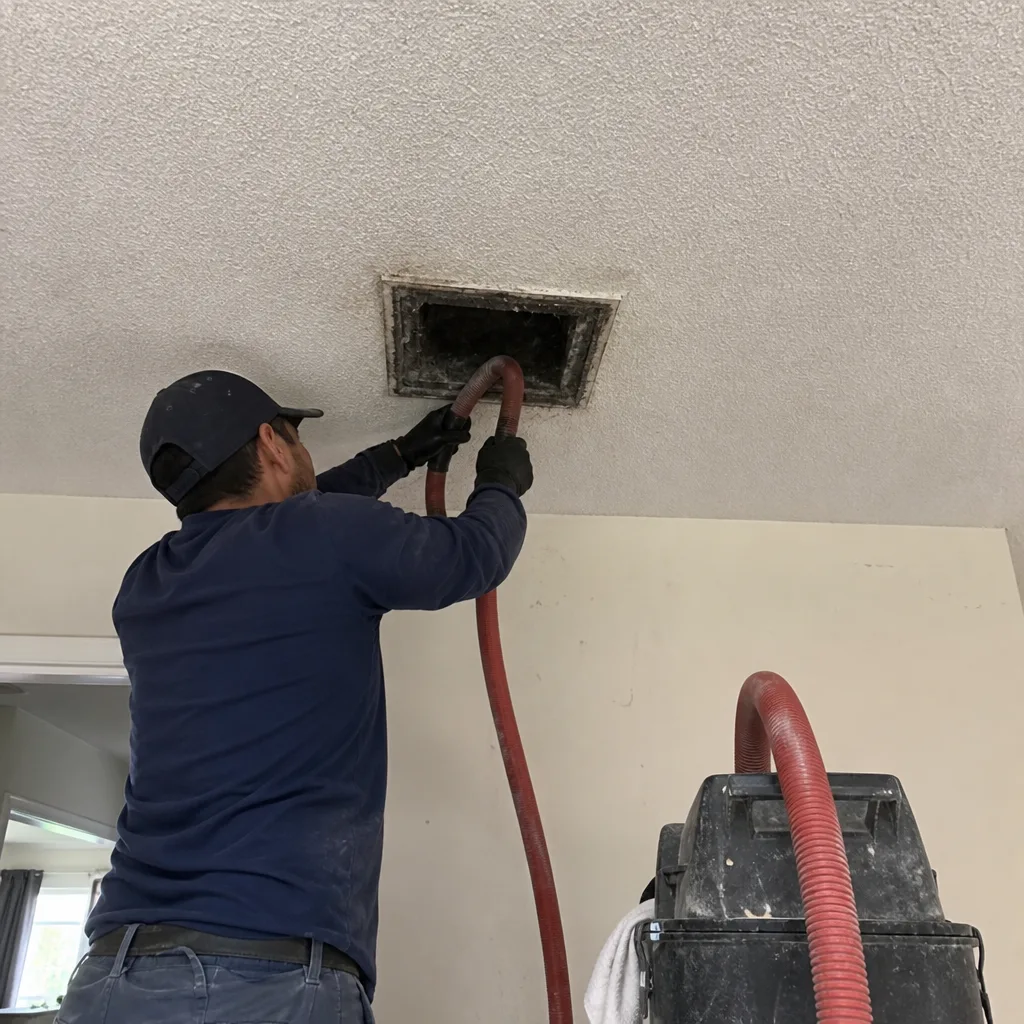 Before
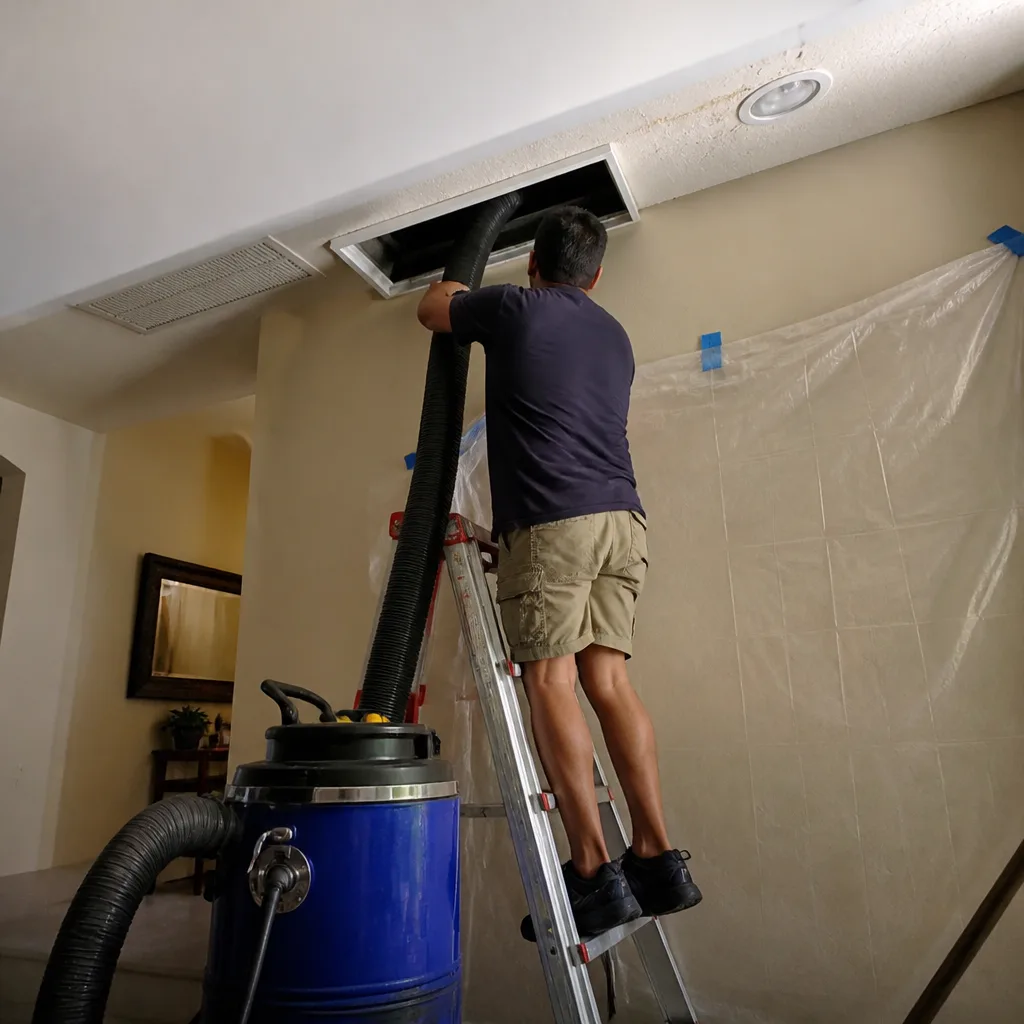 After
After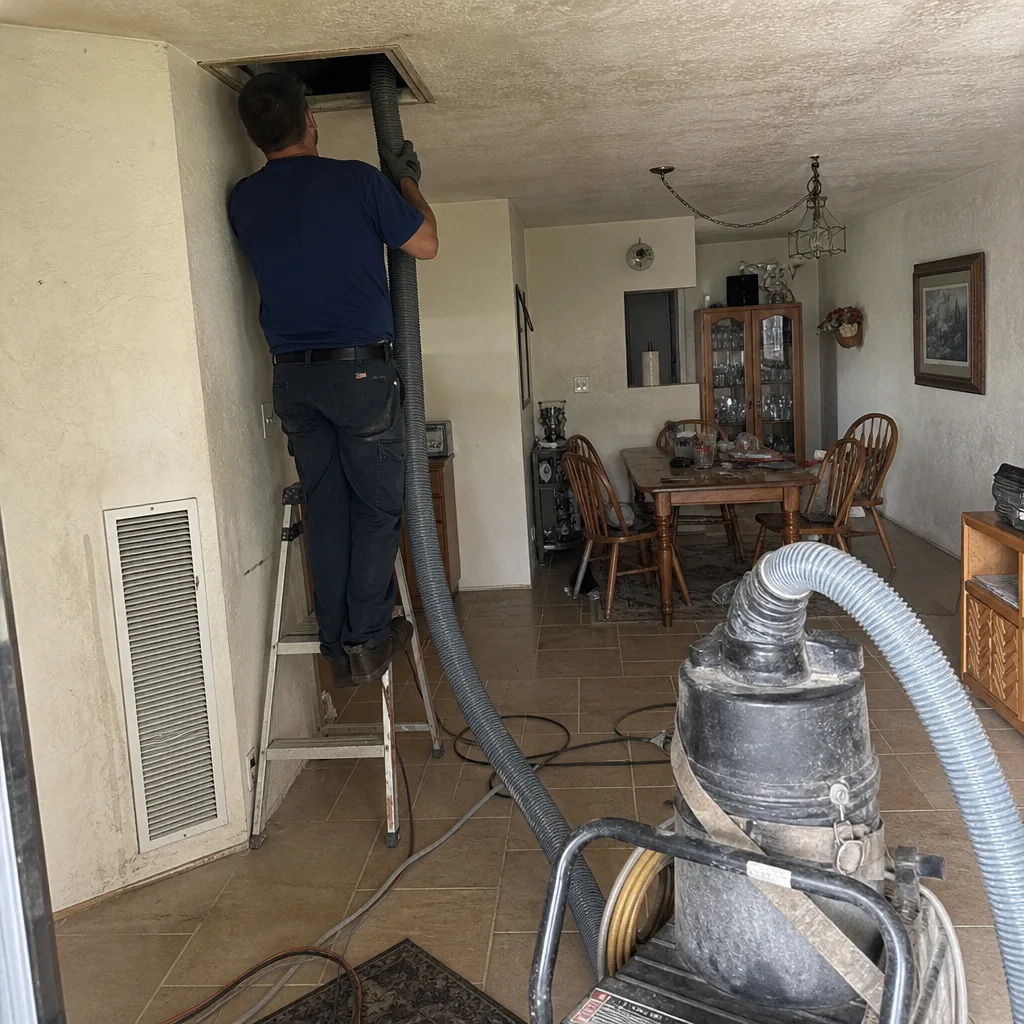 Before
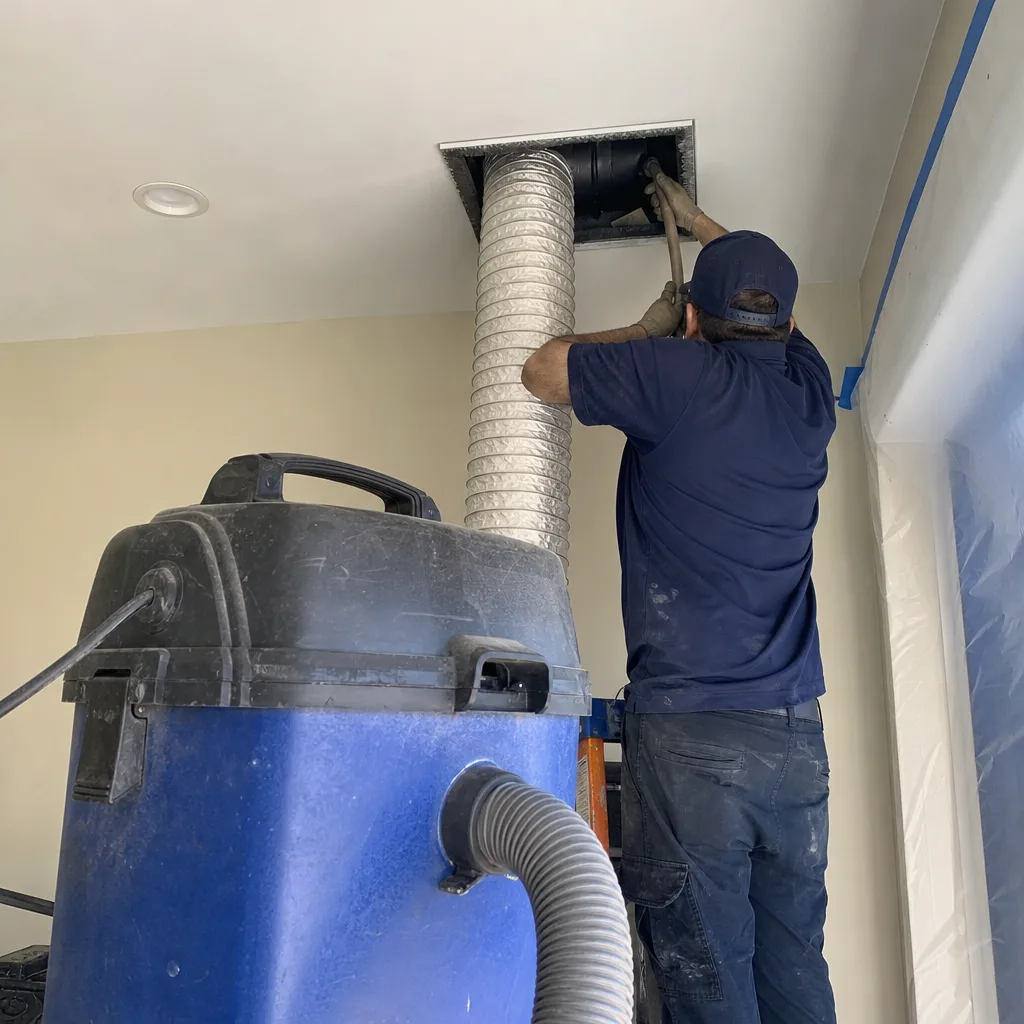 After
After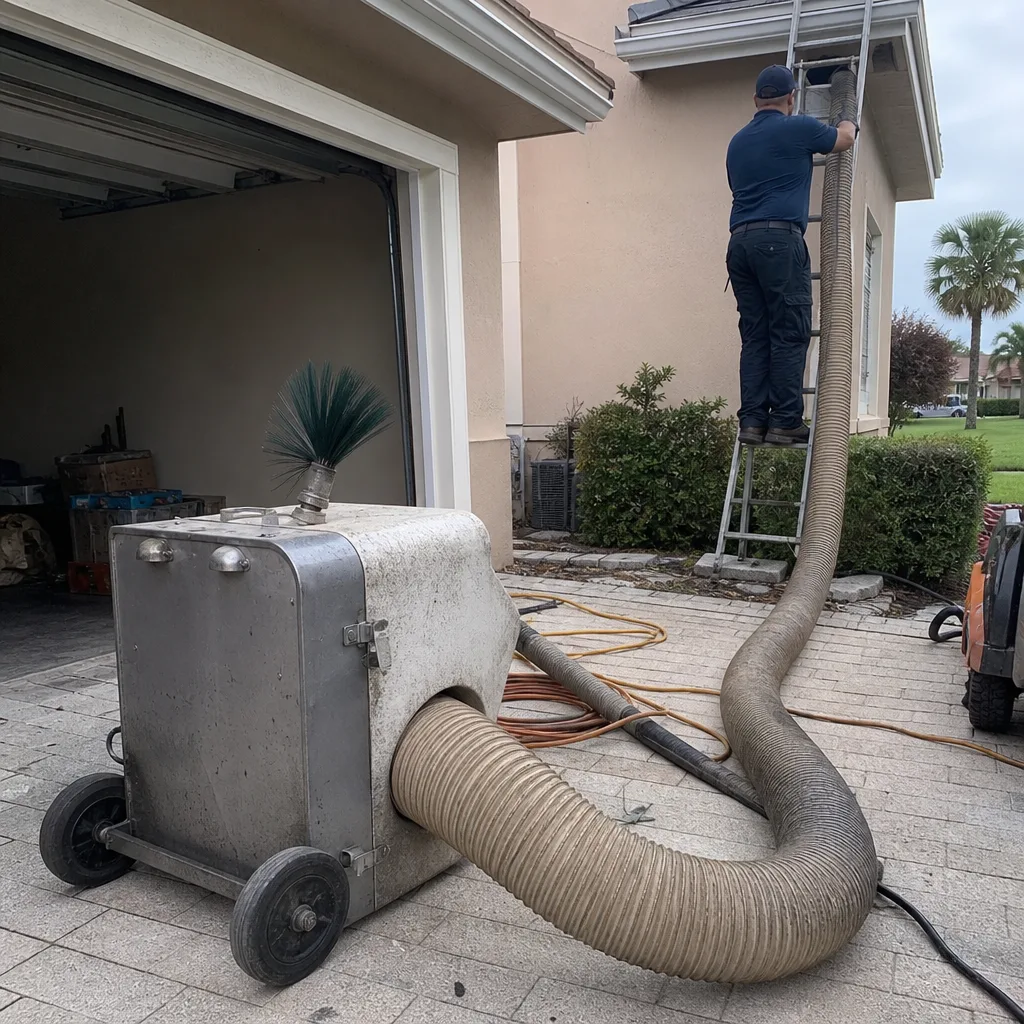 Before
 After
After