
Last updated October 15, 2026
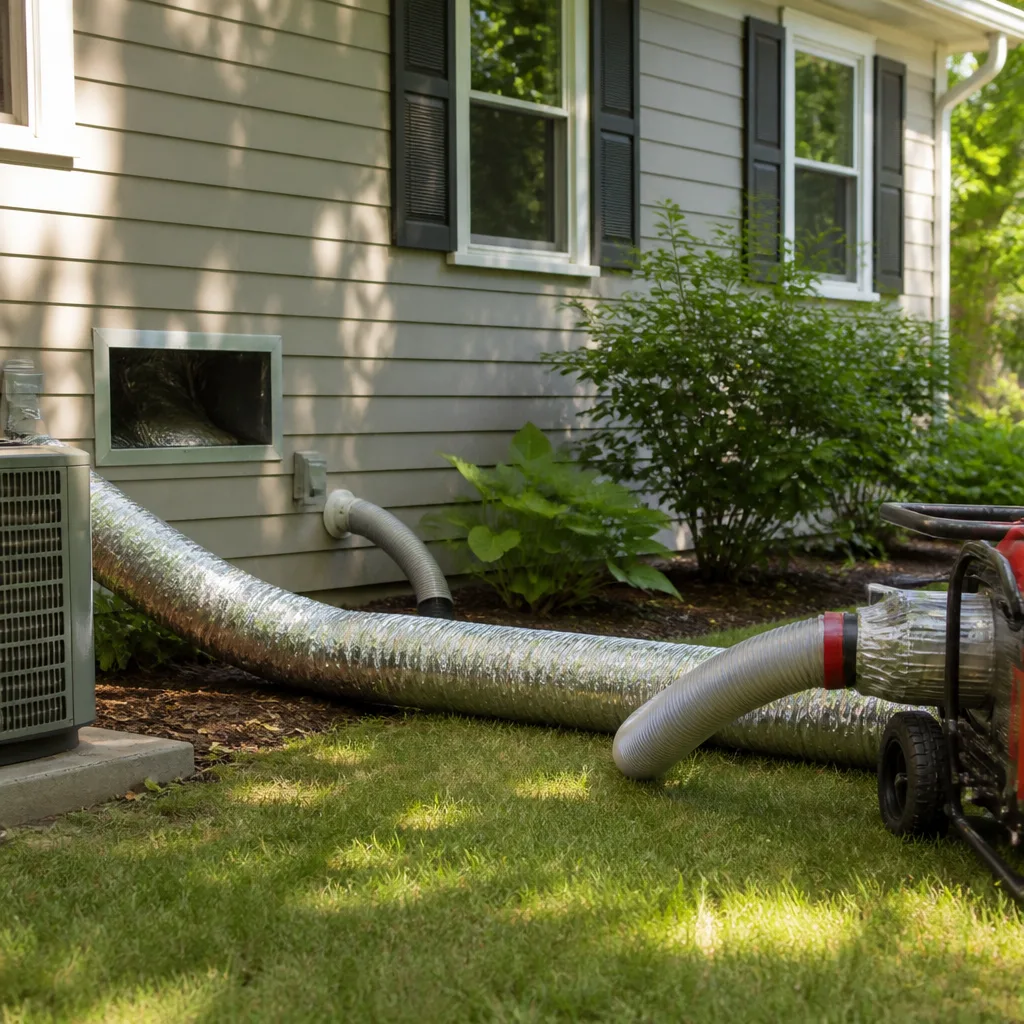 Whole-home duct cleaning
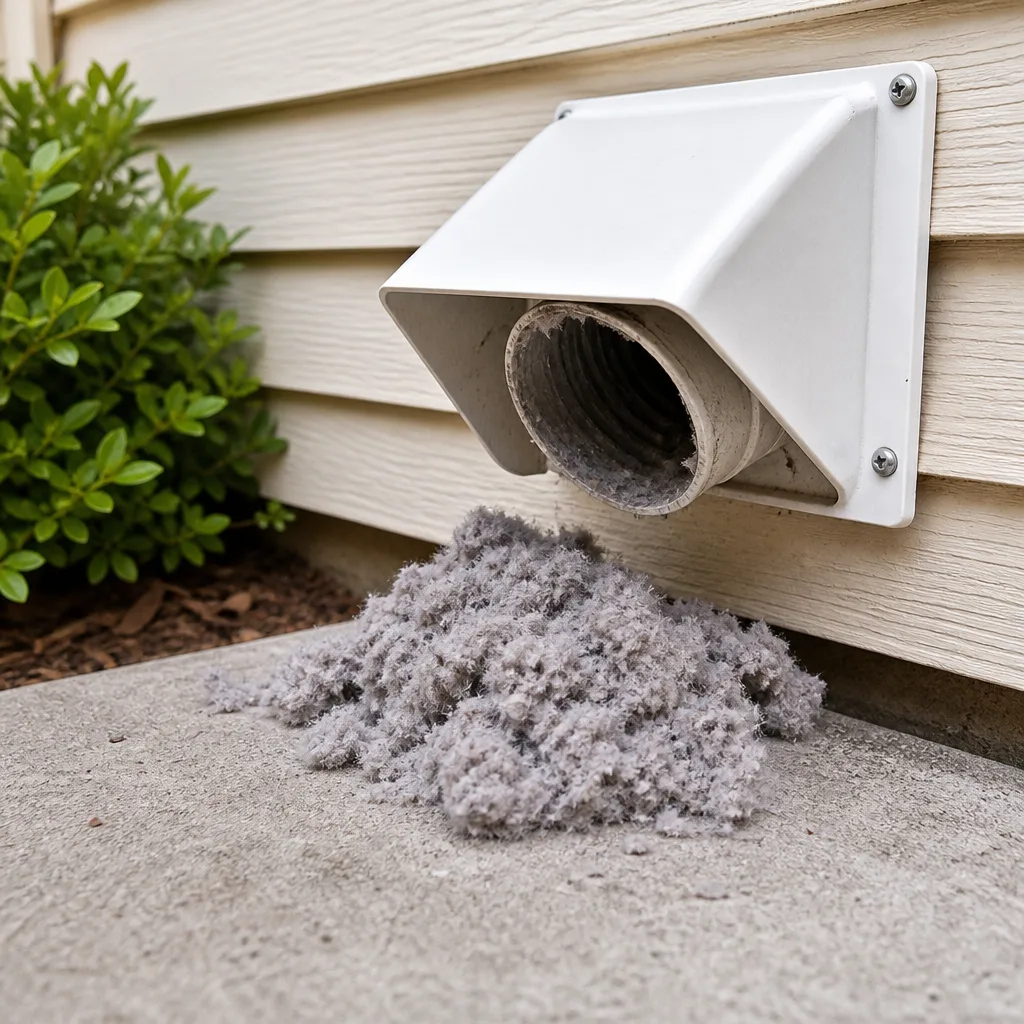 Dryer vent cleaning
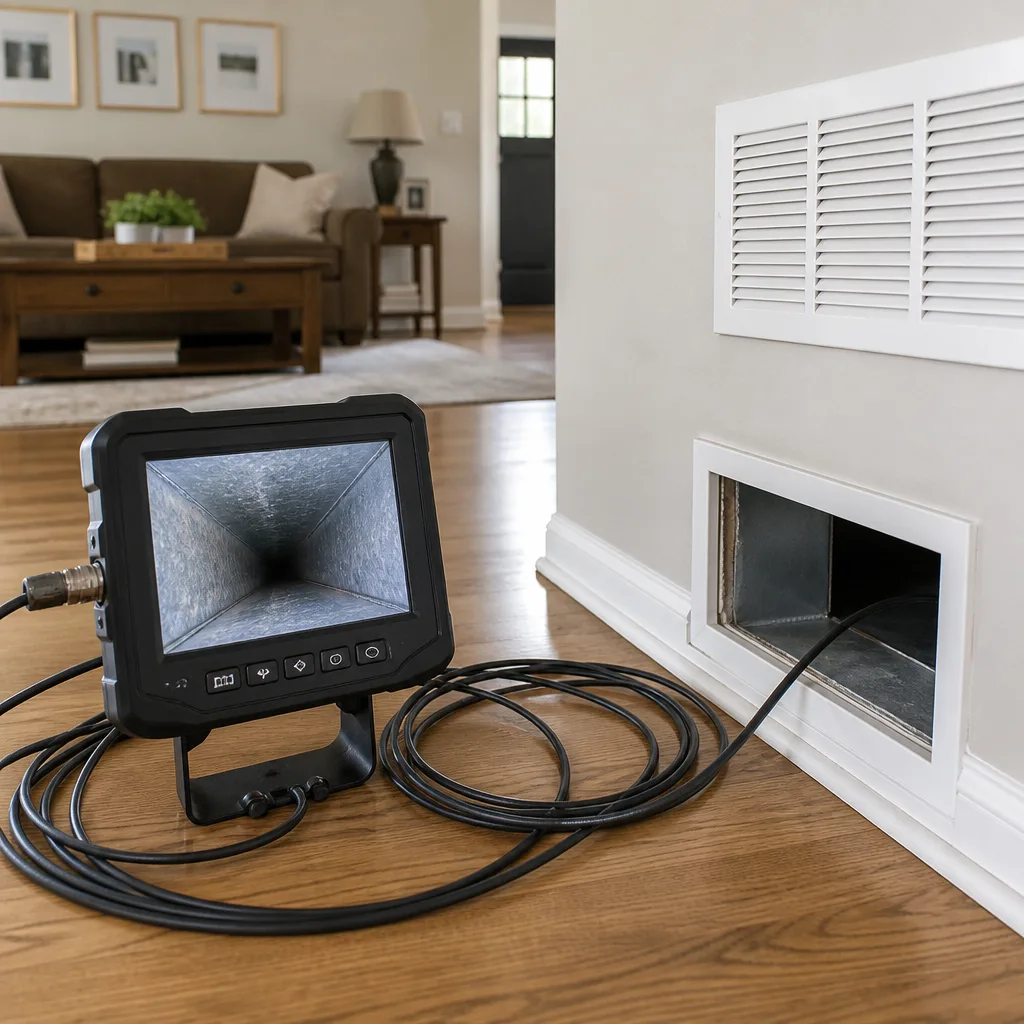 Camera inspection
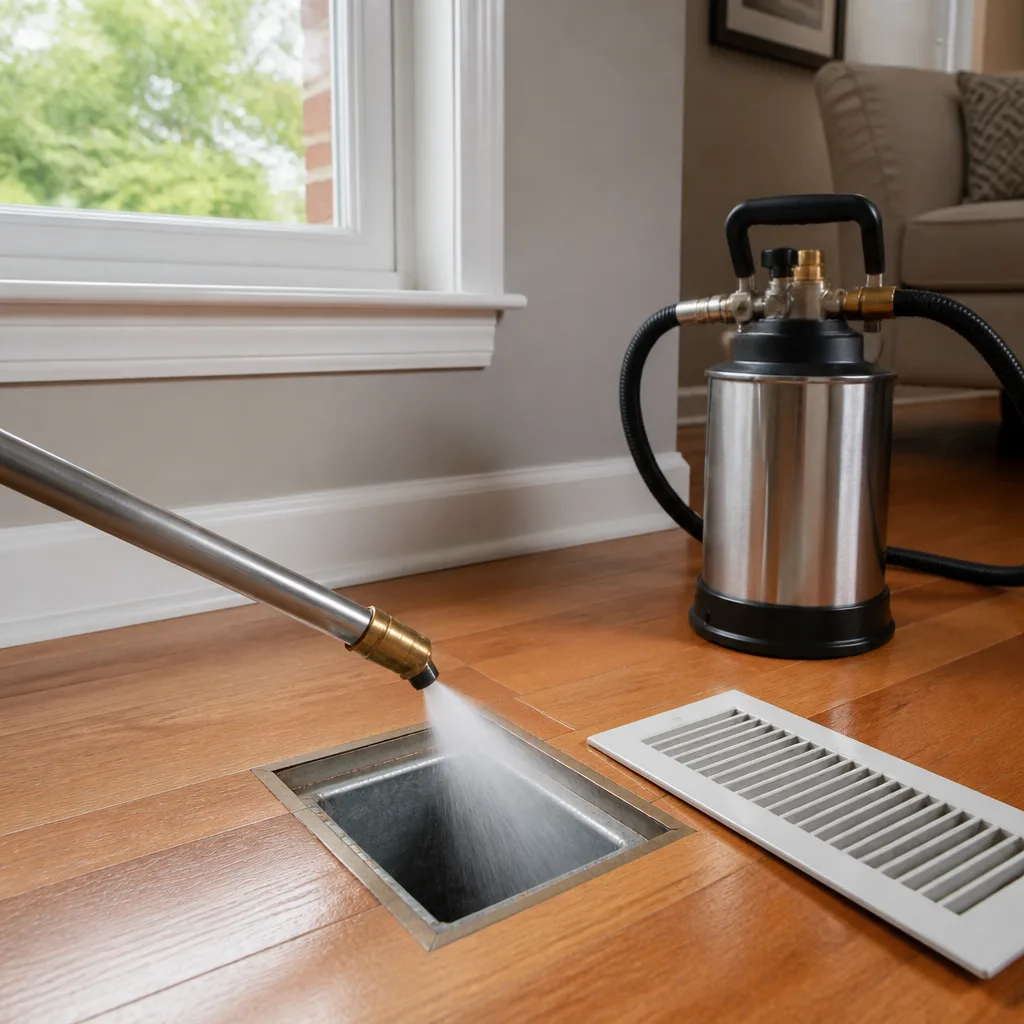 Sanitizing & deodorizing
Whole-system duct and dryer vent check with before-and-after photos - you see exactly what came out of your vents
That "$99 whole-house special" is a bait ad - the real number appears once they are in your hallway, or the "clean" is a shop-vac at the register. We photograph the inside of your ducts before and after instead.
Air Duct Cleaning Cost Breakdown: The West Palm Beach Homeowner’s Reference for 2026
A $99 duct cleaning and a $499 duct cleaning are rarely competing for the same job. They’re often describing completely different scopes of work using the same words, and the homeowner has no way to know that until the technician is already inside. This guide exists to close that gap. By the time you finish reading, you’ll know exactly which line items belong in a legitimate Air Duct Cleaning estimate, which add-ons are worth paying for, and which ones exist to inflate an invoice.
Quick Answer
Air duct cleaning in West Palm Beach typically costs between $350 and $650 for a full system on an average 2,000-square-foot home in 2026, with smaller homes starting around $250 and larger or heavily soiled systems running $700 to $900. The price depends on the number of vents, system accessibility, duct material, and whether the scope includes sanitizing or coil cleaning. Any quote below $200 should be read as either a partial job or a foot-in-the-door strategy, not a complete cleaning.
Styles & brands we work with
Table of Contents
- The Line-Item Anatomy of a Legitimate Estimate
- What Actually Drives Price: Square Footage, Vents, Age, and Material
- Add-Ons: Sanitizing, Coil Cleaning, and Dryer Vents
- What a Suspiciously Low Quote Usually Means
- How to Read a Written Guarantee Like an Auditor
- Why the West Palm Beach Market Prices the Way It Does
- Extraction Methods: Why the Equipment Matters to Your Wallet
- Should You Attempt DIY Duct Cleaning?
The Line-Item Anatomy of a Legitimate Estimate
Most homeowners in West Palm Beach receive duct cleaning quotes as a single number: “We’ll do your whole system for $X.” That single number is where the bait-and-switch lives. A legitimate estimate breaks the job into line items, and each line item tells you something about what the contractor actually plans to do. When a line item is missing, assume that step is not included.
Here’s what a complete West Palm Beach air duct cleaning estimate should contain:
- Number of supply and return vents – this is the primary unit of work. Every vent is an access point for cleaning tools, and a quote that doesn’t state a vent count is not tied to your house.
- Main trunk line and branch line cleaning – the large central ducts and the smaller lines that branch off to each room. Some low quotes only cover the trunk line and skip the branches entirely.
- Return air plenum and blower compartment cleaning – where air is pulled back into the system. This is where dust accumulates fastest and where skipped labor hides.
- Evaporator coil inspection – the coil sits downstream of your filter and collects what the filter misses. A visual inspection should be standard; deep cleaning is an add-on.
- Filter replacement or cleaning – a new filter should be part of the job, not an extra charge.
- Access hole creation and sealing – if the contractor needs to cut into the ductwork to reach certain sections, the estimate should say who makes the holes and how they get sealed afterward.
- Final system check – a post-cleaning walkthrough with you, including before-and-after photos.
When we provide a written price for air duct cleaning in West Palm Beach, the scope is spelled out line by line before any work begins. That’s not a courtesy; it’s the only way a homeowner can compare quotes on equal terms. A missing vent count, a missing coil inspection, or a missing access-and-seal clause is a red flag, not an oversight.
What Actually Drives Price: Square Footage, Vents, Age, and Material
Contractors in West Palm Beach rarely explain why one house costs more to clean than another. The explanation isn’t complicated, but it is specific. Four factors drive nearly all the variance, and understanding each one puts you in a position to negotiate from knowledge rather than guesswork.
1. Number of Vents and Returns
The industry standard for pricing is vent count, not square footage. A 1,500-square-foot home with 14 vents will often cost more than a 2,000-square-foot home with 10 vents, because every vent is an access point that requires time and labor. Families in neighborhoods like Flamingo Park and Southland Park with older, compartmentalized floor plans tend to have more vents per square foot than newer open-concept builds in Ibis or Bayhill Estates.
2. Square Footage and System Size
Square footage matters indirectly: bigger homes have longer duct runs, larger trunk lines, and longer cleaning times. A 3,500-square-foot home in Bear Lakes or Banyan Lakes typically runs $550 to $800 for a full cleaning. A 1,200-square-foot condo near downtown might run $250 to $400. The vent count still matters more than the raw square footage.
3. System Age
Older systems in West Palm Beach’s historic districts, like El Cid and Grandview Heights, often haven’t been cleaned in 15 or 20 years. Heavy buildup takes longer to extract and may require two passes instead of one. It also increases the chance the contractor finds damage, which is a separate repair conversation. Homes built before 1985 sometimes have duct interiors lined with fiberglass, which requires gentler cleaning methods and specialized equipment.
4. Duct Material
Flexible duct, common in homes built since the 1990s, is more delicate than rigid sheet metal. It requires lower negative pressure during extraction, which slows the job down slightly. Rigid metal ducts found in older West Palm Beach construction can handle higher pressure and tend to clean faster. Neither is better; they just price differently.
Knowing these four factors means you can ask the right question when a quote seems high or low: “How many vents are you counting, and what does your price cover per vent?”
Add-Ons: Sanitizing, Coil Cleaning, and Dryer Vents
Once the basic cleaning scope is set, the add-on conversation begins. Some add-ons are legitimate. Some are unnecessary. The difference depends on your house, your system, and the honesty of the person selling them.
Sanitizing and Antimicrobial Treatment
After mechanical cleaning removes the bulk of dust and debris, a sanitizing fog or spray can reduce remaining bacteria and mold spores inside the ducts. In a humid climate like South Florida’s, where condensation inside ductwork is a year-round reality, this add-on has real value. It typically adds $75 to $150 to the job. The question to ask: “What product are you using, and is it EPA-registered for HVAC use?” We use products from trusted air-quality brands like Guardsman and Honeywell because we can stand behind what goes into a customer’s air system. A contractor who can’t name the product is selling you a placebo.
Evaporator Coil Cleaning
Your evaporator coil sits above the air handler and gets damp every time the system runs. Dust sticks to it. Over time, that reduces cooling efficiency and shortens the life of the compressor. Deep coil cleaning is a legitimate add-on when the coil is visibly dirty, and it runs $100 to $200 in the West Palm Beach market. The question to ask: “Can you show me a photo of the coil before I agree to the extra charge?” A contractor who can’t show you the problem is selling a service you may not need.
Dryer Vent Cleaning
Dryer vent cleaning is often bundled with duct cleaning, and in West Palm Beach it’s a smart bundle. Lint buildup in dryer vents is a fire hazard, and the humidity here means lint clings more stubbornly to vent walls. The add-on typically runs $75 to $125 when bundled with a duct cleaning. It’s a separate service with separate value, and we cover it in detail on our dryer vent cleaning page.
The rule with any add-on is simple: if the contractor can’t tell you exactly what the product or service does, show you evidence of the problem it solves, and price it as a line item, say no.
What a Suspiciously Low Quote Usually Means
West Palm Beach has no shortage of $79 and $99 duct cleaning ads. They’re everywhere: in coupon mailers, on social media, on flyers stuck to your front door. Here’s what those prices usually mean operationally.
First, the vent count is almost never specified. The coupon price covers some fixed number of vents, often 8 or 10, and every vent beyond that is an upcharge. A typical West Palm Beach home has 12 to 16 vents. By the time the technician adds the extra vents, the “extras” have pushed the bill to $300 or more.
Second, the scope is truncated. The trunk line might get a quick pass while the branch lines are skipped. The coil inspection may not happen. The blower compartment may be ignored entirely. The job looks done because the technician spent 40 minutes in your house and left with a receipt, but the system’s real problems remain untouched.
Third, the low quote often assumes no access work. If the contractor needs to cut an access hole, the quote doesn’t include cutting or sealing it. That becomes an “unexpected” charge on the day of service.
Fourth, the low quote exists to get a technician through your door so they can scare you into upsells. The script is predictable: “Your system is in rough shape. We found mold. You need sanitizing, coil cleaning, and new filters, and it’ll be $900.” Some of those findings are real. Some are manufactured. The homeowner has no way to verify what’s being claimed without photos and evidence, and that’s exactly the position the low-quote model depends on.
The $99 duct cleaning and the $499 duct cleaning aren’t different prices for the same job. They’re different jobs.
How to Read a Written Guarantee Like an Auditor
A verbal promise is worth nothing in this industry. A written guarantee is worth whatever it actually says. Homeowners in West Palm Beach who have been burned once learn to read the fine print; the smart ones know what to look for before the first work order is signed. For more guides & resources on protecting yourself, see our blog.
Here’s what a real done-right guarantee includes:
- A specific duration. “We guarantee our work for 365 days” means something. “We guarantee your satisfaction” means nothing, because satisfaction is subjective and unenforceable.
- A defined remedy. What happens if something is wrong? A legitimate guarantee says the contractor will return and fix it at no charge. Vague language like “we’ll make it right” leaves the definition of “right” to the contractor.
- Coverage scope. Does the guarantee cover the entire cleaning, or just specific portions? A guarantee that covers “all cleaning work performed” protects you. A guarantee that covers “the main trunk line” leaves you exposed everywhere else.
- No-cost second visit. If the work fails, the second visit should be free. That’s the point of a guarantee, and if the guarantee doesn’t explicitly say the return visit costs nothing, assume it doesn’t.
Our air duct repair work comes with a written guarantee and a free second visit if the repair does not hold, because that’s what accountability looks like on paper. The 365-Day Done Right Promise applies the same standard to every cleaning job: if the work isn’t right, we return and make it right, in writing, every time.
Compare that to a coupon-taper’s “satisfaction guarantee,” which usually means you can call back within 30 days and then argue about what was actually included in the original work. One of those is cost protection. The other is marketing language.
Why the West Palm Beach Market Prices the Way It Does
West Palm Beach isn’t a generic pricing market, and a homeowner here shouldn’t compare quotes against national averages. The local climate, housing stock, and market conditions all shape what duct cleaning costs. Before hiring, review Air Duct Cleaning Permits, Codes & Inspections in FL: What You Need to Know to verify your contractor is compliant.
The humidity is the first driver. South Florida’s year-round moisture means dust inside ducts is damp dust, which sticks to duct walls more stubbornly than the dry particulate you’d find in Arizona or Nevada. Contractors in West Palm Beach spend more time per vent than their counterparts in dry climates, and that labor time shows up in the price.
The housing stock is the second driver. West Palm Beach has a mix of pre-1960 masonry homes with rigid metal ducts, 1980s and 1990s subdivisions with flexible duct runs, and recent luxury builds with high-efficiency systems. Each requires different equipment settings and different handling. A company that cleans a 1950s ranch in Pineapple Park and a 2015 build in Mirasol on the same day needs technicians who know both systems, and that expertise isn’t free.
The local market is also saturated with discount operators. Palm Beach County has a high concentration of one-truck operations that compete entirely on price. That competition drives the advertised price floor down, but it doesn’t drive the cost of doing the job properly down. A homeowner comparing a $99 flier against a $500 line-item estimate isn’t comparing two versions of the same service; they’re comparing two different businesses operating under the same title.
Extraction Methods: Why the Equipment Matters to Your Wallet
The industry splits into two basic methods: negative-pressure extraction and rotary brush systems. Each has a place, and the method a contractor uses affects both the quality of the clean and the price you pay.
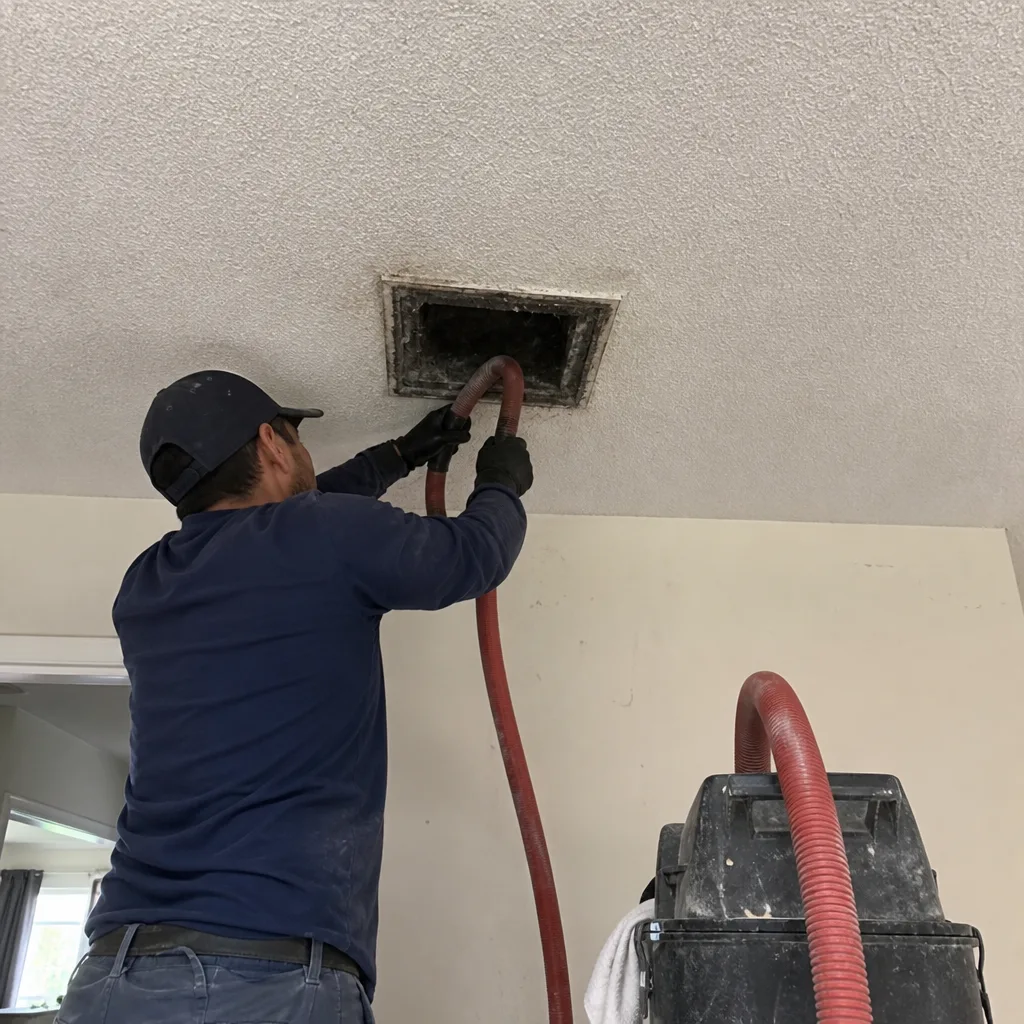
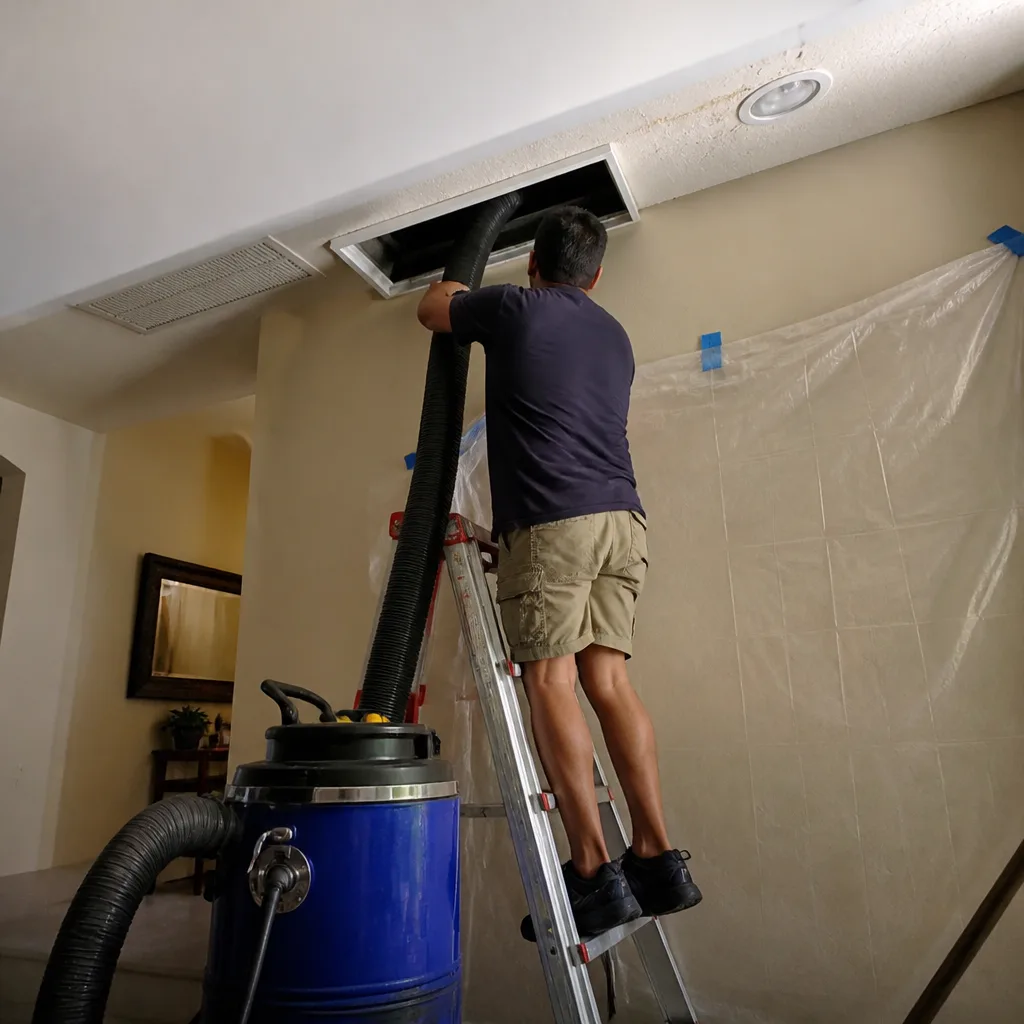
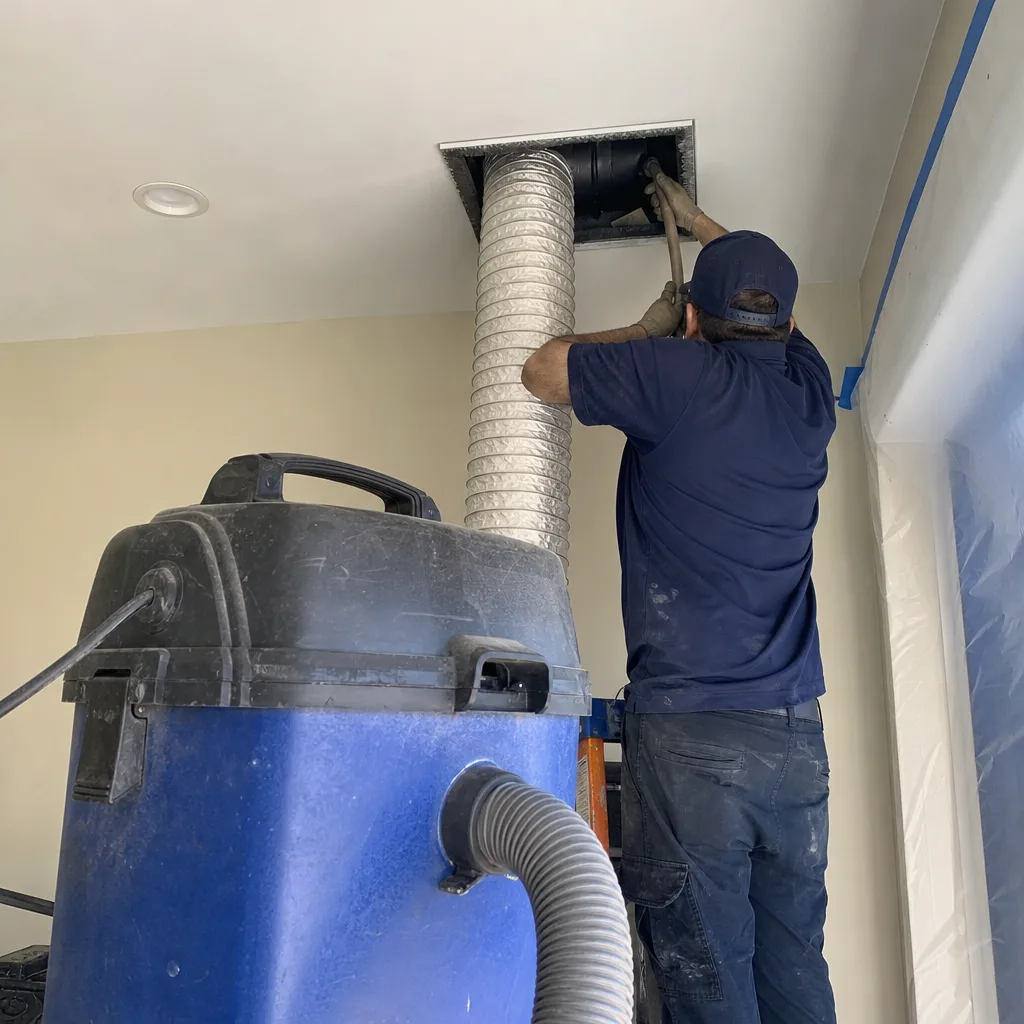
Negative-pressure extraction is the foundation of any legitimate cleaning. A large vacuum unit, often truck-mounted or portable, connects to the duct system and pulls air through at high velocity. This creates suction that dislodges and removes loose dust and debris. The keyword here is loose. Negative pressure alone won’t remove caked-on buildup, especially in humid ductwork like we see throughout West Palm Beach.
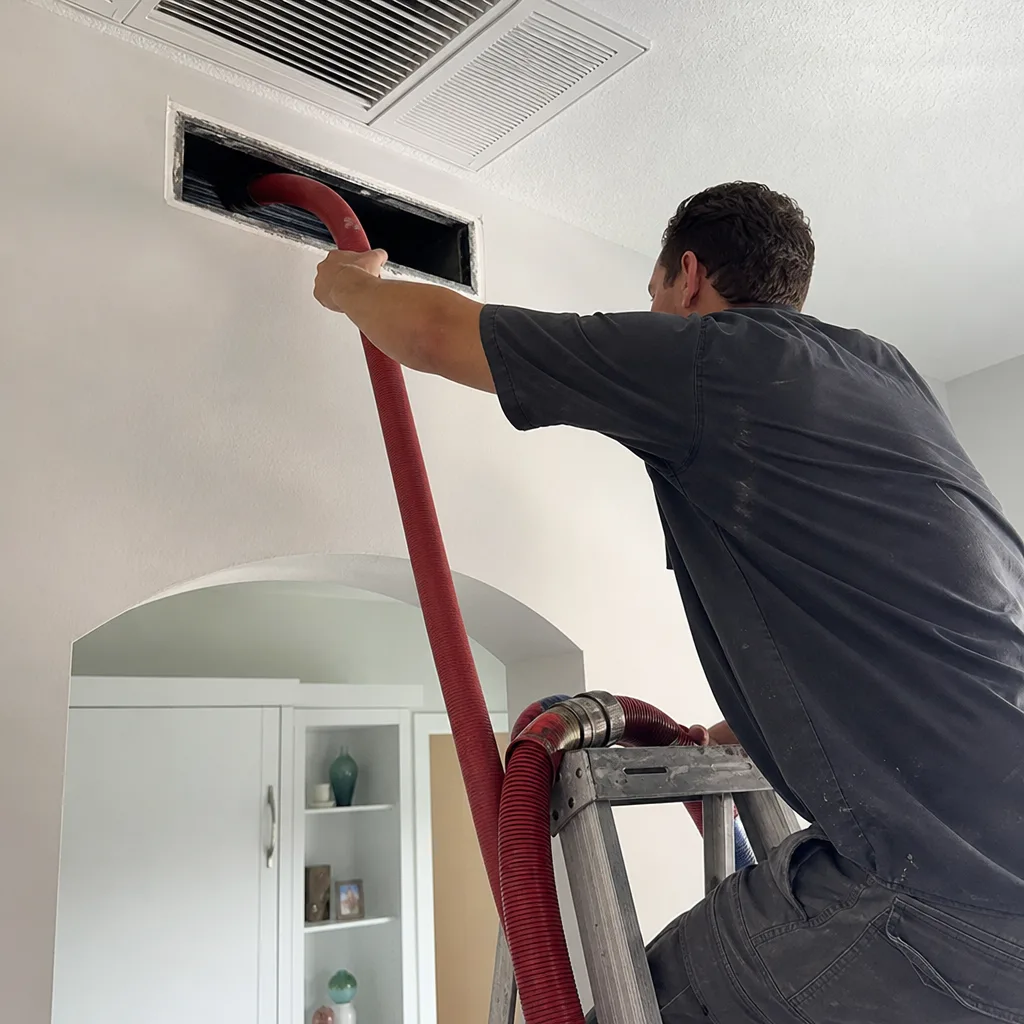
Rotary brush systems add mechanical agitation to the negative pressure. A rotating brush head feeds through the ducts, scrubbing the walls while the vacuum extracts what the brush loosens. This is the difference between rinsing a dirty pan with water and scrubbing it with a sponge. For most West Palm Beach homes, a rotary brush pass produces a visibly better result than negative pressure alone.
We run professional-grade equipment from Rotobrush and Nikro, two trade-trusted names in duct cleaning. That’s not a marketing detail; it’s relevant to your price because better equipment cleans faster without sacrificing thoroughness. A contractor using consumer-grade equipment takes longer, produces worse results, or both, and the homeowner pays either way.
Ask any contractor you’re considering: “What extraction method do you use, and what equipment are you running?” If they can’t answer, that’s an answer.
Should You Attempt DIY Duct Cleaning?
Homeowners ask this question constantly, and it deserves an honest answer. You can clean the areas of your system that are accessible: vacuum your return grilles, change your filter, dust your supply registers. Those steps reduce surface dust and keep the visible portion of your system presentable. They do not clean the ducts themselves.
Cleaning the interior of ductwork requires negative-pressure equipment that most homeowners don’t own and shouldn’t rent without training. The ducts in your attic or slab are enclosed spaces with limited access. Getting a vacuum hose in through a register reaches maybe 18 inches into the duct run. The remaining 30 or 40 feet of branch line stays untouched.
There’s also a safety consideration. Ductwork in West Palm Beach attics gets extraordinarily hot during the summer months, and working in those conditions without proper ventilation and hydration is dangerous. Duct interiors can also contain mold, rodent droppings, and other contaminants that require protective equipment to handle safely.
Read your system’s registers and returns yourself if you like. Inspect what you can see. But when the interior of the ducts needs cleaning, a trained professional with the right equipment will do in two hours what a weekend of DIY effort cannot accomplish.
Common Mistakes to Avoid
- Accepting a quote without a vent count. The vent count is the primary unit of labor in this trade. A quote without one isn’t tied to your house. Ask how many vents are included and what happens if your house has more.
- Paying before seeing before-and-after photos. A legitimate duct cleaning produces visual evidence. If a contractor can’t show you photos of your own ducts before and after the work, ask why not. Cameras are standard equipment in 2026.
- Agreeing to sanitizing without a product name. “We’ll sanitize your system” is a phrase, not a plan. The product should be EPA-registered for HVAC use, and the contractor should be able to name it on the spot.
- Believing a coupon price covers the full system. The $79 flier price covers whatever the fine print says it covers, which is usually less than your house requires. Read the exclusions before you book.
- Skipping the written guarantee. If the contractor won’t provide a written guarantee with a specific duration and a defined remedy, you’re unprotected. In West Palm Beach’s climate, where duct problems tend to recur, that exposure is expensive.
- Choosing on price alone in a market this diverse. West Palm Beach’s housing stock ranges from 1920s bungalows to 2020s smart homes. A contractor needs to handle both. The cheapest quote rarely comes from a company that does.
- Not confirming who shows up at your door. You should know the technician’s name and see a photo before they arrive. If the company can’t tell you who’s coming, that’s a trust failure waiting to happen.
See the difference
 Before
 After
After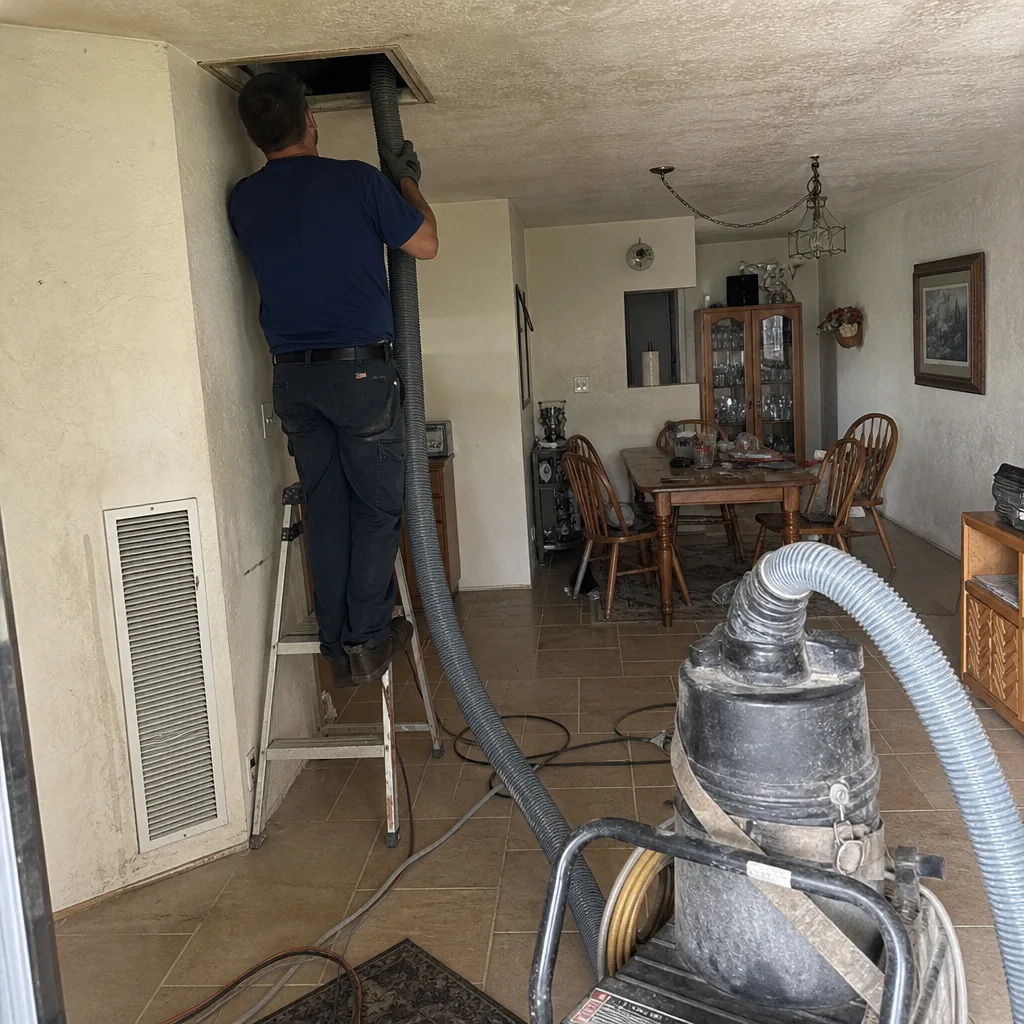 Before
 After
After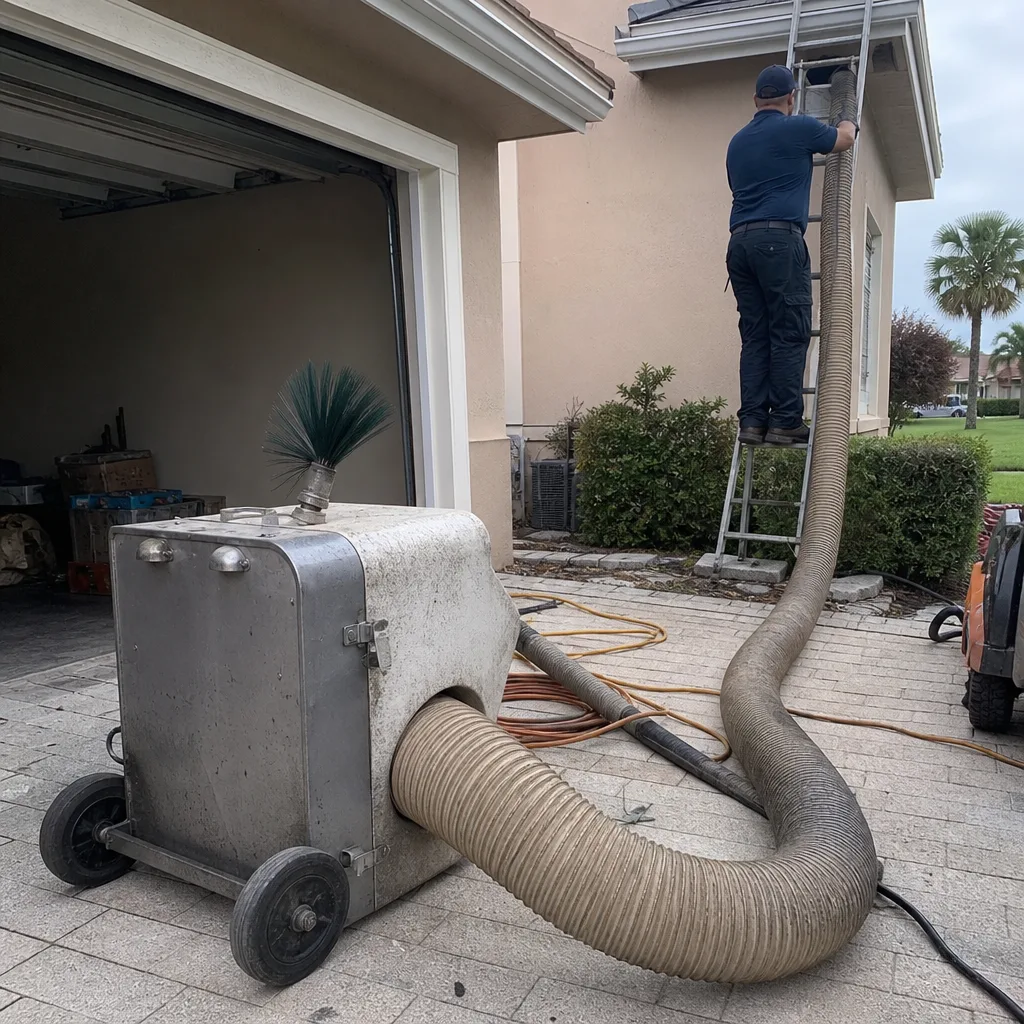 Before
 After
AfterWhen to Call a Professional
If you’ve noticed visible dust accumulating on registers shortly after cleaning, a musty odor when the system kicks on, inconsistent airflow between rooms, or a family member whose allergies worsen indoors, those are signs your ducts need attention beyond what a filter change can address. If you’ve lived in your West Palm Beach home for five or more years and have never had the ducts cleaned, a professional inspection is overdue. If you’re preparing to move into a newly purchased home and don’t know the system’s history, call before you move your family in. Linden Air Duct West Palm Beach offers free estimates throughout West Palm Beach. Call (728) 231-8154 and a live person will answer, any hour of any day.
Frequently Asked Questions
Air duct cleaning in West Palm Beach costs between $350 and $650 for a full system on an average 2,000-square-foot home in 2026. Smaller condos and townhomes run $250 to $400, and larger homes or heavily soiled systems run $700 to $900. The price depends on vent count, system accessibility, duct material, and whether add-ons like sanitizing are included. Call (728) 231-8154 for an exact written quote for your home.
Cheaper quotes usually mean a smaller scope: fewer vents included, branch lines skipped, no coil inspection, no access-and-seal work, or all four. The advertised price gets a technician through the door, and the real invoice lands after the upsells. Compare quotes by line item, not by total, and ask what the cheap quote leaves out. Call (728) 231-8154 and we’ll walk you through a line-item comparison of any quote you’ve received.
A legitimate contractor shows you before-and-after photos of your own ducts, taken during the job with a camera inserted into the system. You should see visible improvement in the duct interior, not just a receipt. We document every job with before-and-after photos so you can see exactly what changed. If a contractor can’t or won’t provide that evidence, treat the job as unverified.
In West Palm Beach’s humid climate, most homes benefit from duct cleaning every 3 to 5 years. Homes with pets, smokers, recent renovations, or family members with allergies should consider every 2 to 3 years. Homes near the coast or on heavily landscaped lots may need more frequent attention due to salt air and pollen infiltration. Call (728) 231-8154 and we’ll assess your system’s condition and give you an honest recommendation.
For most West Palm Beach homes, yes. Duct cleaning removes accumulated dust, pet dander, pollen, and debris that your filter cannot catch. It can improve airflow, reduce strain on your HVAC system, and improve indoor air quality for allergy sufferers. The value depends entirely on the thoroughness of the work, which is why the line-item scope matters more than the headline price. A $500 thorough cleaning is worth more than a $99 partial pass every time.
Sanitizing with an EPA-registered HVAC antimicrobial product can reduce bacteria and mold spores inside the ductwork after mechanical cleaning. In West Palm Beach’s humid climate, where condensation inside ducts is common, this step has more value than in drier regions. The key is the product: a legitimate contractor names the product and its EPA registration, and a vague “sanitizing” with an unnamed product is not worth paying for.
The Bottom Line
Air duct cleaning in West Palm Beach is a $250 to $900 market with a wide price band because scope, not quality, is what most contractors are actually competing on. The homeowner who knows how to read a line-item estimate, spot a truncated scope, and verify a written guarantee will pay the right price for the right job. The homeowner who compares two numbers on a flier is gambling. Get the written price, confirm what it covers, see the photos, and hold the guarantee in your hand before you sign.
Written by Marcus Veale, Owner at Linden Air Duct West Palm Beach, serving West Palm Beach since 2004.