
Last updated October 15, 2026
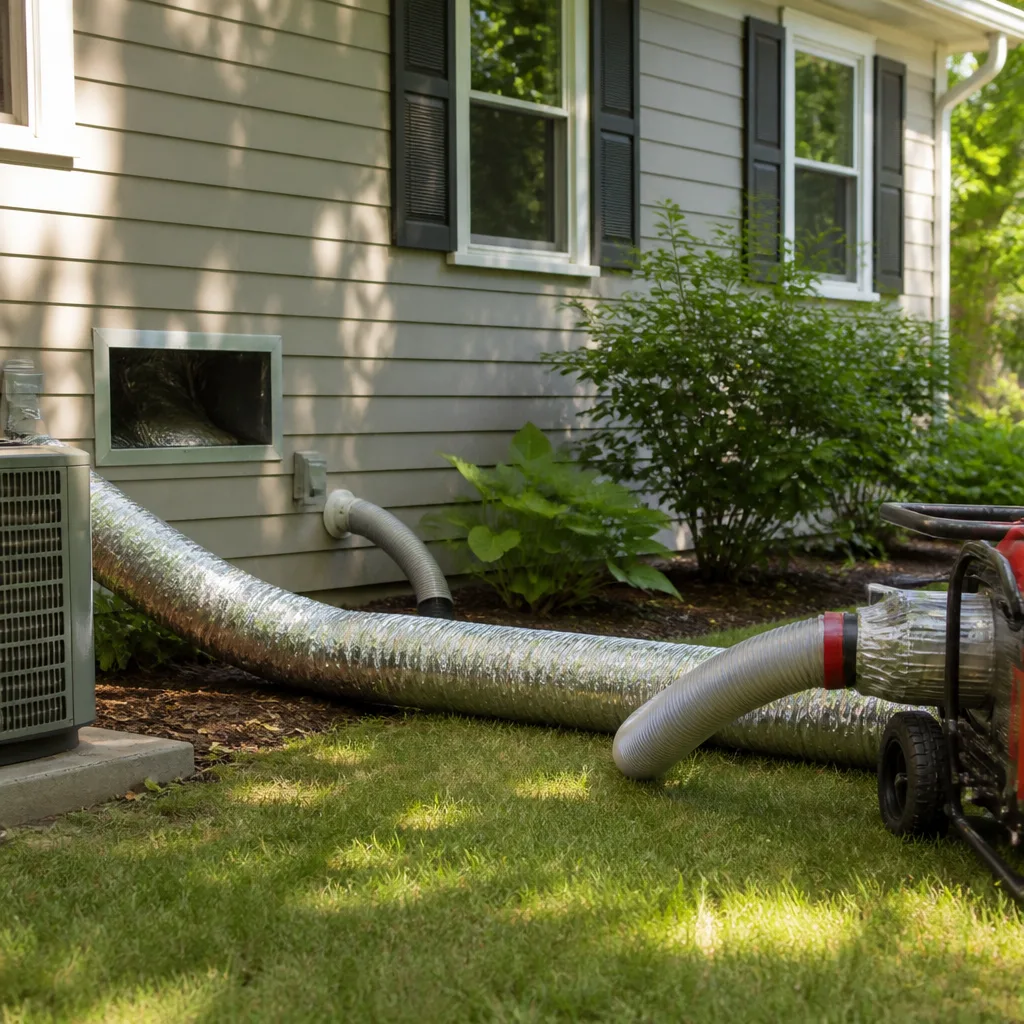 Whole-home duct cleaning
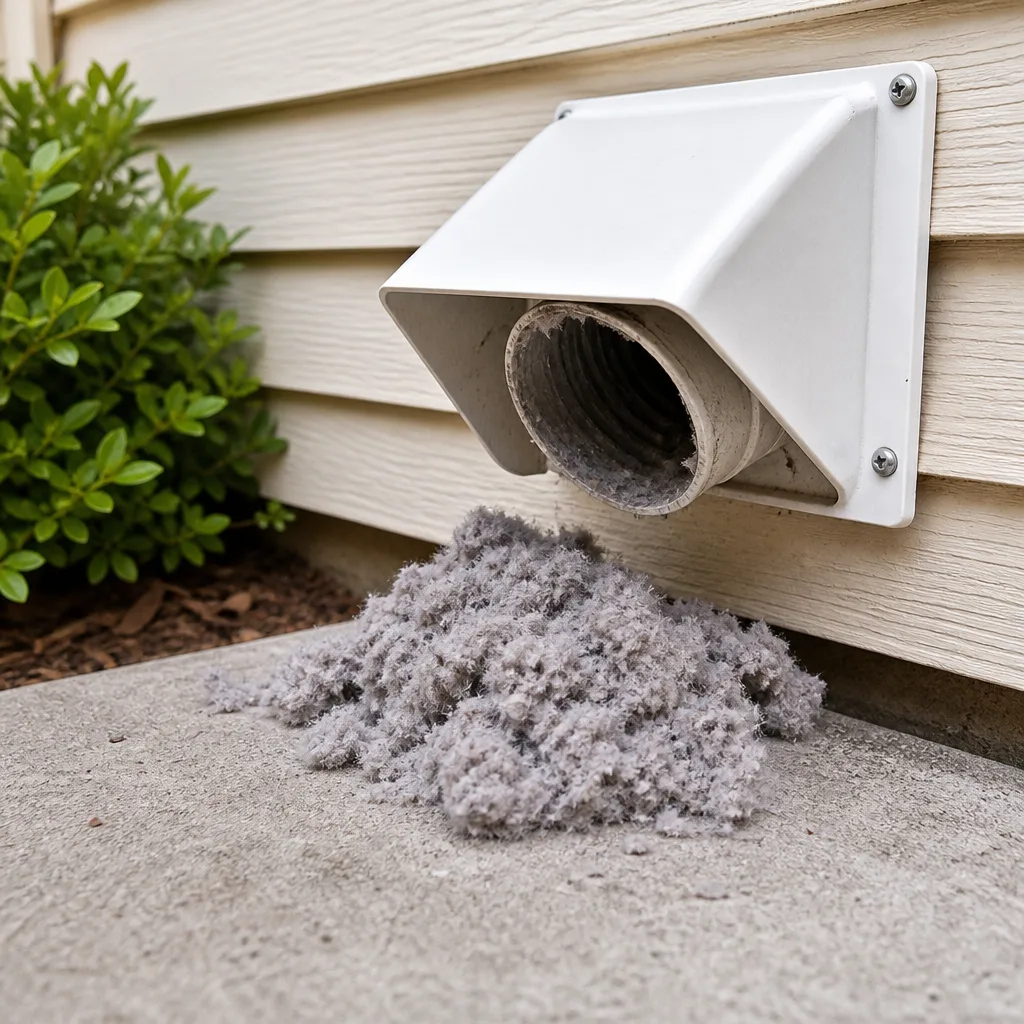 Dryer vent cleaning
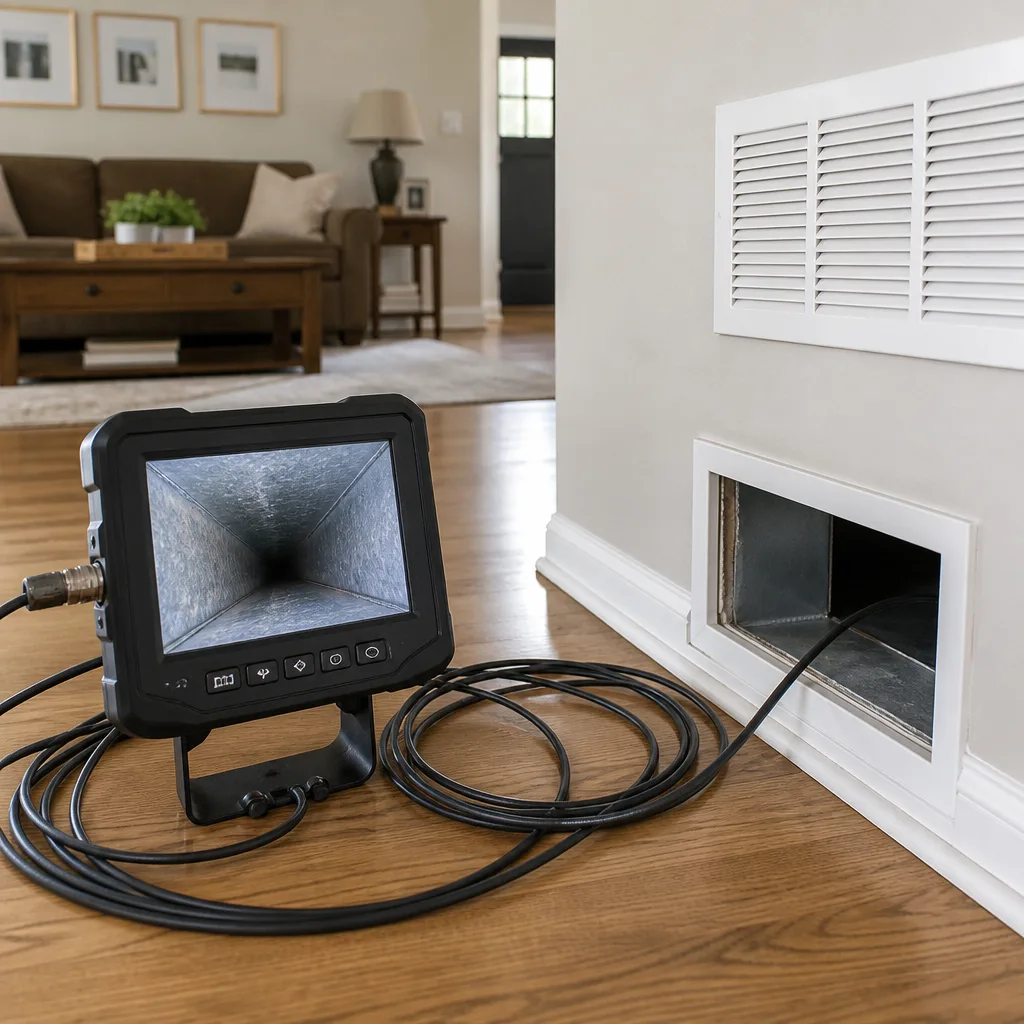 Camera inspection
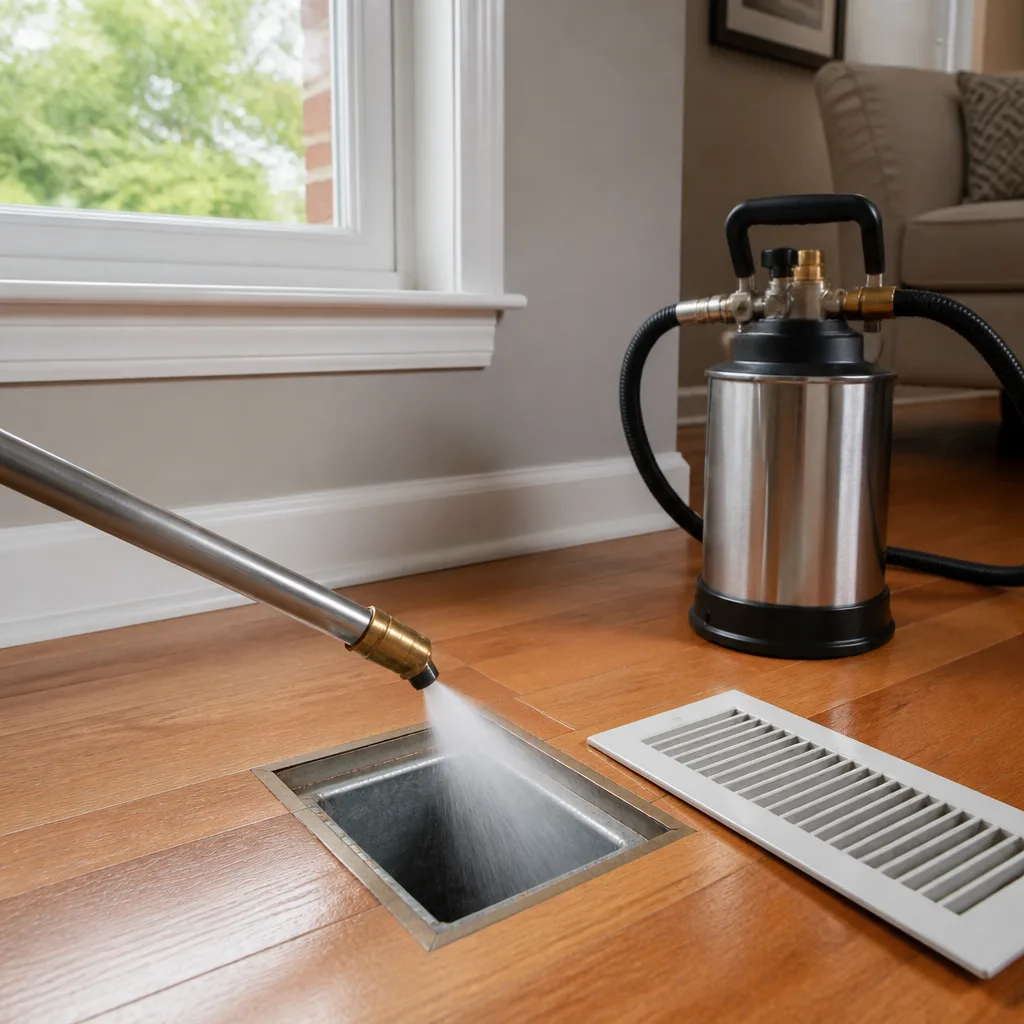 Sanitizing & deodorizing
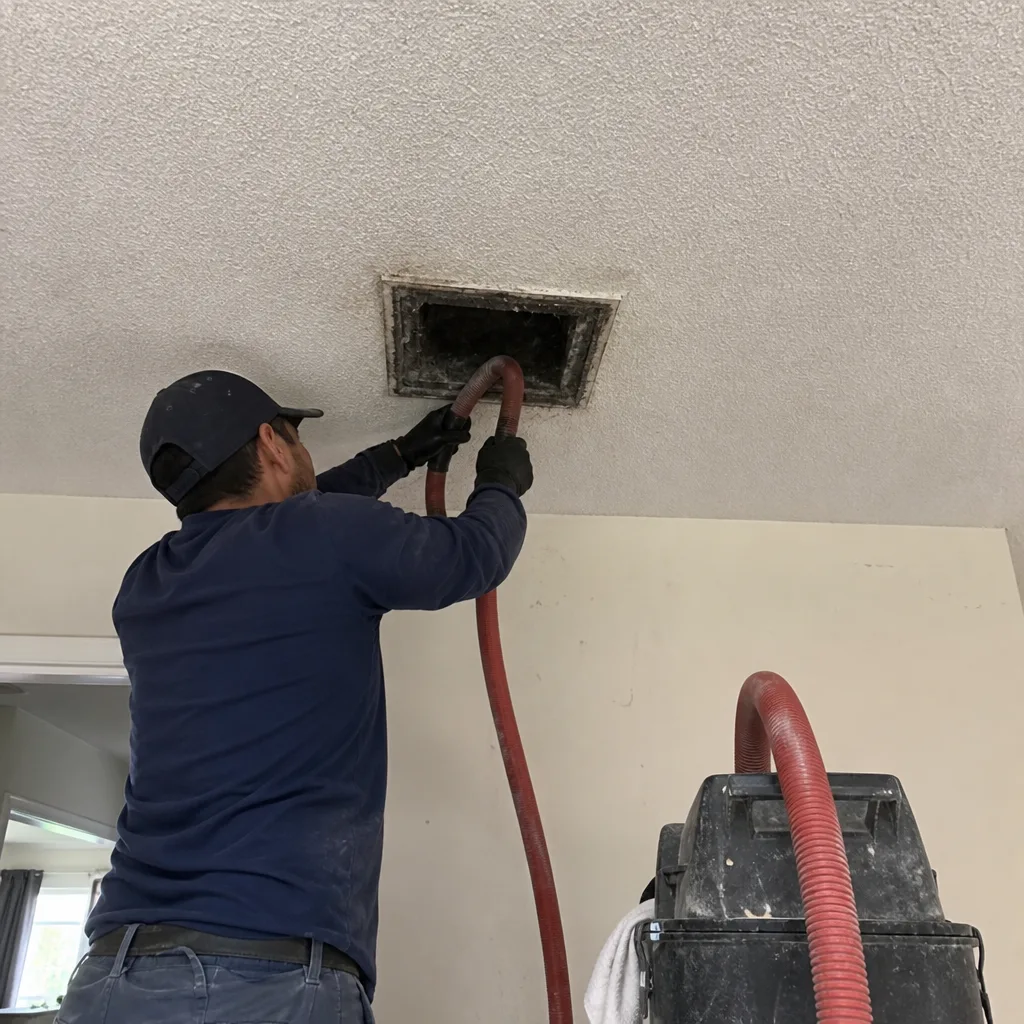
Whole-system duct and dryer vent check with before-and-after photos - you see exactly what came out of your vents
That "$99 whole-house special" is a bait ad - the real number appears once they are in your hallway, or the "clean" is a shop-vac at the register. We photograph the inside of your ducts before and after instead.
Air Duct Cleaning Maintenance Checklist for West Palm Beach Homeowners
Here’s the counterintuitive truth about duct maintenance in West Palm Beach: the humidity alone can cut the useful life of a standard fiberglass filter by weeks. Add a single shedding dog, a floor-level return vent, and a slab foundation, and you’ve got a duct system that accumulates debris at two to three times the rate of your neighbor’s elevated home with ceiling returns and a tidy cat. This guide is built for that reality. You’ll learn which variables actually drive buildup in our climate, what you can safely inspect yourself, and when the right move is to call a professional for our Air Duct Cleaning services instead of guessing.
Quick Answer
Air duct cleaning maintenance in West Palm Beach isn’t a fixed annual ritual. It’s a schedule that shifts based on four home-specific variables: pets, vent placement, foundation type, and renovation activity. Most homes in our area need a professional inspection every 3 to 5 years, but homes with multiple shedding pets, floor-level returns, a slab foundation, or recent drywall work may need attention every 2 to 3 years. For details on local requirements, see Air Duct Cleaning Permits, Codes & Inspections in FL: What You Need to Know.
Styles & brands we work with
Table of Contents
- The Variables That Shift Your Timeline
- Your DIY Register-Level Inspection Walkthrough
- The West Palm Beach Filter Change Calendar
- Documenting Conditions: Evidence, Not Intuition
- DIY Tasks vs. Jobs That Require a Technician
- A Frank Word About Safety and Warranties
- Common Mistakes to Avoid
- When to Call a Professional
- Frequently Asked Questions
The Variables That Shift Your Timeline
A maintenance checklist that treats every West Palm Beach home the same is a checklist that fails. We’ve walked into thousands of homes across Palm Beach County since 2004, and the difference between two houses in the same neighborhood can be dramatic. A condo in Downtown West Palm Beach with concrete walls and a single return overhead stays cleaner longer than a sprawling ranch in The Acreage with floor returns in every room and three retrievers. The variables matter more than the calendar.
Here are the four conditions that actually change how fast your ducts accumulate debris:
- Floor-level return vents. Returns near the floor are vacuuming the dirtiest air in the room. Gravity does the rest. Everything that drifts downward through your living space – dust, pet dander, sand tracked in from the beach – gets pulled into the return before it ever reaches a higher vent.
- Pets. A single short-haired dog sheds continuously. A long-haired cat or dog changes the equation entirely. Hair and dander bond with the humidity inside ducts and form a mat that catches other debris, accelerating buildup.
- Slab foundations. Most West Palm Beach homes sit on concrete slabs, which means duct runs are often routed through enclosed chases rather than open basements. Moisture from the slab migrates into those chases, and in our climate, that moisture rarely dries on its own. Damp interior duct surfaces catch and hold particulate.
- Renovation activity. Drywall dust is ultra-fine and travels everywhere. If you’ve had any drywall work, sanding, flooring replacement, or ceiling texture work in the last 18 months, that dust is in your ducts. It doesn’t go away on its own.
If you check two or more of those boxes, your real maintenance interval is closer to 2 to 3 years, not the generic 3 to 5 you’ll read on most sites. If you check none, you may genuinely be fine at the 5-year mark. The point of a checklist is that it adapts to your home, not the other way around. Use the Linden Air Duct West Palm Beach home guide to understand what a professional cleaning actually involves before you schedule one.
Your DIY Register-Level Inspection Walkthrough
You don’t need tools or a contractor to know something’s off. You need a flashlight, a roll of painter’s tape, and ten minutes. This is the first real maintenance task on any honest checklist, and it’s the one almost nobody does.
Here’s the step-by-step walkthrough we recommend:
- Remove two or three register covers in different rooms. Pick the room where you spend the most time, plus one bedroom, plus the return if it has a removable grille.
- Shine a flashlight into the duct opening. Look at the interior surface. You’re looking for two things: visible accumulation on the duct walls, and any fibrous material that looks wet, damp-stained, or otherwise compromised.
- Run a finger along the inside wall of the duct as far as you can reach comfortably. Not deep inside – just the accessible surface near the opening. If you come back with a visible coating of dust or debris, you’re seeing the start of what’s lining the full run.
- Check the register cover itself. Look at the back side and the edges. Dark grey or black accumulation around the louvers is normal in any home that’s gone more than a year without cover cleaning. Heavy, greasy buildup that returns quickly after wiping suggests more than air current – it suggests warm, humid air meeting a surface and condensing.
- Note any smell. When the system runs, does the air from that register smell musty, dusty, or stale? That’s not just a smell – it’s an indicator of what’s inside the ducts passing over it.
- Wipe the register cover, reinstall it, and move on. You’re not trying to diagnose; you’re observing.
Do this twice a year – say, once in May before the AC runs hard, and once in October before the winter season shifts how often the system cycles. The documentation piece matters, which we’ll get to below. For homeowners in West Palm Beach who’ve never had their system cleaned, this inspection is usually the moment they realize what’s actually in there. If that’s what you find, our Air Duct Cleaning in West Palm Beach service handles full-system negative-pressure extraction with professional-grade equipment.
The West Palm Beach Filter Change Calendar
Standard HVAC advice says change your filter every 90 days. That’s a national average, and it’s wrong for this climate. West Palm Beach has two distinct conditions that shorten filter life significantly: the spring pollen season and the ever-present construction dust generated by the unending cycle of development, road work, and landscaping across Palm Beach County.
Here’s a filter calendar that actually fits our local conditions:
- February through April: Oak, pine, and grass pollens peak. During this stretch, a standard 1-inch fiberglass filter in a home with outdoor airflow is often loaded in 30 days. Check monthly, and replace when visible accumulation is heavy enough that the filter’s surface looks matted. For many homes, that’s every 45 days.
- May through October: Here’s the counterintuitive part. This is our rainy season, and while it suppresses some airborne pollen, it forces the AC into near-continuous cooling. More runtime means more air passes through the filter, which means the filter loads faster even when the outdoor air looks clean. But more importantly, high interior humidity means any accumulation in the filter or ducts doesn’t stay dry – it becomes damp and biologically active. Check monthly, replace every 60 to 90 days depending on runoff.
- November through January: Lower humidity and cooler temperatures mean the system cycles less. But this is also when many homeowners open windows, which introduces outdoor dust. A 90-day interval may hold if you don’t have pets and you close your windows. Homes with pets and open windows should still check every 45 days.
Upgrading your filter to a higher MERV rating helps, but it creates a trade-off. A MERV 11 or 13 filter from a brand like Honeywell catches finer particles, yes – but it also restricts airflow if your system isn’t designed for that density. That restriction can increase static pressure and make the blower work harder, which matters in our long cooling season. If you’re considering a higher-MERV filter, verify that your system can handle it. We’ll talk about that in the DIY vs. Pro section below.
Documenting Conditions: Evidence, Not Intuition
Most homeowners decide to call a duct cleaner based on a feeling-something seems off, or the house feels dustier than it used to. If you’re unsure, check Air Duct Cleaning Warning Signs: A West Palm Beach Homeowner’s Reference Guide. That’s a fine starting point, but it’s not evidence. And when a homeowner calls us with documented observations, the conversation is radically different – they know what they’ve seen, when they saw it, and whether it’s changing.
Documentation is simple. Create a note on your phone or a single page in a notebook. Each time you do the register-level walkthrough above, write down three things:
- Date of the inspection.
- What you saw: the color, texture, and amount of accumulation in each register you checked.
- Any smell. Fresh, stale, musty, or none.
After two inspections, you’ll have a baseline. If the accumulation is heavier in May than it was in October, and even heavier the next May, you’re watching the system load in real time. That’s the evidence that tells you when the schedule needs to accelerate. No guesswork. No vague sense that “it’s been a while.”
Photograph what you see with your phone. A clear photo of the inside of a register from 6 inches away, taken twice a year, is the strongest possible record. When you eventually call for professional Air Duct Repair in West Palm Beach or cleaning, you’ll be able to show the technician exactly what’s changed, and when. That documented history helps the technician prioritize where to focus during your service.
DIY Tasks vs. Jobs That Require a Technician
There’s a clean line between what a homeowner should handle and what belongs in the hands of a technician with professional equipment. It’s not about effort. It’s about access, tools, and liability.
Genuinely DIY-safe maintenance tasks:
- Vacuuming and washing register covers
- Changing the furnace or air handler filter
- Checking for visible moisture stains around visible duct joints
- Inspecting the accessible interior of registers with a flashlight
- Keeping supply and return vents clear of furniture and obstruction
- Trimming back exterior vegetation near the condensing unit
Jobs that should never be DIY:
- Accessing duct runs in enclosed chases, crawl spaces, or attics where the duct work isn’t readily visible or reachable
- Cutting into duct board or flex duct to inspect the interior
- Applying any kind of chemical cleaner, sealant, or antimicrobial treatment inside the duct work – most of these products require professional application and ventilation protocols, and improper application can create air quality problems
- Any repair that involves disconnecting, replacing, or re-sealing duct sections
- Any work inside the air handler cabinet itself
Why the hard line? Duct systems in West Palm Beach homes are frequently built into spaces that are hot, cramped, and structurally unforgiving. The attic cavity of a ranch home in Palm Springs or the chase walls of a Royal Palm Beach two-story can easily reach 130 degrees or more in summer. Working in those conditions without the right equipment and experience is a recipe for heat exhaustion, a fall, or damage to the duct work that you won’t discover until your air handler starts pulling attic air into the conditioned space.
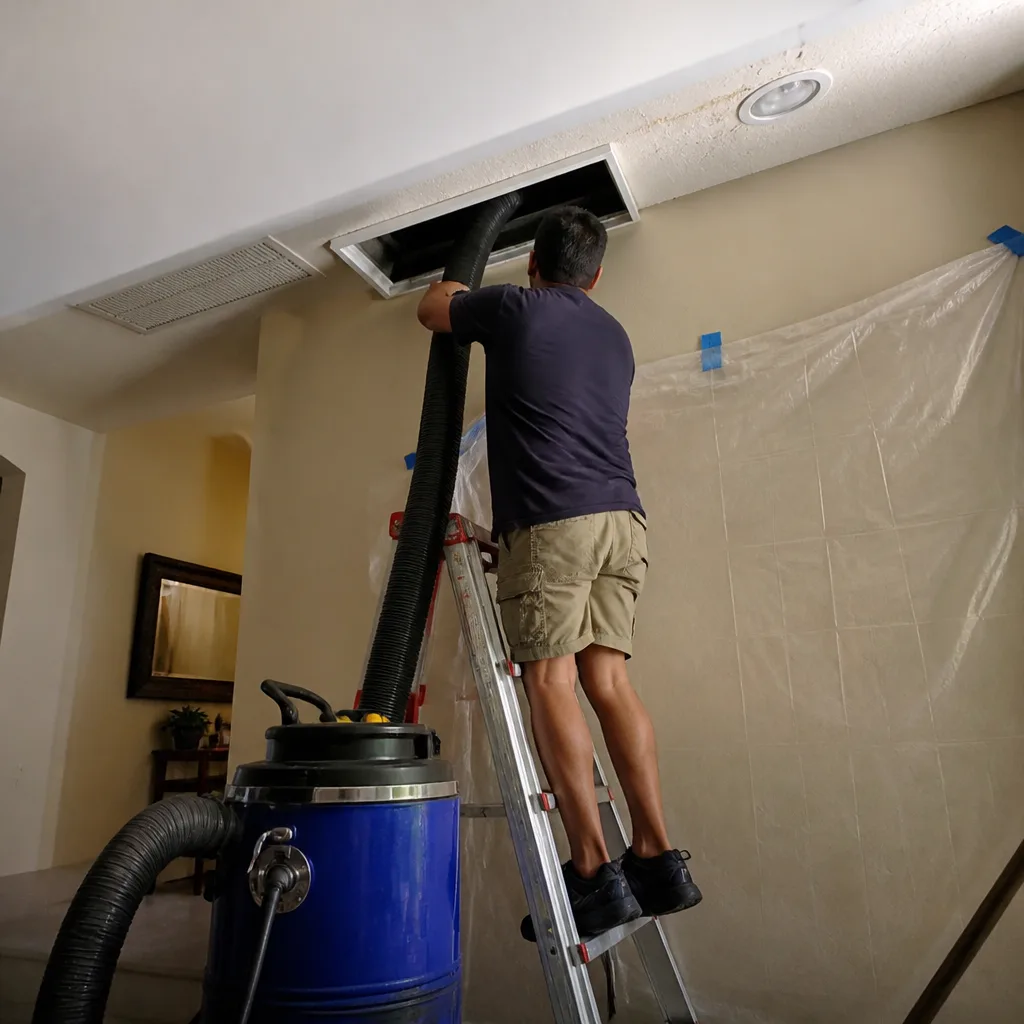
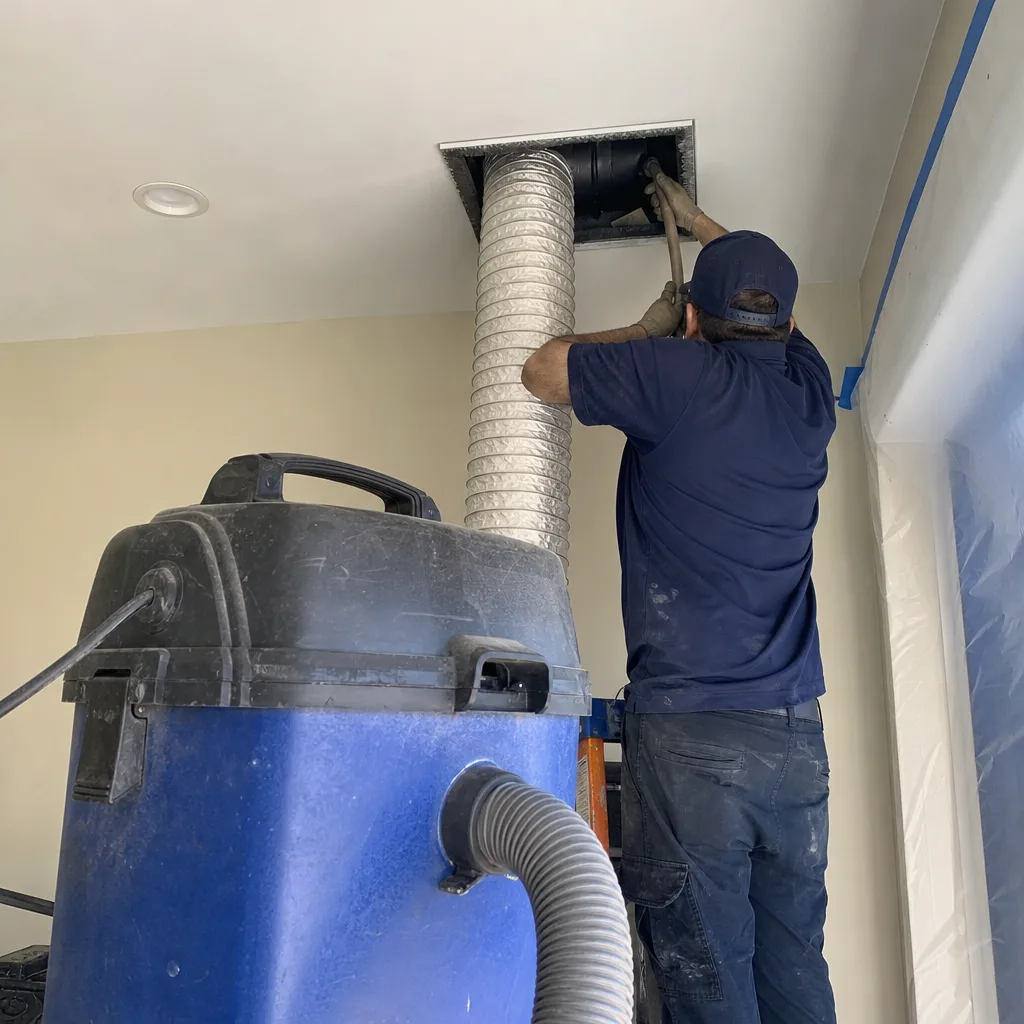
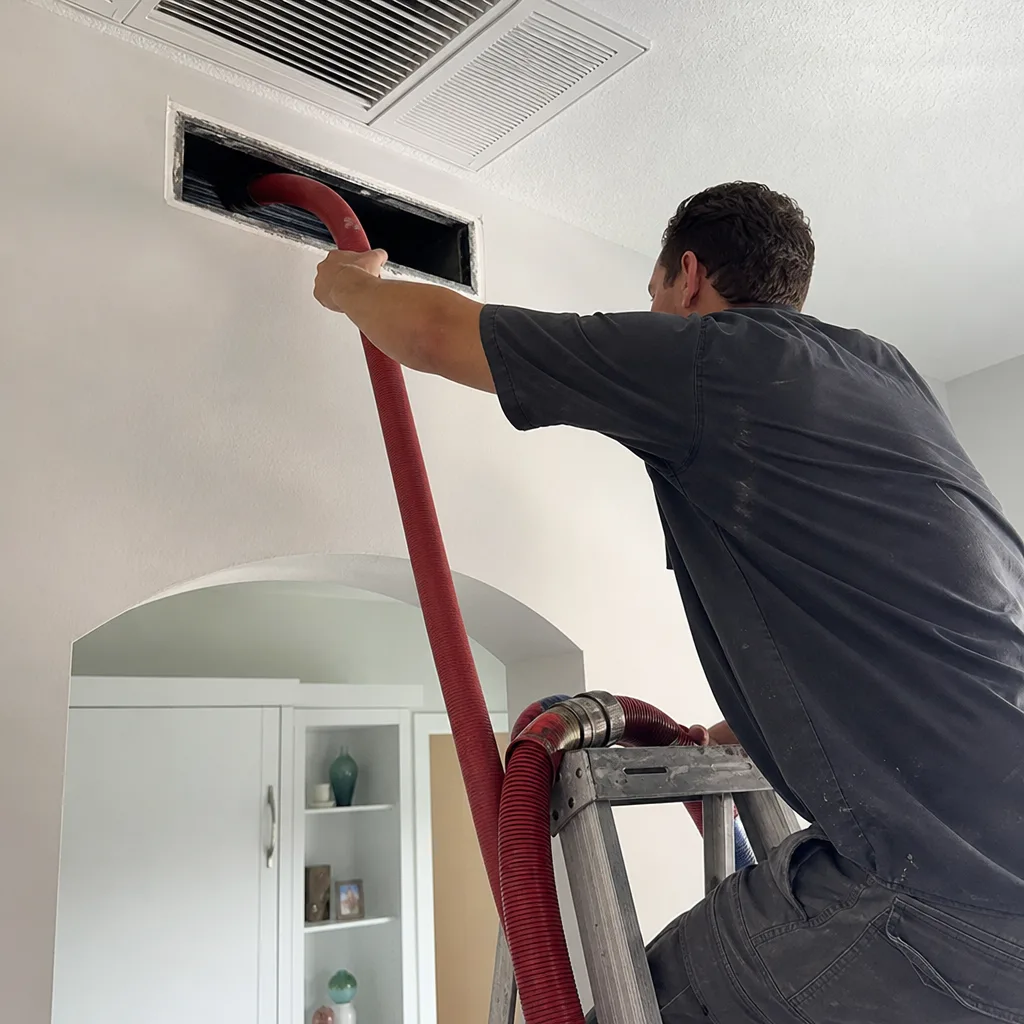
When the job requires accessing those spaces, we use professional-grade equipment including Rotobrush and Nikro systems designed for negative-pressure extraction. The equipment creates a sealed vacuum environment on the duct run while agitating material off the interior surfaces, collecting debris at the source rather than pushing it into the home. That’s not something a rental vacuum from the hardware store can replicate, and we’re direct about that with every West Palm Beach homeowner we serve.
A Frank Word About Safety and Warranties
There’s a reason this section exists, and it’s not to protect our business. It’s to protect you from the two genuine risks of careless DIY duct work: physical injury and warranty voiding.
Duct systems in South Florida homes are often accessible through attic hatches, crawl access panels, and chases that are not designed for casual entry. A fall from an attic ladder, a misstep through a ceiling, or contact with wiring inside a chase can cause serious injury. Duct work also sits alongside other mechanical systems – electrical runs, plumbing, and in some homes, gas lines. Disturbing a joint or seal in the wrong place can have consequences beyond a dusty register. If you can’t see the duct run clearly and reach it without strain or risk, that’s the point where you stop and call someone who does this work daily.
The warranty concern is equally real and equally avoidable. Many HVAC system warranties, including those from major air handler manufacturers, specify that unauthorized access or modification to the air distribution system can void coverage. If you open a cabinet, disconnect a plenum, or alter the duct configuration, and the manufacturer later discovers evidence of that work, you may be left holding the full cost of a compressor or blower replacement that would otherwise have been covered. No filter change or register wipe is worth that risk.
This is the practical boundary of any honest maintenance checklist: observe at the register, maintain what’s visible and safe, and treat everything behind the wall or above the ceiling as a professional’s domain.
Common Mistakes to Avoid
- Following a national “every 3 years” schedule without adjusting for your home. A home with three shedding pets and floor returns in West Palm Beach’s humidity is not the same system as a pet-free condo with ceiling returns. The variables matter more than the calendar.
- Using a high-MERV filter without checking system compatibility. Dense filters from brands like Honeywell trap more particles, but they also increase static pressure. In systems not designed for that restriction, the blower works harder and may fail sooner. Check your system’s specifications first.
- Spraying disinfectant or air freshener into the ducts. This doesn’t clean anything. It adds fragrance and chemicals to the air stream. Duct cleaning is a matter of extraction, not masking.
- Blocking return vents with furniture or rugs. A blocked return starves the system for air, slows efficiency, and pulls more dirt from the accessible surfaces around it. Every return in the home needs at least a few inches of clearance.
- Assuming recent construction dust will “work its way out.” Drywall dust settles into the duct lining and stays there. It doesn’t exit on its own; it becomes part of the accumulated material that a professional extraction later removes.
- Cleaning only when the house smells. By the time you smell a musty or stale odor from the registers, the accumulation is already substantial. Smell is a late-stage indicator, not an early warning.
- Hiring on price alone without verifying who’s coming to your door. In West Palm Beach, duct cleaning is a service where the lowest quote often arrives in an unmarked van with no uniform, no badge, and no written price before the job starts. Verification matters more than the dollar figure on the estimate.
When to Call a Professional
Call a professional when your documentation shows heavy or worsening accumulation, when you notice a persistent musty or stale odor from the registers, when you’ve had renovation work in the last 18 months, or when someone in the home has allergies or respiratory issues that seem to worsen when the system runs. These are the concrete triggers for a full professional extraction. A walkthrough estimate should be free, and the company should put a written price in front of you before any work begins. Linden Air Duct West Palm Beach offers free estimates to homeowners throughout West Palm Beach, and every job receives a written price before work starts. Call (728) 231-8154 to schedule a walkthrough. Every technician who arrives is background-checked, identity-verified, and introduced by name and photo before they reach your door.
You should also know about our Dryer Vent Cleaning in West Palm Beach service, because the dryer exhaust path traps lint in the same way your ducts trap dust, and a clogged dryer vent creates a fire hazard. Many homeowners who schedule duct cleaning add dryer vent service in the same visit.
Frequently Asked Questions
Whole-home air duct cleaning in West Palm Beach typically ranges from $350 to $700 for a single-system home, depending on square footage, number of supply and return runs, accessibility of the duct work, and how long it’s been since the last cleaning. Homes with significant accumulation or difficult access (such as slab-chase duct runs) may run higher. Expect a written price before any work begins, and be wary of any quote that seems too low – it usually means corners are being cut. Call (728) 231-8154 for a free walkthrough estimate and an exact price for your home.
Cheap quotes often come from companies that run a perimeter-only cleaning – they vacuum the registers and visible runs but don’t extract from the full system. Other low quotes are from companies that send untrained, unverified workers in unmarked vehicles. You’re not comparing the same service. A proper cleaning uses negative-pressure extraction equipment from brands like Rotobrush or Nikro and includes the full supply and return system. If the price seems like a steal, ask what equipment they use, whether they access the full duct run, and who exactly is coming to your door.
A professional duct cleaning should include before and after photos of the interior of your ducts, so you can see the difference with your own eyes. Linden Air Duct West Palm Beach provides documentation of every job, and every service is backed by the 365-Day Done Right Promise: if the work is not right, we make it right, in writing. Before anyone leaves, ask to see the photos. If the company can’t or won’t show them, that’s a red flag regardless of the price.
Most homes in West Palm Beach need professional cleaning every 3 to 5 years, but that’s a starting point, not a fixed rule. Homes with shedding pets, floor-level return vents, slab foundations, or recent renovation work should plan for every 2 to 3 years. The best way to know your home’s interval is to do the register-level inspection we describe in this guide twice a year and watch the trend. When documented accumulation worsens between inspections, it’s time to schedule a service.
Yes, and in a specific way. The high humidity in West Palm Beach means that whatever enters your ducts doesn’t stay dry. Dust, pollen, and dander absorb moisture from the air, become damp, and then stick to the interior surfaces more aggressively. Dry climates let particulate stay loose and sometimes get pushed through the system. Here, it adheres and builds. That’s why we see faster accumulation in Florida homes than in dry-climate homes with the same occupant count and pet load.
You can clean the accessible register openings and covers, but that’s the extent of what a homeowner should attempt. A household vacuum doesn’t generate enough negative pressure to extract material from the full duct run, and poking tools into the ducts can damage flexible duct work or push material further down the system. Full cleaning requires professional-grade negative-pressure equipment, and anything involving the air handler, plenum, or enclosed chases should be handled by a trained technician for safety reasons and to protect your equipment warranty.
The Bottom Line
The maintenance checklist that works for your West Palm Beach home is the one written for your actual conditions – not a generic national guideline. Pay attention to the variables: pets, floor returns, slab foundation, and renovation dust. Inspect at the register level twice a year, change filters on a calendar that accounts for pollen season and construction dust, and document what you see. When the evidence shows worsening accumulation, call a professional who verifies who’s coming to your door and puts the price in writing before any work begins. That’s the whole system: observe, document, and act when the data says to. For more guides & resources, visit our blog.
Written by Marcus Veale, Owner at Linden Air Duct West Palm Beach, serving West Palm Beach since 2004.
See the difference
 Before
 After
After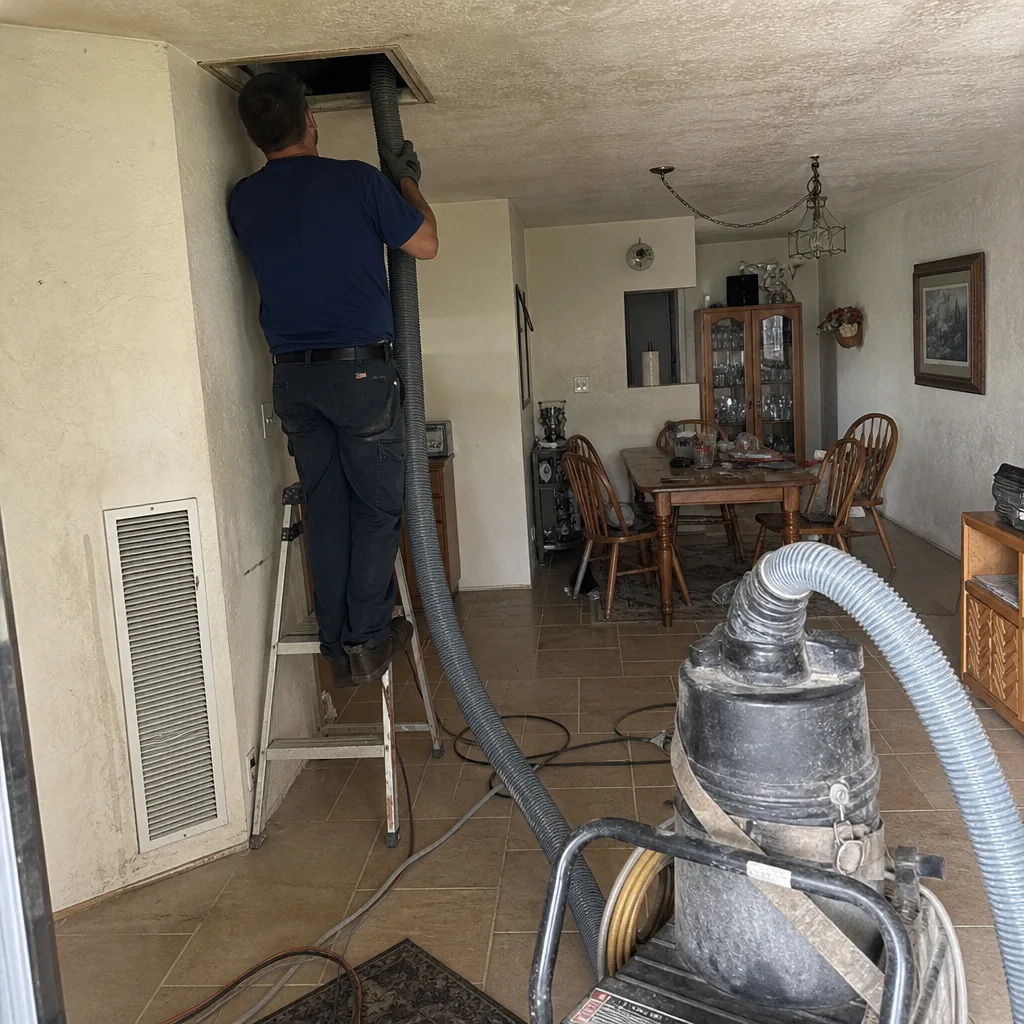 Before
 After
After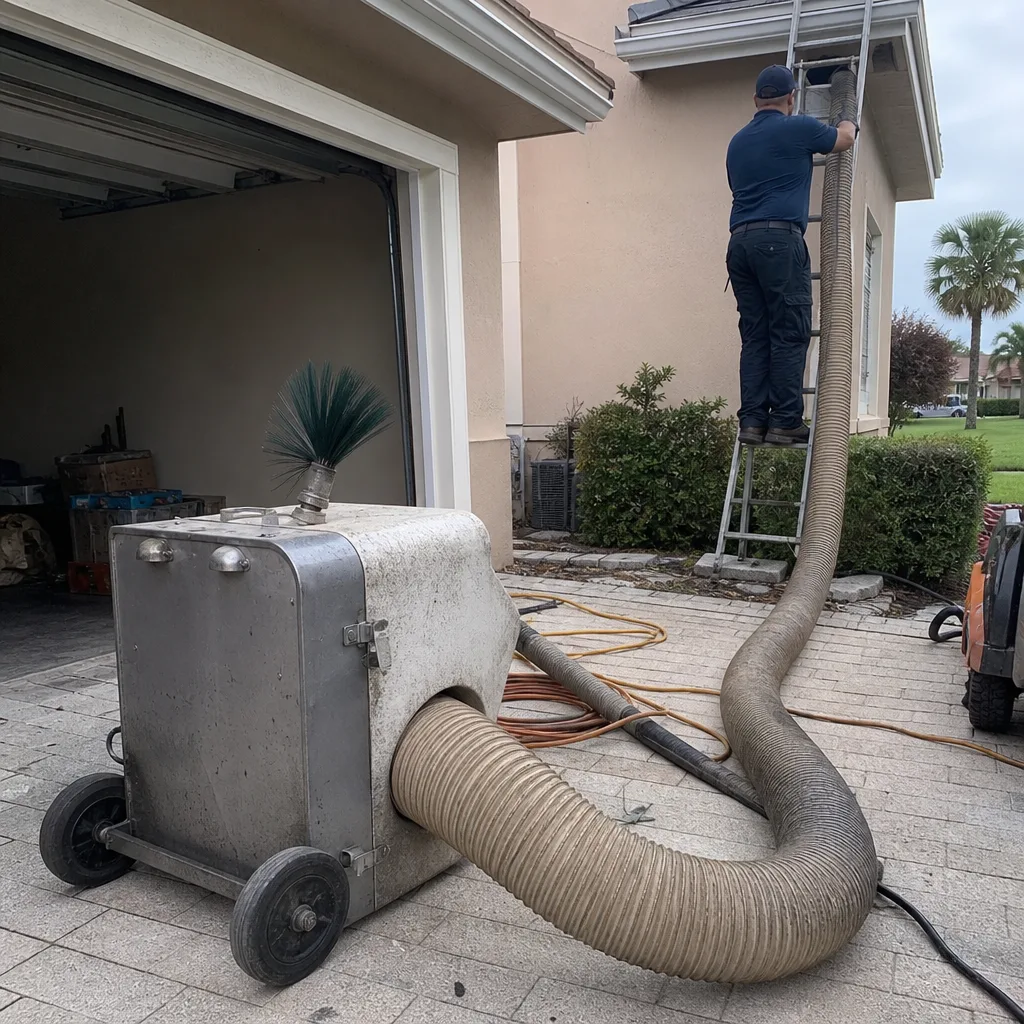 Before
 After
After