
Last updated October 15, 2026
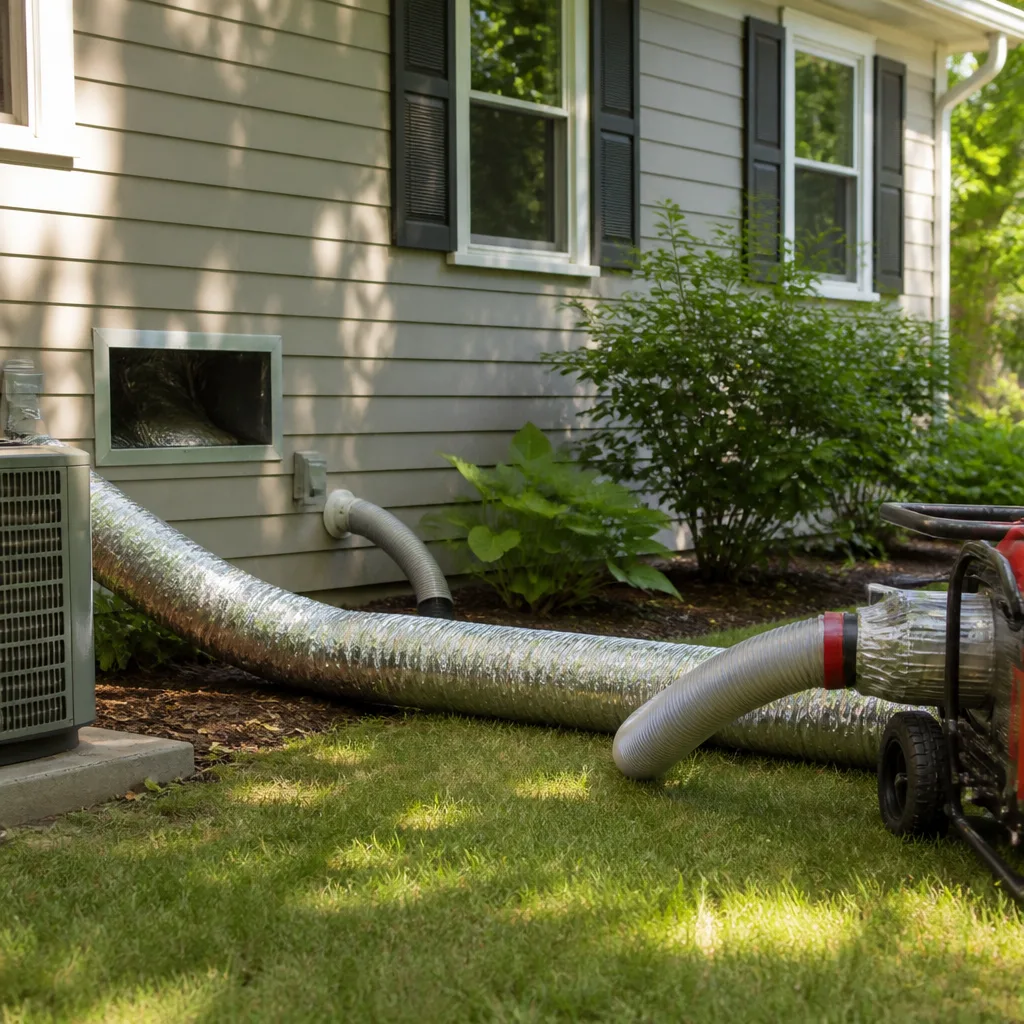 Whole-home duct cleaning
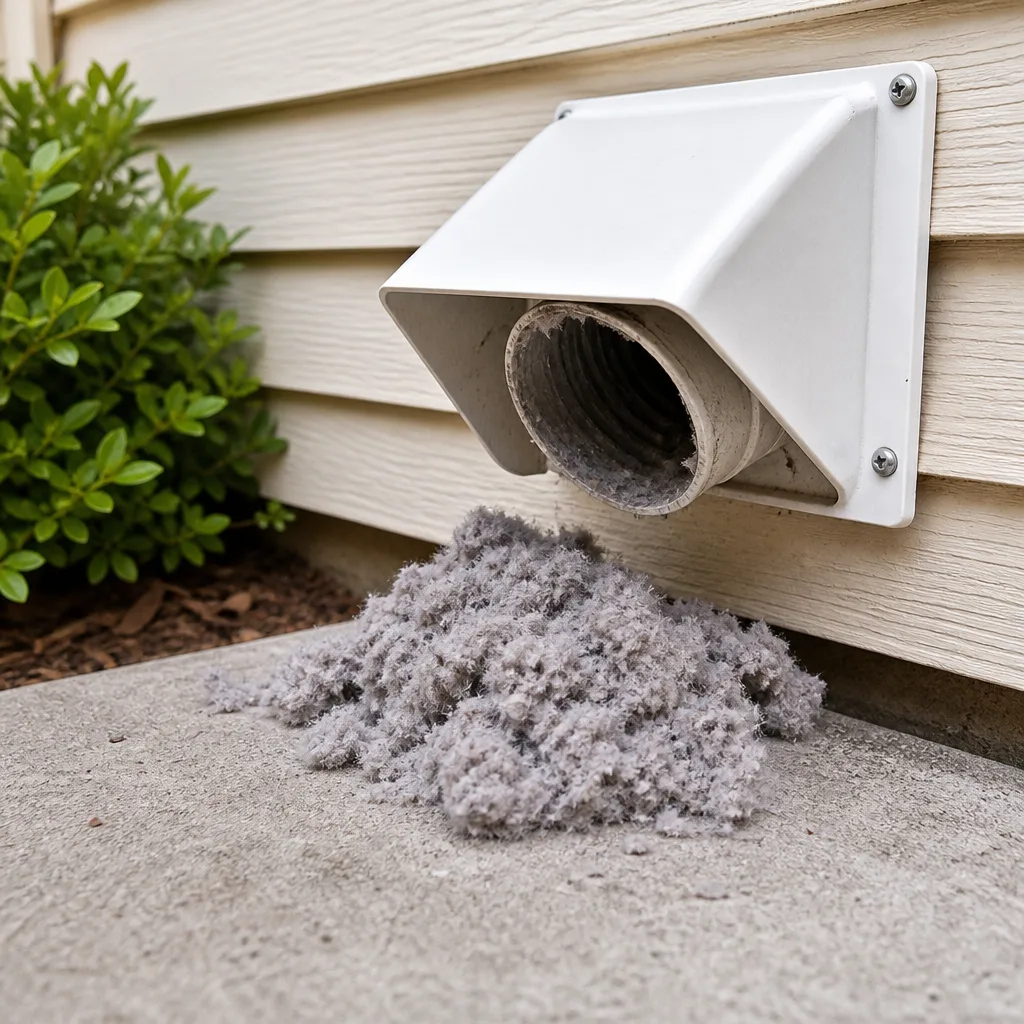 Dryer vent cleaning
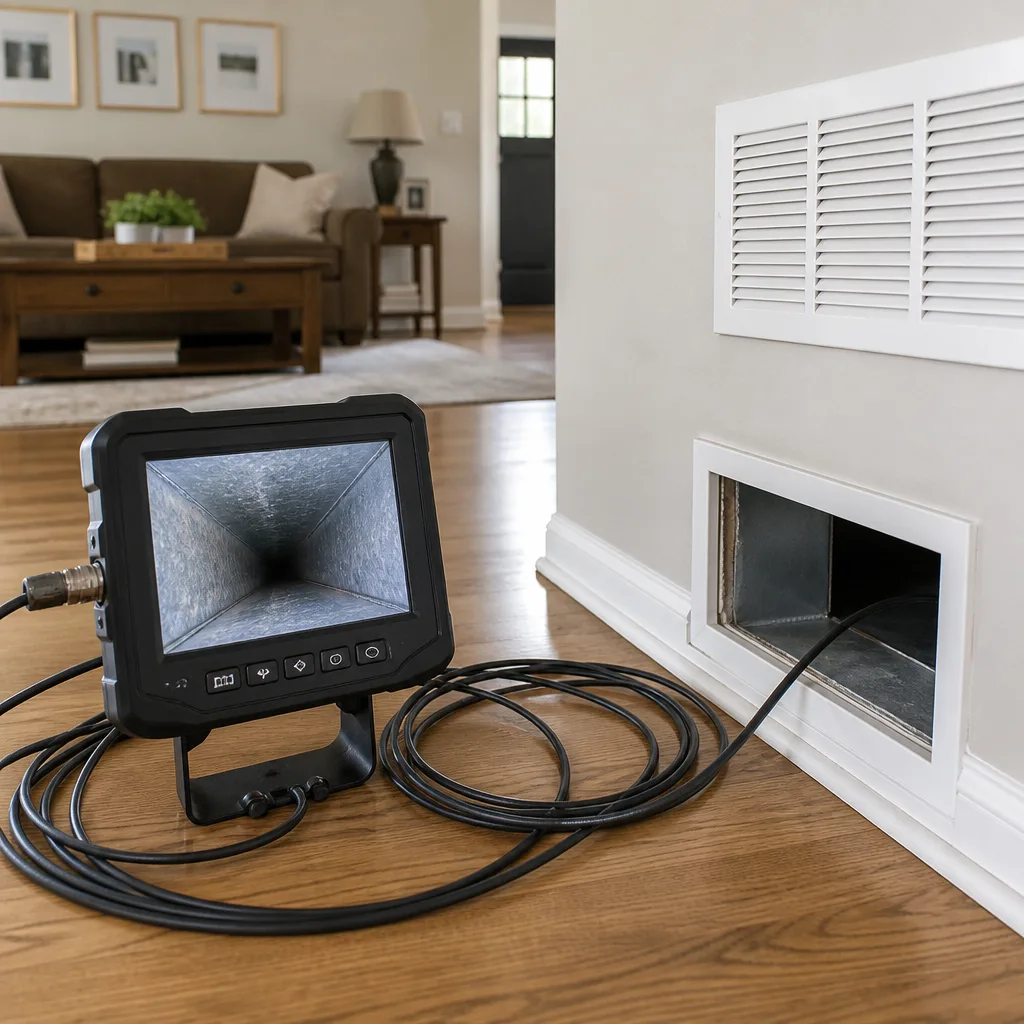 Camera inspection
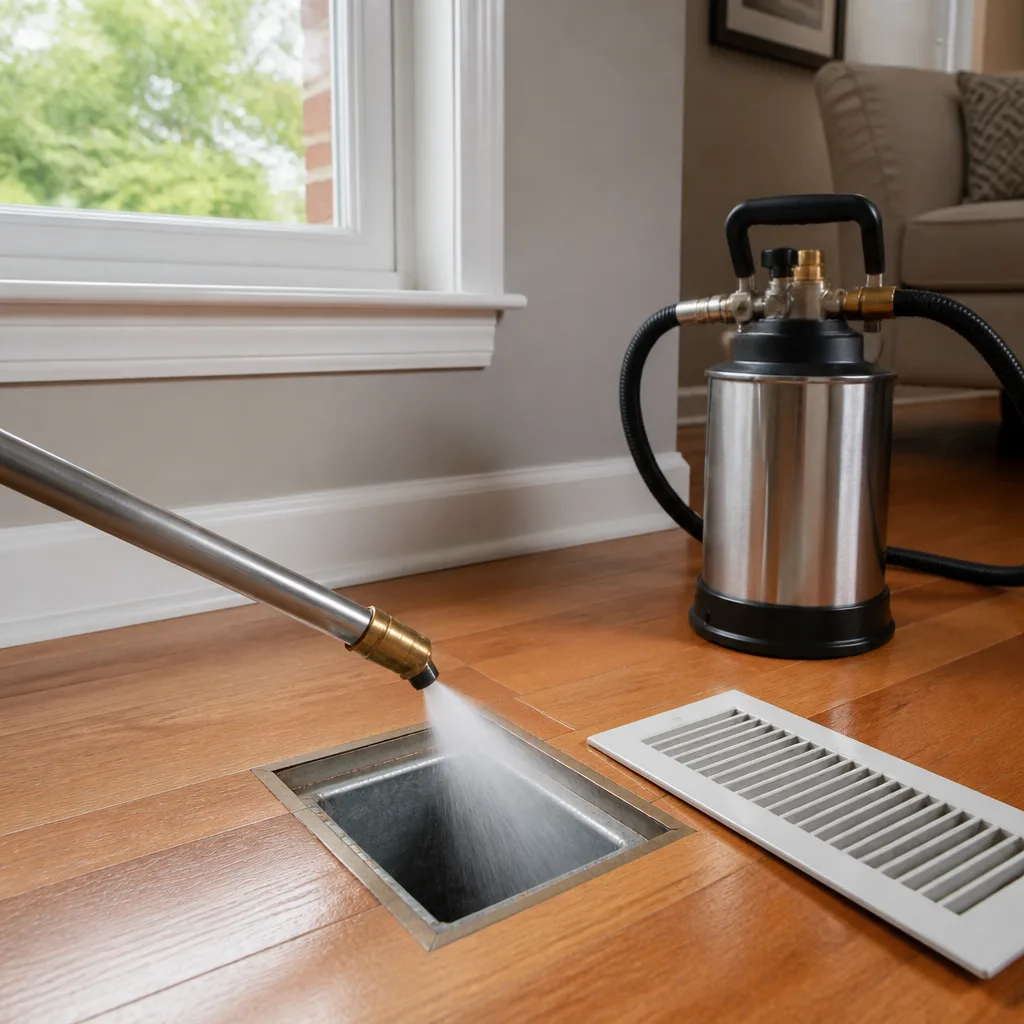 Sanitizing & deodorizing
Whole-system duct and dryer vent check with before-and-after photos - you see exactly what came out of your vents
That "$99 whole-house special" is a bait ad - the real number appears once they are in your hallway, or the "clean" is a shop-vac at the register. We photograph the inside of your ducts before and after instead.
Air Duct Cleaning Warning Signs: A West Palm Beach Homeowner’s Reference Guide
The warning sign West Palm Beach homeowners most consistently miss isn’t visible or smellable. It’s a utility bill that’s crept up 15 to 20 percent over two years while usage stayed flat, and it almost never gets connected to the ducts until much later. Ducts fail slowly. They accumulate dust in layers, develop small leaks that widen over seasons, and harbor moisture problems that announce themselves only after mold is already established. By the time you see a dark ring around a ceiling register, the underlying condition has usually been developing for months. Our Complete Guide to Air Duct Cleaning in West Palm Beach covers the slow signals, the urgent ones, and how to tell which is which before you spend money or risk your indoor air. Here’s what to watch, what it means, and when it’s time to call a professional in West Palm Beach.
Styles & brands we work with
Quick Answer
The clearest early warning signs that you need air duct cleaning in West Palm Beach include visible dust or dark streaking around supply registers, a musty smell when the AC first kicks on, uneven cooling between rooms, and allergy symptoms that worsen indoors. Any burning odor or visible mold demands immediate professional attention. If you’ve noticed dust returning within days of cleaning surfaces, or your energy bills have climbed without a matching increase in usage, your ducts are likely part of the problem. For a proper diagnosis and a written flat-rate quote, call Linden Air Duct West Palm Beach at (728) 231-8154.
Table of Contents
- Visible Signs at Your Registers and Returns
- What Different Duct Odors Actually Mean in South Florida
- The Hidden Warning Signs: Energy Costs, Allergies, and Airflow
- Urgent Warning Signs vs. Planned Response: How to Tell the Difference
- What You Can Check Yourself at the Vent Level
- How to Document and Describe Warning Signs When You Call
- Common Mistakes to Avoid
- When to Call a Professional
- Frequently Asked Questions
- The Bottom Line
Visible Signs at Your Registers and Returns
Most West Palm Beach homes run the AC for nine to ten months a year. That means your ductwork is in near-constant use, pulling air through a system that rarely gets looked at. The first visible signs are usually subtle, and they appear in places you pass daily without noticing. The most common is a gray or brown film on the wall or ceiling around a supply register. This film is called particulate deposition, and it’s the airborne fraction of whatever is inside your ducts settling onto the nearest surface as air exits the vent. When you see it, the ducts are not just holding dust, they’re actively distributing it.
Another visible signal is a dark line or streaking on the register grille itself. This is not normal dust accumulation from the room. It’s the airborne dirt pattern created when particles are carried through the grille at velocity and deposit in a specific pattern. If you clean the grille and the streaking returns within two to three weeks, the source is inside the ducts, not the room. We’ve seen this pattern repeatedly in homes across West Palm Beach, from Northwood to the South End, and it means the same thing in a 1950s bungalow as in a newer development: the duct interior has an active contaminant load that keeps re-supplying the grille.
Here’s what to look for in order of what it typically indicates:
- Gray dust film on ceiling or wall around supply registers: Ducts contain accumulated dust and particulate that is being blown into the living space.
- Dark streaking on register grilles that returns after cleaning: Active contamination inside the duct, not ambient room dust.
- Visible dust particles in sunbeams shortly after the AC cycles on: The system is introducing particulate faster than normal settling can remove it.
- Debris visible inside the duct when you remove a register: Direct evidence of accumulated material. Take a photo with your phone before replacing the grille.
- White or gray fuzzy growth on the inside of a supply boot: Possible mold or fungal growth requiring immediate professional evaluation. See the urgent section below.
The important distinction is between what’s normal and what’s diagnostic. A thin film of household dust on a grille is unremarkable. Dark, sticky, patterned residue that returns quickly is a signal. Visible debris inside the duct when you look in with a flashlight is the clearest confirmation you’ll get without professional equipment. For homeowners who want a reference point, our Air Duct Cleaning in West Palm Beach page explains what a proper cleaning actually removes and what it looks like before and after.
What Different Duct Odors Actually Mean in South Florida
Odor is the most reliable early warning signal in a humid climate, and it’s also the most easily misread. South Florida’s humidity creates specific odor signatures that point to different underlying conditions. The key is to separate what you smell when the AC first starts from what you smell when it’s been running for ten minutes. Startup odors come from what’s settled inside the ducts. Constant odors point to what’s actively growing or what’s getting pulled in from somewhere it shouldn’t.
Here are the common signatures and what they mean in the West Palm Beach context:
- Musty or damp smell on startup that fades: This is typically moisture-associated microbial growth in the duct lining or on dust inside the system. In West Palm Beach’s humidity, this is the most common odor complaint we hear. It fades because the moving air dries the surface briefly, but the growth remains and the smell returns on the next cycle.
- Musty smell that does NOT fade: The source is likely larger or located closer to the air handler, sometimes in the coil or drain pan area. This one tends to worsen over weeks and does not respond to air fresheners or filter changes.
- Dusty or stale smell on startup: This is accumulated particulate being disturbed by airflow. It’s less alarming than a musty smell, but it means the duct surfaces are loaded and the system is blowing that material into your rooms every time it starts.
- Metallic or ozonelike smell: In our experience, this usually points to an electric component running hot, most often in the air handler, not the ducts themselves. It’s worth investigating promptly because it can indicate a failing blower motor or capacitor.
- Burning smell that persists: Turn the system off and call a professional immediately. This is not a cleaning issue; it’s an electrical or mechanical failure signal. Do not continue running the AC.
The humidity factor matters more than most homeowners realize. When duct interiors stay slightly damp, which they do in West Palm Beach for months at a time, dust becomes a growth medium rather than an inert nuisance. That’s why a duct problem here doesn’t just look different, it smells different too. A dusty system in a dry climate smells stale. A dusty system in a humid climate smells damp and organic. If you’re noticing an odor that’s strongest in the master bedroom or the room farthest from the air handler, that’s also diagnostic. The longest duct runs are the hardest to clean and the most likely to hold moisture.
The Hidden Warning Signs: Energy Costs, Allergies, and Airflow
Not every duct problem announces itself visually or by smell. Some of the most significant warning signs in West Palm Beach homes are invisible and get attributed to the wrong cause, sometimes for years. Understanding these hidden signals-explored in our DIY vs Professional Air Duct Cleaning guide-can save you from paying for whole-system inefficiencies while the actual problem sits ignored in the ductwork.
Rising energy costs with stable usage. This is the signal from the opening of this guide, and it deserves a closer look. When ducts develop leaks, air that should be delivered to your rooms escapes into the attic or wall cavities. The AC still runs, the thermostat still reaches its setting eventually, but the system works longer and harder to do it. The result is a utility bill that climbs 15 to 20 percent while your thermostat settings and usage habits stay exactly the same. In West Palm Beach, where air conditioning is the single largest portion of most household energy bills, that difference shows up quickly. If you’re comparing bills year over year and the increase doesn’t match rate changes, have the ducts evaluated. Leaky or obstructed ductwork is one of the most common causes of unexplained energy creep.
Uneven room temperatures. The classic sign is a bedroom that’s always five degrees warmer than the hallway, or a living room that cools fine while a guest room never quite gets comfortable. Some temperature variation between rooms is normal, especially with poor insulation or lots of western sun exposure. But when the variation is consistent, structural, and resistant to thermostat adjustments, the ductwork is often the culprit. A partial disconnection, a crushed flex duct in the attic, or a heavy accumulation of dust and debris restricting airflow down a long run will all produce this pattern. The room becomes a heating or cooling dead zone that no amount of vent adjusting fixes.
Increased allergy symptoms indoors. If you or someone in the household experiences congestion, coughing, or eye irritation that’s noticeably worse at home and better when you go out, your ducts may be circulating an allergen load you’re breathing daily. The mechanism is straightforward: a dirty duct system holds dust, dust mites, pollen tracked indoors, and in humid conditions, mold spores. The AC then becomes the delivery system, cycling that material through your rooms for hours every day. What’s important here is the pattern. Allergies that are worse at home, and especially in specific rooms, point to an indoor source. When the ducts are cleaned properly and symptoms improve, that’s confirmation.
These three hidden warning signs share something important: they’re gradual. They don’t create a single dramatic event. Each one can be rationalized as something else, which is why they get missed until the underlying duct condition has become substantial. West Palm Beach homes built before the mid-1990s often have older galvanized ductwork that’s been patched and resealed multiple times. Newer homes with flex duct in the attic are more prone to sagging, disconnection, and crushing from things stored on top of the runs. Both situations produce measurable inefficiency long before anything looks visibly wrong.
Urgent Warning Signs vs. Planned Response: How to Tell the Difference
Not all duct warning signs carry the same urgency. Knowing which situations demand immediate action and which ones allow you to plan, compare quotes, and schedule deliberately is one of the most useful distinctions a West Palm Beach homeowner can make. It prevents both panic and expensive delay.
Urgent category: act now.
- Visible mold growth on any interior duct surface, register, or supply boot. Mold in the duct system means spores are almost certainly circulating through the house. This is a health issue first and a maintenance issue second. Turn the system off and call a professional who can evaluate the extent of the growth, not just wipe the visible portion.
- Persistent burning or electrical smell from any vent. Shut the system down at the thermostat and call an HVAC technician. This is not a duct cleaning issue; it’s a potential fire hazard that needs mechanical diagnosis.
- Evidence of rodents or significant pest activity in the ducts. If you hear scratching in the ducts, find droppings inside a register, or notice a strong ammonia smell when the system runs, you have a health concern and a contamination problem that requires more than a filter change. The ducts need professional cleaning after the pest issue is resolved.
- Water staining around ceiling registers. This suggests condensation inside the duct or, worse, a leak somewhere in the ceiling. Unaddressed moisture in a duct system leads to mold growth and material degradation.
Planned category: schedule deliberately.
- Accumulated dust and debris without moisture or pest evidence. This is the most common situation. Schedule a cleaning when it’s convenient, get a written quote, and proceed when you’re ready. The dust represents reduced efficiency and indoor air quality, but not an immediate health emergency.
- Mild startup odor that clears within minutes. This signals contamination that should be addressed, but it doesn’t require emergency scheduling. Book the evaluation and the cleaning on your timeline.
- Moderate uneven room temperatures. Have the ductwork evaluated as part of the cleaning process. The cleaning itself won’t fix a disconnected run, but it’s the right time to identify the problem and discuss Air Duct Repair in West Palm Beach options.
The rule is simple. Moisture, mold, pests, and burning smells are urgent. Dust, mild odors, and inefficiency are planned response. If you’re uncertain which category a symptom falls into, describe it honestly to the contractor on the phone. A reputable company will ask you the right diagnostic questions and tell you whether you need immediate service or can schedule on a normal timeline.
What You Can Check Yourself at the Vent Level
You don’t need special equipment to gather useful diagnostic information about your duct condition. What you need is a flashlight, your phone camera, and ten minutes to look at the right things. Here’s a step-by-step process that will tell you more than most paid “free inspections” from a sales rep ever would.
- Turn off the AC at the thermostat. You want to observe the ducts in their resting state, not with air moving through them.
- Choose one supply register in any room and remove it. Most registers lift out or unscrew in seconds. If you’re not sure how yours works, look for screws or simply lift gently; don’t force anything.
- Point a flashlight into the duct opening, not just at it. Angle the beam so it reflects off the duct surface. What you’re looking for is accumulated material: dust that looks like a gray carpet, visible debris like small pieces of drywall or insulation, or any dark-colored growth that looks fuzzy or organic.
- Take a photo with your phone. Even a mediocre photo documents what you’re seeing. If you end up calling a contractor, this photo is your reference point. If anyone tells you the ducts are “filthy” and you have a photo showing clean metal, you know to get a second opinion.
- Wipe the inside surface of the duct with a clean white cloth or paper towel. If it comes back with thick, dark, greasy residue, the duct lining is holding a contaminant load. If it’s slightly dusty but mostly clean, your system isn’t bad.
- Repeat the check at one return register. The return is where room air enters the system. If it’s visibly loaded with dust, pet hair, and grime, that material is being pulled into the system and recirculated or deposited inside the ducts.
The information you gather here is valuable for one specific reason: it gives you a baseline. When a contractor recommends a cleaning, you can compare what they’re describing to what you’ve already seen. That’s how you get an honest diagnosis rather than a sales pitch. For more on what a proper cleaning involves, including the negative-pressure extraction method and what professional-grade equipment from brands like Rotobrush and Nikro actually does, our Linden Air Duct West Palm Beach home page covers the process in plain terms.
How to Document and Describe Warning Signs When You Call
When you call a duct cleaning company, the quality of the information you provide determines the quality of the response you receive. A vague report gets you a generic answer. A specific, well-documented report gets you an accurate diagnosis and a fair quote. Here’s how to prepare for the call so you get the honest treatment you’re paying for.
Step 1: Note the specific rooms and registers. “The master bedroom on the east side” is more useful than “the house smells.” Duct systems are room-specific. A problem isolated to one room or one duct run means something different than a problem distributed throughout the house.
Step 2: Describe the smell with precision. Use the vocabulary from the odor section above. Musty, dusty, metallic, and burning are distinct signals. When you smell it matters too: on startup, after running for ten minutes, or all the time.
Step 3: Share your photos. The images you took at the register level are diagnostic gold. Send them if the contractor will accept them, or describe what you saw in terms of color, texture, and extent. “Dark gray fuzzy growth about the size of a quarter on the inside of the supply boot” paints a precise picture.
Step 4: State what you want in response. Be clear that you want a written, flat-rate quote before any work begins. If the company hesitates or describes pricing as something they’ll determine after they “get in there,” that’s a red flag. A legitimate company can quote a whole-system duct cleaning over the phone once they understand the scope.
Step 5: Ask about verification. This is specifically where Linden Air Duct West Palm Beach answers differently than many competitors. You should know who’s coming to your door, and you should be able to verify them. Ask what the verification process is. The Threshold Standard means every technician is background-checked, identity-verified, and introduced to you by name and photo before arrival. The tech’s name and photo arrive before the visit, and a photo ID badge is shown at the door, every time. That’s not a courtesy; it’s a written protocol, and it’s the reason so many West Palm Beach homeowners, especially those who are home alone or have young children, choose Linden.
The way a company handles your call tells you a lot. At Linden, a live person answers the phone 24/7. You’re not navigating a voicemail tree. You describe the issue, you get a clear next step, and you get a price in writing before any appointments are scheduled around it.
Common Mistakes to Avoid
- Assuming visible grille dust means the ducts are dirty. Grille dust is often just room dust that settled on the grille. What matters is what’s inside the duct. Check the interior, not just the visible surface, before deciding the ducts are or aren’t the problem.
- Ignoring a mild startup odor because it fades. In West Palm Beach’s humidity, a musty startup smell that clears after a minute is still evidence of moisture-related growth in the system. It won’t fix itself, and it tends to worsen over months.
- Treating allergy symptoms as purely seasonal. If your congestion gets better when you leave the house and worse when you return, the pattern points indoors, not to South Florida pollen. Rule out the ducts before you accept a lifetime of indoor allergies.
- Accepting a lowball quote without a written scope of work. The air duct industry has a well-documented problem with bait-and-switch pricing, where a too-low initial quote becomes a much larger invoice once the technician is on site. A legitimate company puts the price in writing before work begins, every single time.
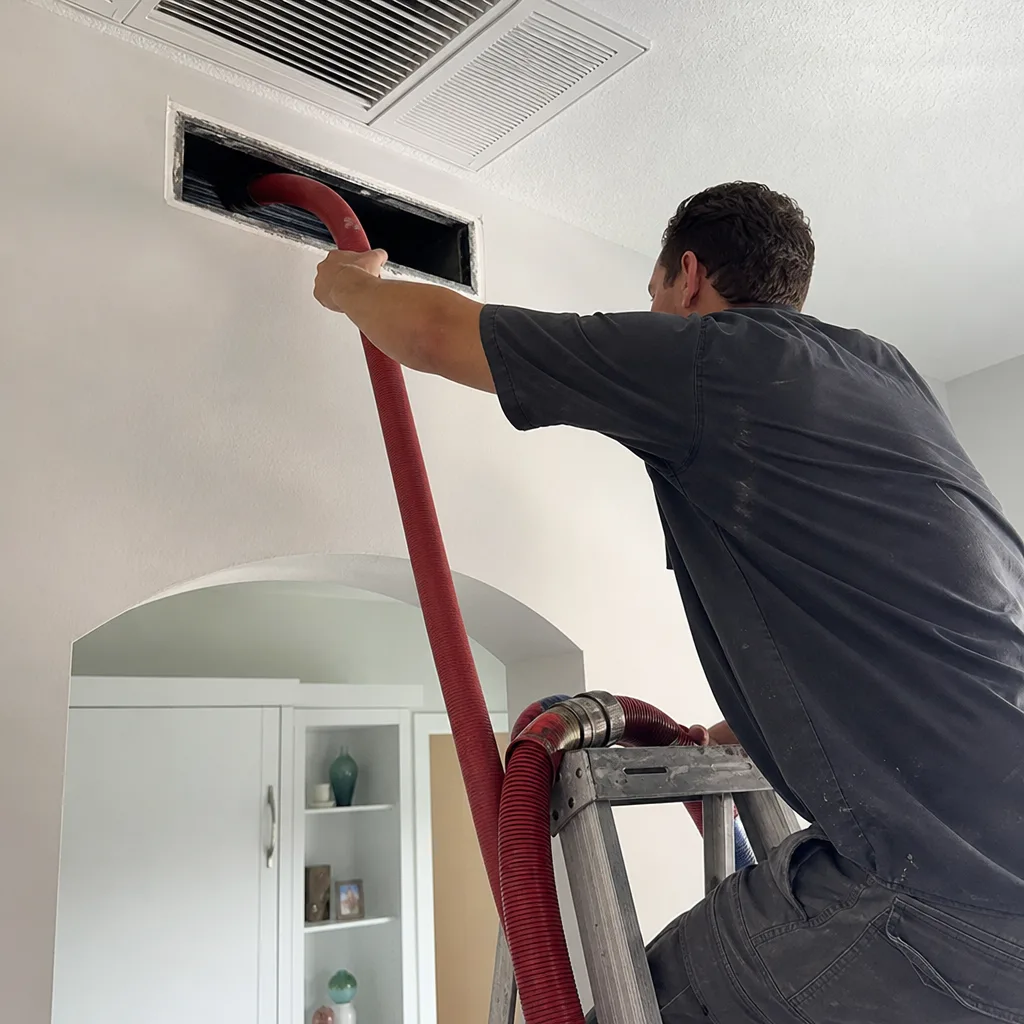
- Failing to ask what “cleaning” actually includes. Some companies vacuum the returns and wipe the grilles, then call it a done job. Ask whether the entire duct system gets cleaned using negative-pressure extraction, what equipment is used, and what before-and-after documentation you’ll receive.
- Running the AC after smelling a burning odor. This is how a minor electrical fault becomes a larger mechanical failure. Turn the system off and get a professional diagnosis.
- Not keeping records of your service. Every cleaning or repair should come with documentation. At Linden, every repair includes a written guarantee, backed by the 365-Day Done Right Promise. If a covered repair fails, Linden returns at no charge. That promise matters more when it’s in writing, and it’s in writing on every job.
When to Call a Professional
Any of the urgent signals discussed above, visible mold, burning smells, pest evidence in the ducts, or water staining around registers, warrants an immediate professional call. For the non-urgent signals like accumulated dust, mild startup odors, uneven room temperatures, or unexplained energy creep, the timing is yours to choose, but the professional engagement matters just as much. Ductwork is not accessible or diagnosable without the right equipment and experience. What you see at the register is a fraction of what’s happening inside the system. Linden Air Duct West Palm Beach offers free estimates in West Palm Beach, with the price put in writing before any work begins, always. For more guides & resources on maintaining your system, visit our blog. Call (728) 231-8154 and describe what you’ve observed. A live person answers, and you’ll get a straight answer about what the next step should be, including whether you even need a cleaning yet.
Frequently Asked Questions
Whole-system air duct cleaning in West Palm Beach typically runs between $350 and $750 for an average single-family home, depending on the size of the system, the number of returns, and the extent of contamination. What matters more than the exact number is that the price is flat, written, and agreed before work starts. Be wary of per-vent pricing structures, which create an incentive to inflate the job. Call (728) 231-8154 for an exact quote on your system, which is free and requires no commitment.
For most West Palm Beach homes, a professional air duct cleaning every 3 to 5 years is appropriate. Homes with pets, smokers, recent renovation work, or family members with respiratory conditions may benefit from more frequent service, every 2 to 3 years. The most honest answer is that it depends on your specific conditions, which is why the register-level check described above is useful. It tells you whether your system has reached the point where cleaning is warranted rather than just scheduled on a calendar.
Lower quotes typically come from companies that clean fewer components, use less effective equipment, or plan to upsell you once they’re on site. Some operations vacuum only the registers and call it a whole-system cleaning. Others price the initial call low and then discover “problems” that multiply the invoice. The relevant question is what the quoted price includes. A legitimate whole-system cleaning using negative-pressure extraction and professional-grade equipment has real costs. Get the scope in writing before you compare numbers.
Ask for before-and-after documentation of your own duct system. A professional cleaning should include photos showing the interior of the ducts before work and after. At Linden Air Duct West Palm Beach, every job includes this documentation, and the price is agreed before work starts. You’ll also receive a written guarantee covering the work. The 365-Day Done Right Promise means that if the work is not right, Linden makes it right, backed in writing on every job.
Mold spores circulating through a forced-air system can contribute to respiratory symptoms, particularly in people with asthma, allergies, or compromised immune systems. The risk depends on the type and concentration of mold, but the prudent response is the same: turn the system off and have a professional evaluate the extent of the growth. Mold in ductwork is not a surface cleaning problem; it requires addressing the moisture source and treating or replacing affected materials.
Yes, you should plan to be home during the cleaning. It’s your property and your system, and you should be able to verify who arrived, what they’re doing, and what the ducts look like when they finish. With Linden Air Duct West Palm Beach, you’ll know exactly who’s coming before they arrive. The technician’s name and photo are sent to you before the visit, and they’ll show a photo ID badge at the door. That’s the Threshold Standard, and it applies on every job, not just when you ask.
The Bottom Line
Most duct problems in West Palm Beach don’t arrive with a dramatic reveal. They build slowly: a little more dust on the furniture, a slightly higher summer electric bill, a musty smell that comes and goes, a bedroom that never quite cools. None of these signals are definitive on their own, but each one is data, and together they form a pattern that’s worth acting on. The most important skill a homeowner can develop is honest observation. Look at your registers. Note your odors. Track your bills. Document what you find. When you call a contractor, you’ll be equipped to demand what every homeowner deserves: a written price, a verified technician, and work that’s guaranteed in writing. That’s how it works at Linden Air Duct West Palm Beach, and that’s how it should work everywhere.
Written by Marcus Veale, Owner at Linden Air Duct West Palm Beach, serving West Palm Beach since 2004.
See the difference
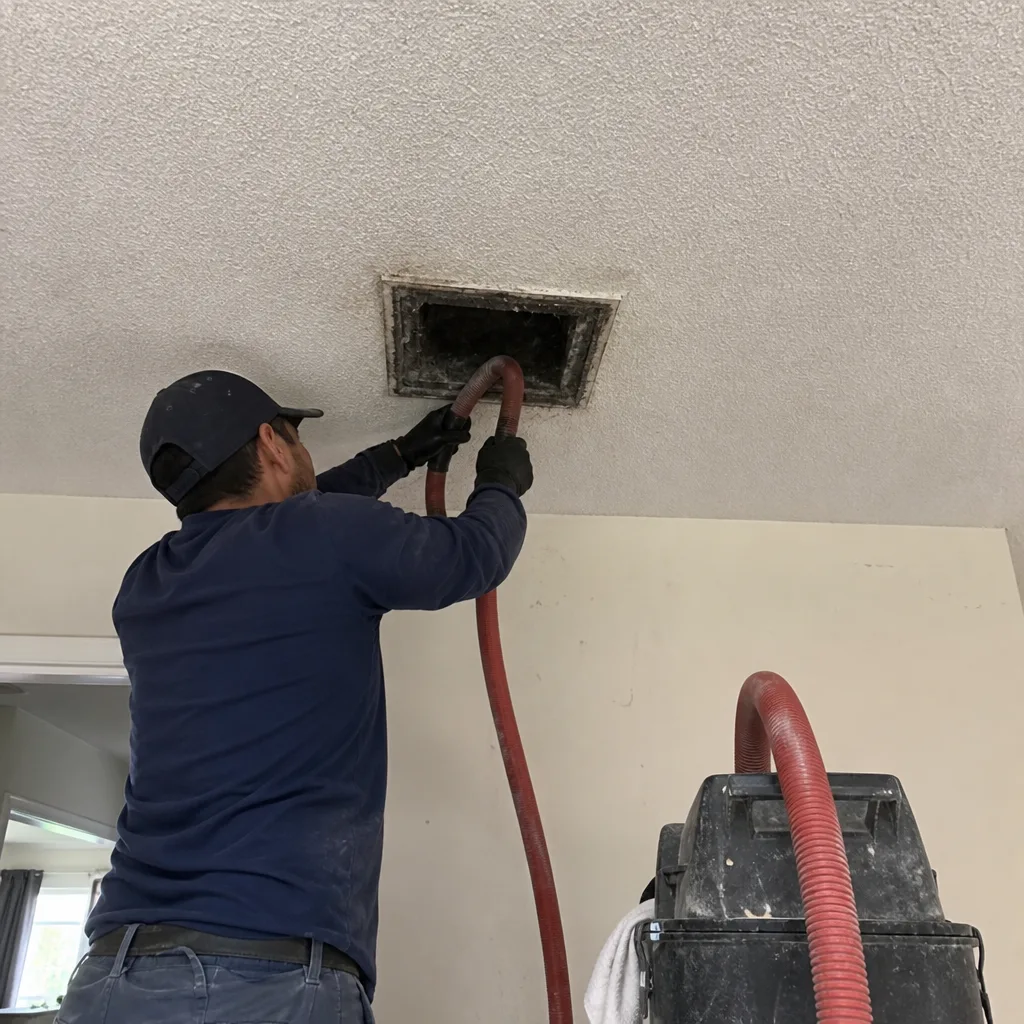 Before
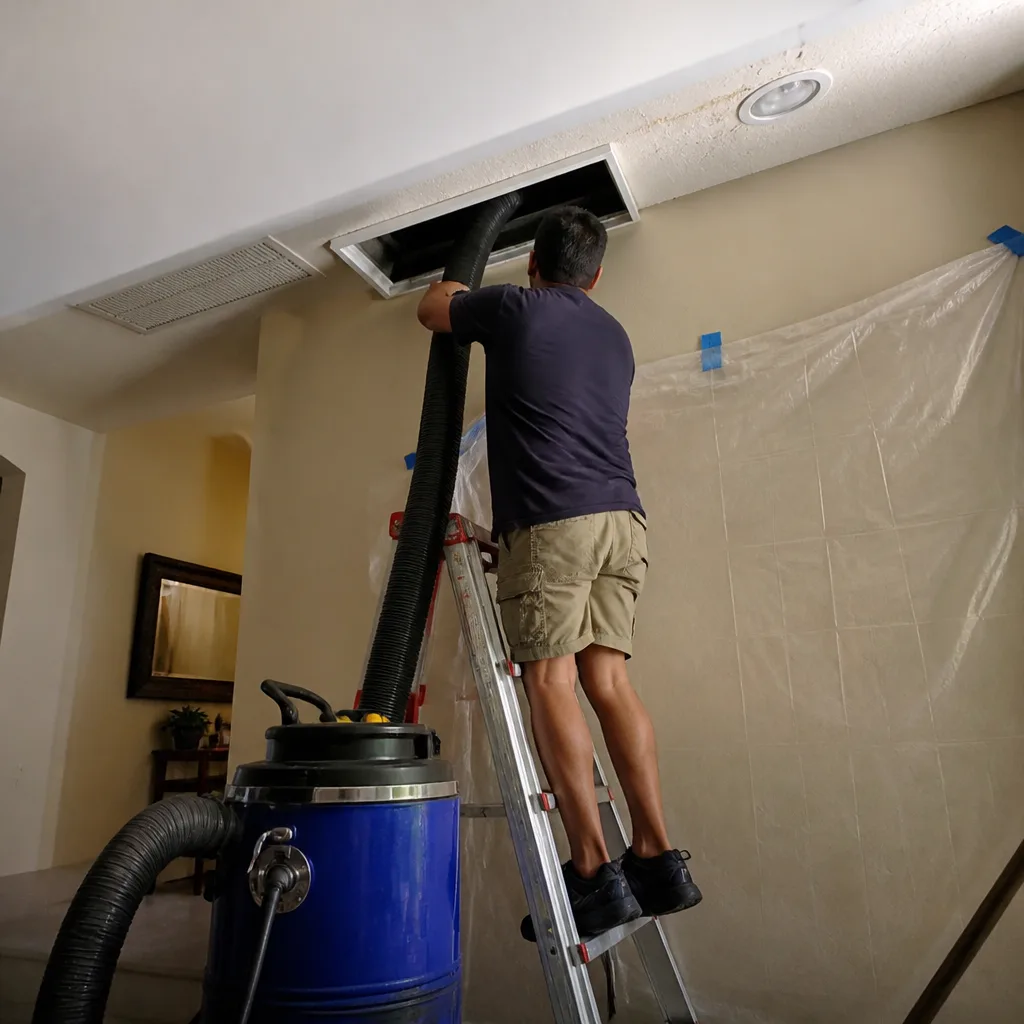 After
After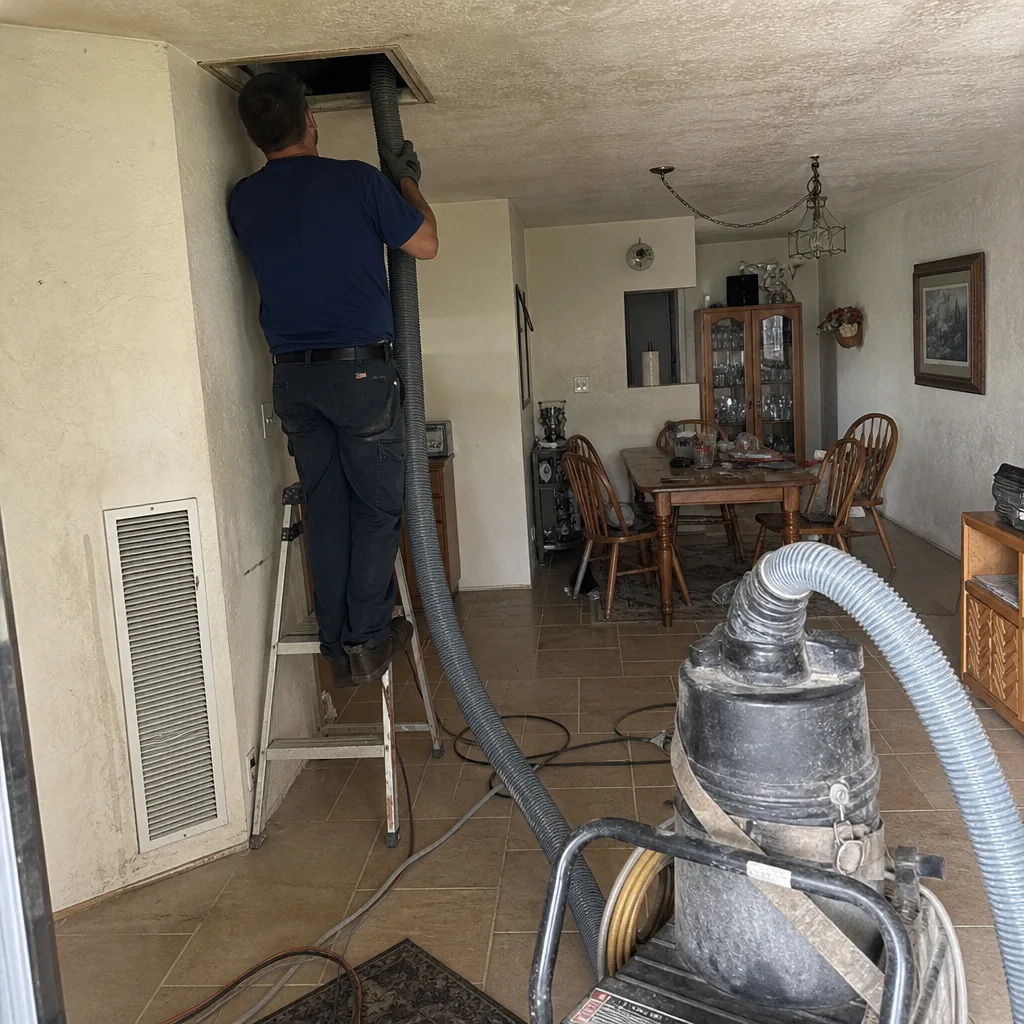 Before
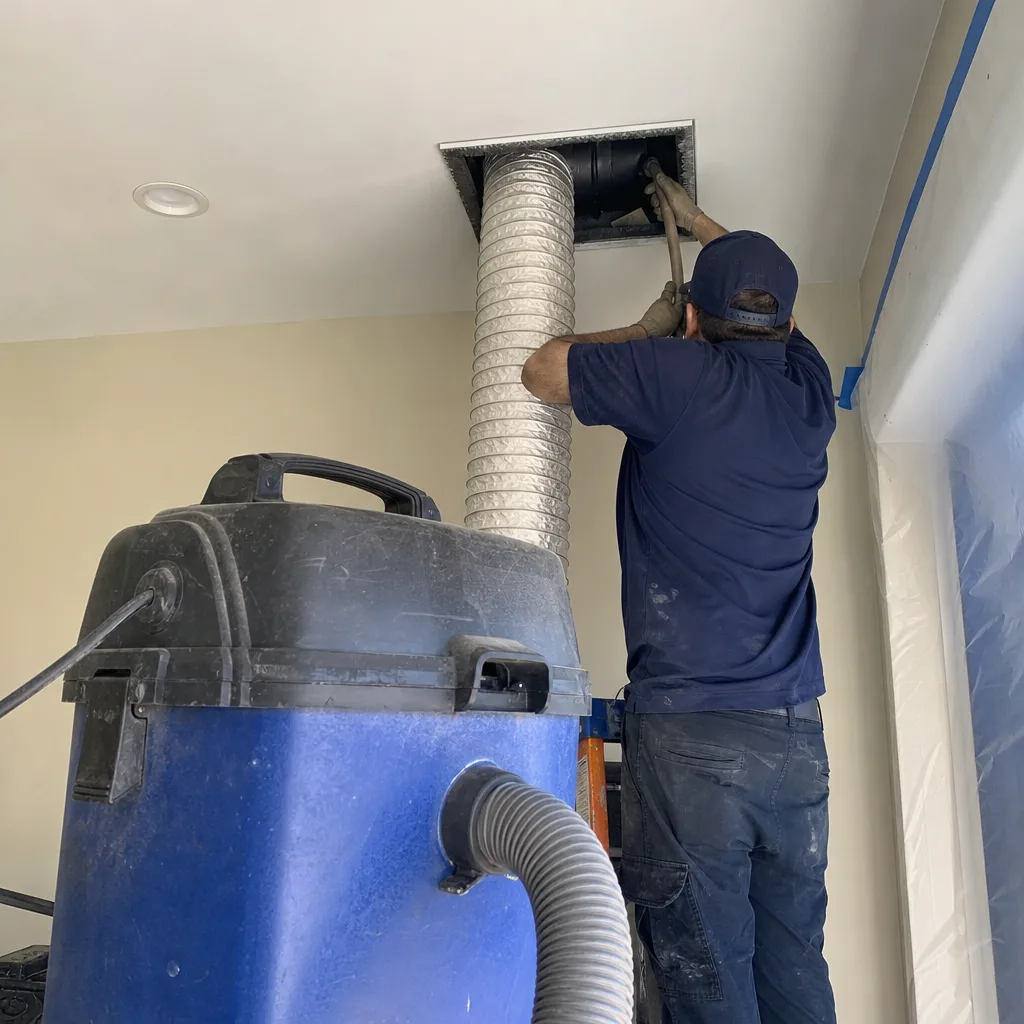 After
After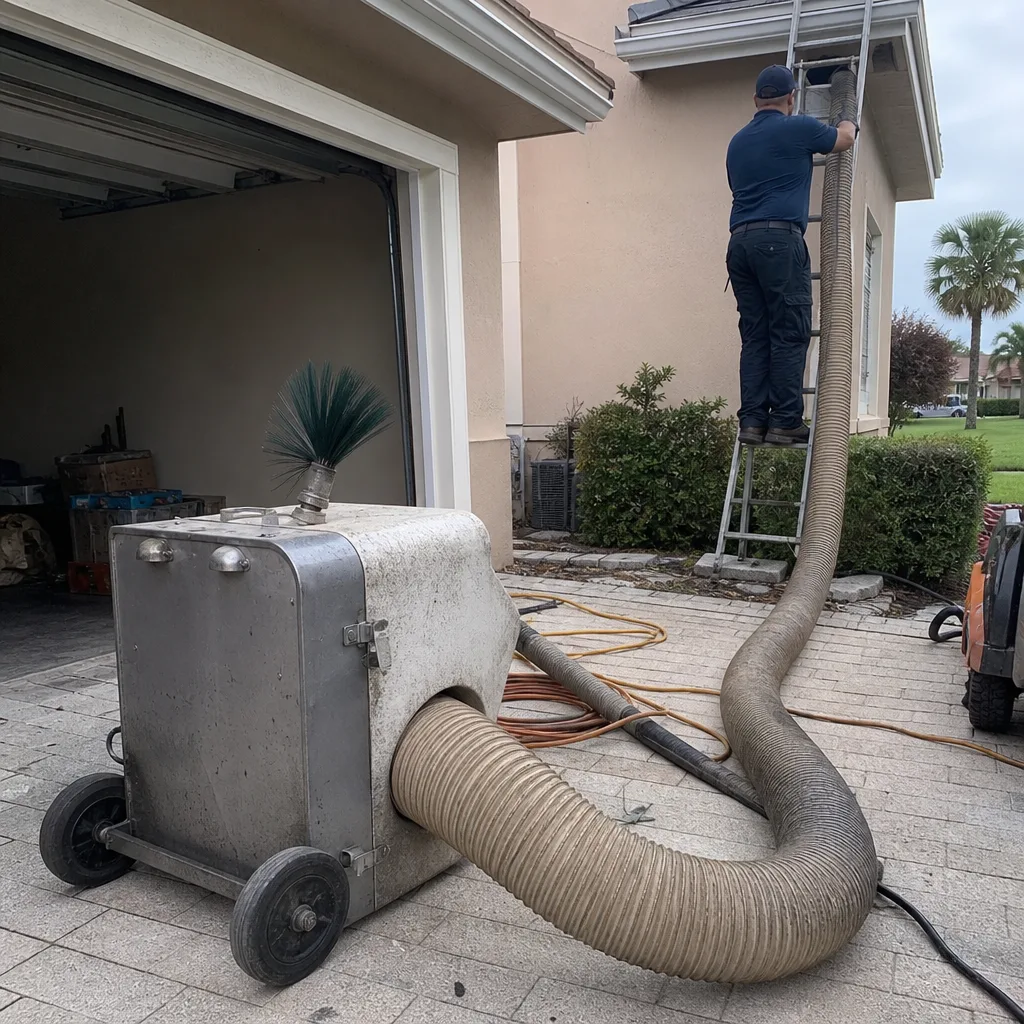 Before
 After
After